
Designing a compelling tee shirt logo goes beyond sketching an idea—it’s about merging brand identity, visual storytelling, and wearability into a single, powerful image. Whether you're launching a clothing line, creating merchandise for a band, or designing for a cause, the right logo can elevate your message and make it unforgettable. Unlike logos meant for digital or print media, a t-shirt logo must work on fabric, at various sizes, and in diverse contexts—from casual streetwear to promotional events. This guide walks through the essential steps to craft a logo that stands out, communicates clearly, and resonates with your audience.
Understanding the Purpose of Your T-Shirt Logo
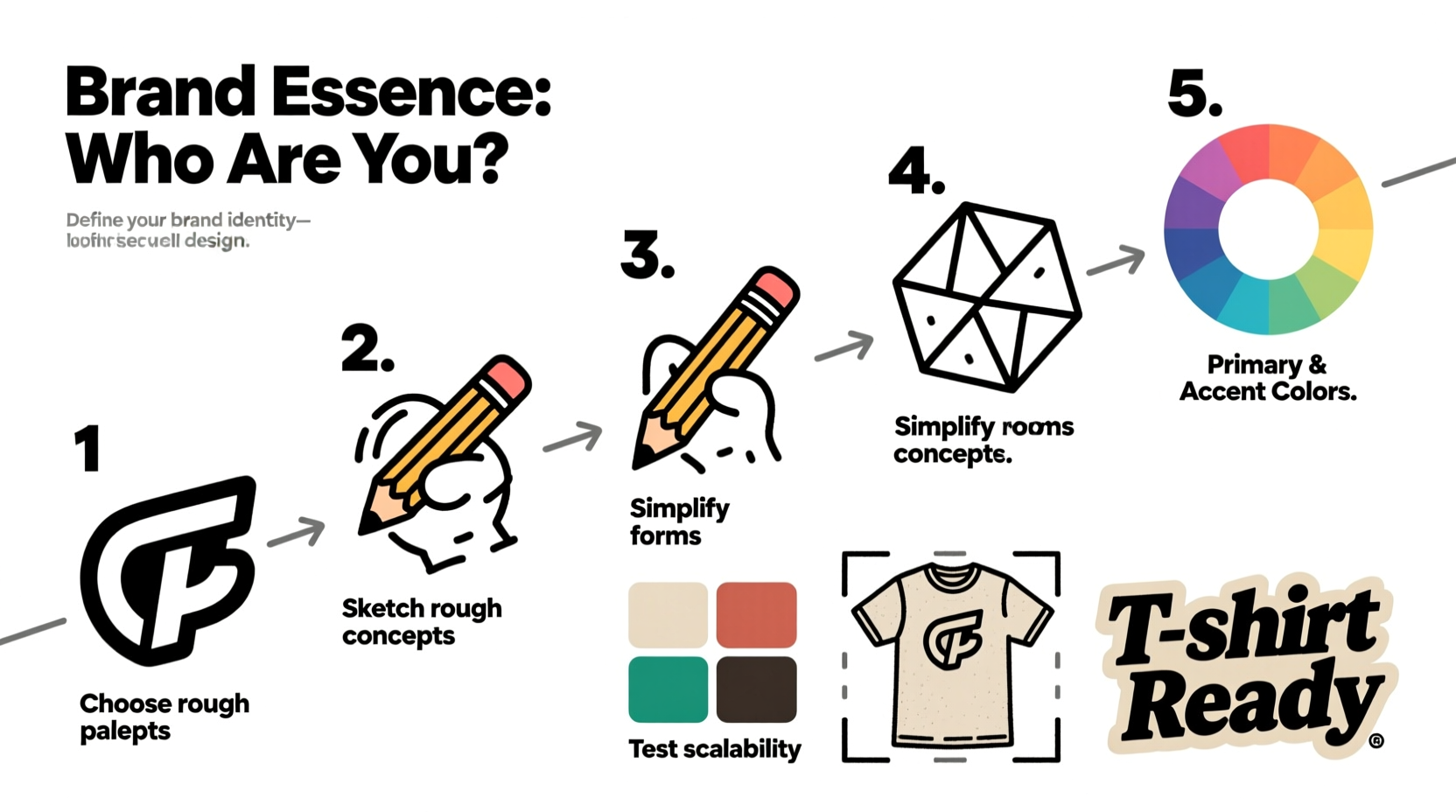
Before opening a design tool or putting pencil to paper, define the core purpose of your logo. Is it promoting a brand? Representing a movement? Celebrating an event? The function shapes every creative decision. A logo for a youth streetwear brand will differ dramatically from one designed for a nonprofit fundraiser.
A strong t-shirt logo doesn’t just look good—it tells a story. It should reflect values, evoke emotion, and remain instantly recognizable even at a glance. Ask yourself: What feeling should someone have when they see this on a shirt? Confidence? Humor? Rebellion? Clarity here prevents wasted effort later.
Step-by-Step Guide to Designing Your Logo
Creating a standout t-shirt logo is a process, not a single moment of inspiration. Follow these seven structured steps to ensure professional results.
- Research & Inspiration Gathering: Study successful t-shirt brands like Supreme, Stüssy, or local indie labels. Note recurring themes—minimalism, typography focus, symmetry, or cultural references. Build a mood board digitally or on paper.
- Define Core Elements: Decide whether your logo will be typographic (wordmark), symbolic (icon), or a combination. Most effective t-shirt logos use simplicity—think Nike’s swoosh or the WWF panda.
- Sketch Initial Concepts: Use pen and paper to generate 20–30 rough ideas. Don’t aim for perfection; explore variations in shape, letterforms, and negative space.
- Select Top 3 Concepts: Refine the most promising sketches. Focus on scalability—can the design still be read when printed small on a chest?
- Digital Drafting: Transfer your chosen concepts into vector software like Adobe Illustrator or free alternatives such as Inkscape. Vector format ensures crisp printing at any size.
- Test for Wearability: Simulate how the logo looks on different shirt colors and placements (chest, back, sleeve). Avoid overly detailed designs that won’t translate well on fabric.
- Finalize & Export: Lock in color palette (ideally 1–3 colors for screen printing efficiency), add bleed if needed, and export in SVG, EPS, and high-res PNG formats.
Typography vs. Symbolism: Choosing the Right Approach
The balance between text and imagery determines how your logo is perceived. Here’s how to choose wisely:
| Approach | Best For | Pros | Cons |
|---|---|---|---|
| Typographic (Wordmark) | Brands with strong names, startups, bands | Clear branding, easy recognition | Limited visual impact without stylization |
| Symbol/Icon Only | Established brands, universal messages | High memorability, language-independent | May require prior brand awareness |
| Combination Mark | New brands needing both name and symbol | Balances clarity and creativity | Can become cluttered if overdesigned |
For new brands, a combination mark often works best. Over time, as recognition grows, the symbol alone may suffice—just like Apple’s evolution from a detailed apple to a sleek silhouette.
“Simplicity isn’t just aesthetic—it’s strategic. The fewer elements a t-shirt logo has, the more likely it is to stick in memory.” — Lena Torres, Brand Identity Designer & Educator
Common Pitfalls and How to Avoid Them
Even experienced designers fall into traps when creating apparel graphics. Recognizing these early saves time and costly reprints.
- Overcomplication: Too many lines, gradients, or tiny details fail in screen printing and lose clarity at a distance.
- Poor Color Contrast: Light gray on white or yellow on beige makes logos invisible. Always test contrast across shirt colors.
- Ignoring Scalability: A logo that looks great on a poster might vanish on a pocket-sized print.
- Using Low-Quality Fonts: Default system fonts lack uniqueness and may carry licensing issues.
- Forgetting the Fabric Factor: Cotton absorbs ink differently than polyester. Designs must account for slight bleed and texture.
Real-World Example: Designing for ‘Urban Roots’ Clothing Co.
‘Urban Roots’ is a fictional sustainable streetwear brand targeting eco-conscious youth. Their goal: a logo that reflects nature and city life in harmony.
The designer began by researching botanical illustrations and urban graffiti styles. After sketching over two dozen ideas, three stood out: a tree growing from a concrete crack, a leaf-shaped skyline, and a stylized “UR” monogram with roots. The third option was selected for its versatility and instant readability. Using bold sans-serif typography paired with a subtle root motif beneath the letters, the final logo worked in black on light shirts and white on dark ones. It scaled perfectly from hat patches to full-back prints. Within weeks of launch, customers began recognizing the brand solely by the root symbol—proof of its impact.
Checklist: Finalizing Your T-Shirt Logo
Use this checklist before sending your design to print:
- ✅ Concept aligns with brand message
- ✅ Design is simple and scalable (test at 1\", 3\", and 12\")
- ✅ Colors are limited and printer-friendly (Pantone or CMYK specified)
- ✅ Works on both light and dark shirt colors
- ✅ File exported in vector format (SVG/EPS) and high-res raster (PNG)
- ✅ No copyrighted fonts or clipart used
- ✅ Tested on a physical mockup or realistic digital simulation
Frequently Asked Questions
How many colors should my t-shirt logo have?
For cost-effective screen printing, limit your logo to 1–3 colors. Each additional color increases setup time and expense. Digital printing allows more colors but may lack durability.
Can I use a photo in my t-shirt logo?
Photographs rarely work well due to detail loss and ink spread on fabric. Convert photos to high-contrast silhouettes or stylized illustrations instead.
Should my logo include my website or tagline?
Only if absolutely necessary. Most t-shirt logos succeed through minimalism. Save longer text for separate hangtags or packaging.
Conclusion: Turn Vision Into Wearable Impact
Designing a memorable t-shirt logo blends artistry with strategy. From defining your message to refining vector paths, each step shapes how your audience perceives and connects with your brand. The most iconic logos aren’t the most complex—they’re the ones people remember after a single glance. Now that you have the tools and insights, it’s time to create something that doesn’t just sit on a shirt, but speaks through it.




 浙公网安备
33010002000092号
浙公网安备
33010002000092号 浙B2-20120091-4
Comments
No comments yet. Why don't you start the discussion?