
Navigating job interviews can be daunting, especially when asked behavioral questions like “Tell me about a time you handled conflict at work” or “Describe a situation where you led a team through a challenge.” These questions aren’t just about what you did—they’re about how you communicate your experience. That’s where the STAR technique comes in. It’s a proven framework used by top candidates and recommended by career coaches to structure responses clearly and effectively. When applied correctly, it transforms vague stories into compelling narratives that highlight competence, confidence, and clarity.
What Is the STAR Technique?
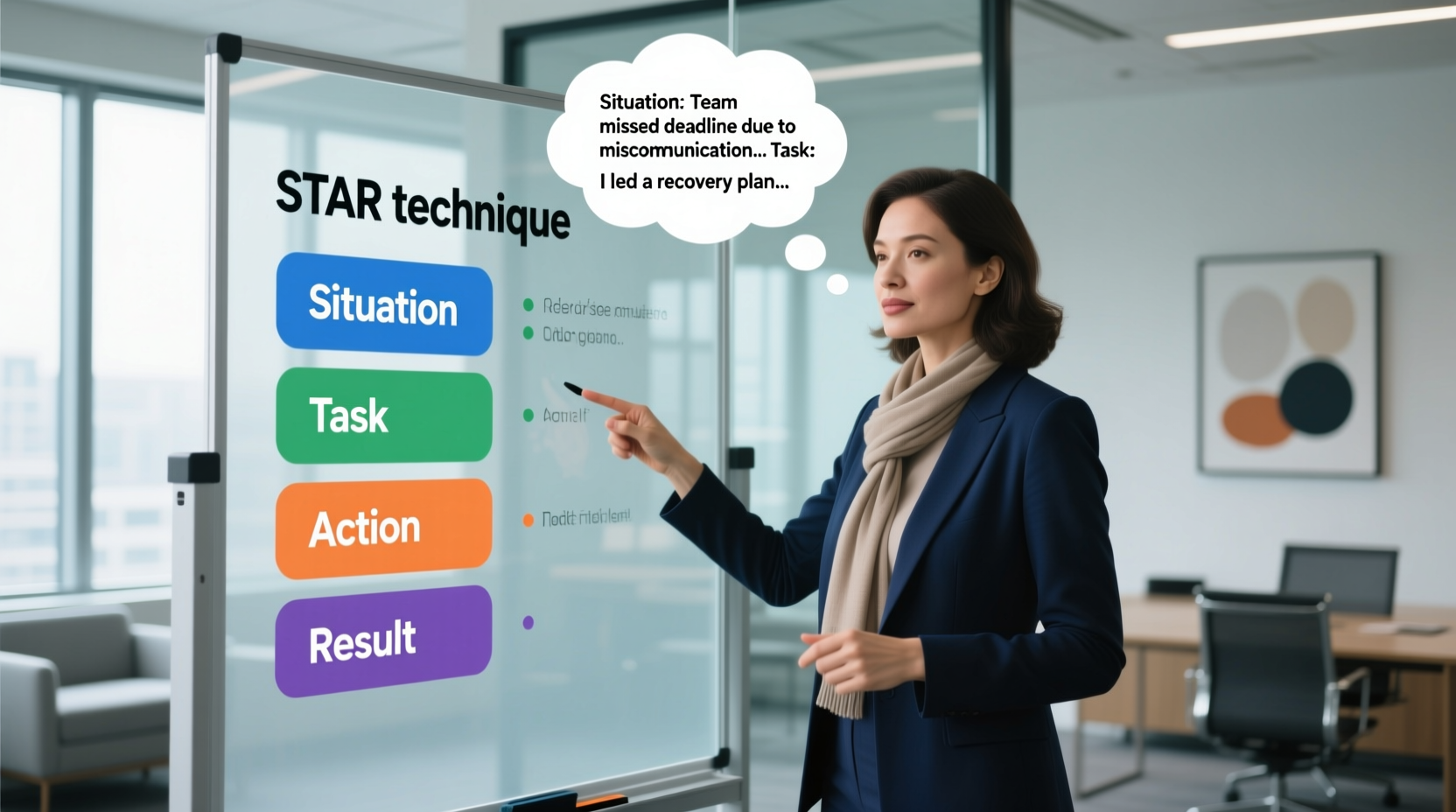
The acronym STAR stands for Situation, Task, Action, Result. It’s a method for organizing real-life examples from your professional experience so they directly answer behavioral interview questions. Instead of rambling or offering generic responses, STAR keeps your answer focused, relevant, and outcome-driven.
This structure is favored by employers because it reveals not only what you’ve done but also how you think, solve problems, and deliver results. Recruiters use these answers to predict future performance—your ability to handle similar challenges in their organization.
“Candidates who use the STAR method stand out immediately. Their answers are concise, evidence-based, and demonstrate impact.” — Laura Simmons, Executive Career Coach at TalentEdge Consulting
Step-by-Step Guide to Using the STAR Framework
Applying the STAR technique isn’t complicated, but it does require preparation. Follow these steps to craft powerful, memorable answers.
- Identify Key Experiences: Reflect on your past roles and pinpoint 5–7 significant achievements or challenges. Focus on moments involving leadership, problem-solving, teamwork, adaptability, or initiative.
- Break Down Each Experience Using STAR: For each story, define the four components clearly.
- Practice Out Loud: Rehearse until your delivery feels natural, not rehearsed. Aim for 60–90 seconds per answer.
- Align With Job Requirements: Match your stories to the skills listed in the job description.
- Refine Based on Feedback: Practice with a mentor or record yourself to eliminate filler words and improve pacing.
1. Situation – Set the Scene
Begin by briefly describing the context. Who was involved? Where were you working? What was happening?
Keep it concise—two to three sentences max. The goal is to orient the interviewer, not tell a novel.
2. Task – Define Your Responsibility
Explain what your role was in that situation. What were you expected to accomplish? What objectives were assigned to you?
This step clarifies that the challenge wasn’t someone else’s—and shows you understand accountability.
3. Action – Detail What You Did
This is the most important part. Describe the specific steps *you* took to address the task. Use “I” statements, not “we,” to emphasize personal contribution.
Be precise: Did you organize a meeting? Develop a new process? Mediate a dispute? Train team members? Mention tools, strategies, or communication techniques if relevant.
4. Result – Share the Outcome
Close with measurable outcomes whenever possible. How did your actions make a difference? Did you save time, increase revenue, improve satisfaction, or prevent an issue?
Quantify results (“reduced processing time by 30%”) or describe qualitative wins (“received positive feedback from senior leadership”). Always end on a strong note.
Real Example: Applying STAR in a Marketing Interview
Question: “Tell me about a time you managed a tight deadline.”
Situation: In my previous role as a digital marketing coordinator, our lead campaign manager fell ill two days before launching a major product release. The campaign included email sequences, social media assets, and landing pages scheduled across multiple platforms.
Task: I was asked to step in and ensure all elements launched on time without compromising quality or brand consistency.
Action: I reviewed the campaign plan, identified dependencies, and created a 48-hour execution checklist. I coordinated daily check-ins with design, copy, and analytics teams, reprioritized tasks, and personally finalized the email content and A/B testing setup. I also documented every change for transparency and audit purposes.
Result: The campaign launched on schedule, achieving a 27% open rate—above our benchmark of 20%. Leadership commended the seamless transition, and I was later assigned as interim project lead for two additional campaigns.
This response demonstrates ownership, collaboration, urgency, and results—all within 75 seconds.
Common Mistakes to Avoid with STAR
Even experienced professionals trip up when using the STAR method. Here are frequent pitfalls and how to avoid them:
| Mistake | Why It Hurts | How to Fix It |
|---|---|---|
| Too much focus on Situation | Leaves little time to explain Action and Result | Limit Situation to 20% of your answer |
| Vague Actions (“I helped the team…”) | Fails to show personal impact | Use active verbs: led, designed, resolved, implemented |
| No clear Result | Undermines credibility of the story | Always include outcome—even if it’s a lesson learned |
| Using “we” instead of “I” | Hides individual contribution | Own your role: “I initiated,” “I proposed,” “I followed up” |
Checklist: Preparing Your STAR Stories
- ✅ Choose experiences that showcase core competencies (leadership, problem-solving, communication)
- ✅ Write out full STAR responses for at least five common interview questions
- ✅ Time yourself—each answer should be under 90 seconds
- ✅ Replace vague language with specific actions and metrics
- ✅ Practice with a friend or record audio to assess tone and clarity
- ✅ Tailor stories to the job description before each interview
- ✅ Prepare at least one story showing failure and what you learned
FAQ: Common Questions About the STAR Technique
Can I use the same STAR story for different questions?
Yes—but only if it fits naturally. Slight rephrasing can help adapt a single experience to questions about teamwork, leadership, or problem-solving. However, relying too heavily on one story may suggest limited experience. Aim for variety.
What if the outcome wasn’t successful?
You can still use the STAR format. Be honest about the result, then emphasize what you learned and how you’ve applied that insight since. Employers value self-awareness and growth mindset.
How many STAR stories should I prepare?
Prepare 5–7 versatile stories that cover a range of skills. Most interviews will draw from themes like conflict resolution, initiative, failure, success under pressure, and collaboration. Having a strong set ensures you’re ready regardless of the question.
Conclusion: Turn Every Answer Into an Opportunity
The STAR technique isn’t just a way to answer interview questions—it’s a strategy to position yourself as a results-oriented, reflective professional. By mastering this framework, you transform unstructured memories into persuasive evidence of your capabilities. Confidence doesn’t come from memorizing perfect answers; it comes from knowing you have a reliable method to communicate your value—clearly, concisely, and convincingly.




 浙公网安备
33010002000092号
浙公网安备
33010002000092号 浙B2-20120091-4
Comments
No comments yet. Why don't you start the discussion?