
There’s a common misconception that mastery comes from talent or sudden inspiration. In reality, the most consistent performers across fields—whether in business, art, or personal development—follow structured processes. Mastering how to do X is not about vague ambition; it’s about breaking down complex goals into manageable actions, refining your approach through feedback, and maintaining momentum over time. This guide outlines actionable strategies to help you systematically master any skill, project, or objective labeled as “X” in your life.
1. Define What “X” Really Means to You
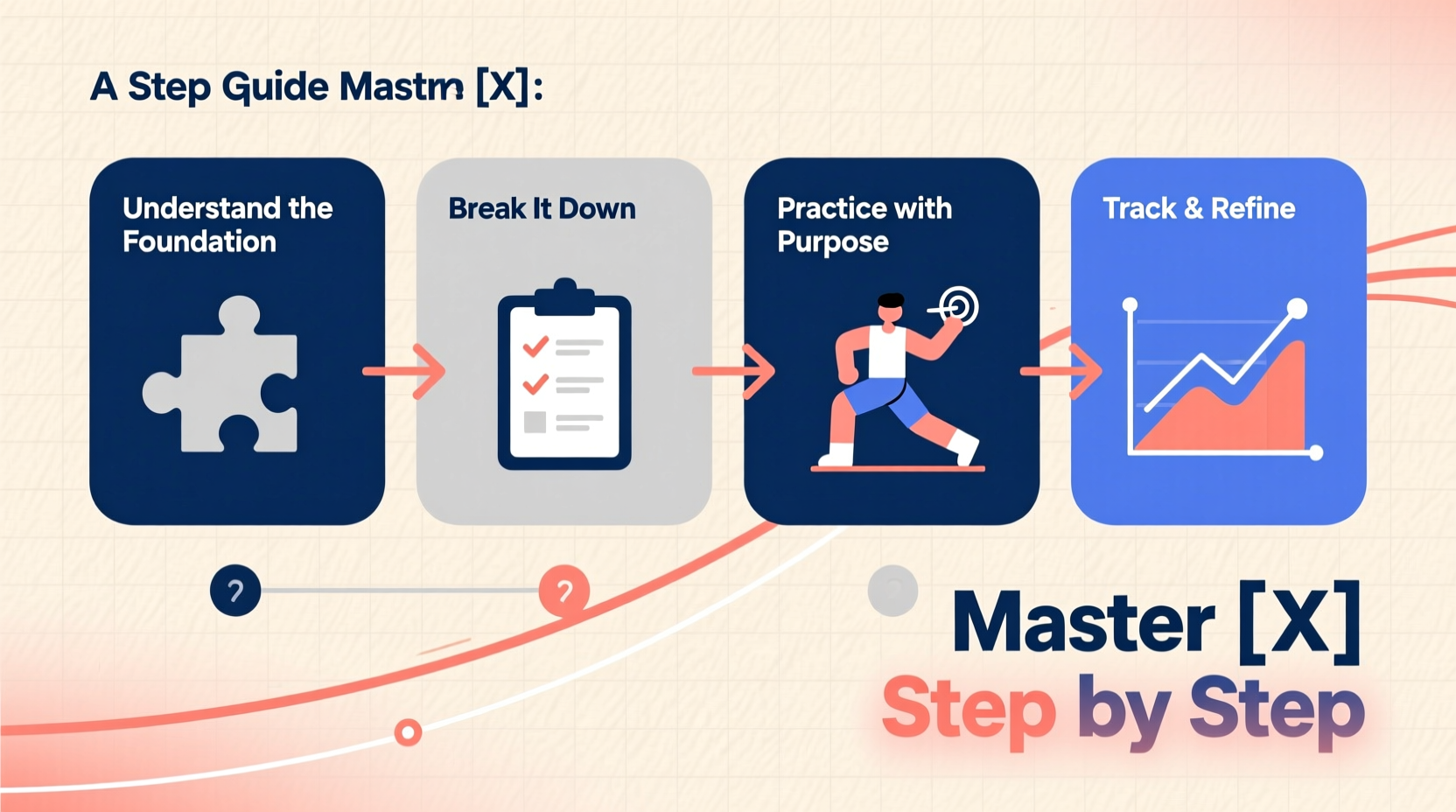
Before diving into execution, clarity is essential. “X” could be launching a side hustle, learning a language, improving public speaking, or mastering a technical skill. The first step is to define it precisely. Vague goals lead to scattered efforts. Instead, use the SMART framework: Specific, Measurable, Achievable, Relevant, and Time-bound.
For example, instead of saying, “I want to get better at coding,” refine it to: “I will build a full-stack web application using React and Node.js within three months, dedicating five hours per week.” This version creates a clear target and timeline.
2. Break It Down: The Step-by-Step Framework
Mastery begins with deconstruction. Identify the core components of “X” and organize them into a logical sequence. This process reduces overwhelm and provides a roadmap for progress.
- Research and map the skill domain – What are the foundational elements? What do experts in this area typically learn first?
- Create a phased plan – Divide the journey into beginner, intermediate, and advanced stages.
- Schedule milestones – Set checkpoints every 2–4 weeks to assess progress.
- Assign weekly tasks – Translate long-term goals into daily or weekly actions.
- Build feedback loops – Plan moments to review what worked and what didn’t.
This structure turns abstract ambition into a repeatable system. For instance, if “X” is writing a book, phase one might include outlining chapters, phase two drafting, and phase three editing with peer reviews.
Real Example: Learning Guitar in 90 Days
Jamie wanted to play her favorite songs within three months. She defined “X” as performing three complete songs confidently in front of friends. Her breakdown looked like this:
- Weeks 1–2: Learn basic chords and transitions
- Weeks 3–4: Practice strumming patterns and timing
- Weeks 5–8: Apply chords to actual songs, starting with simplified versions
- Weeks 9–12: Refine performance, record practice sessions, and rehearse live
By following this sequence and tracking progress every Sunday, she achieved her goal—and even added a fourth song.
3. Optimize Your Environment for Consistent Progress
Success isn’t just about motivation—it’s about design. Your environment shapes behavior more than willpower ever will. If distractions dominate your workspace or resources are out of reach, consistency becomes nearly impossible.
| Factor | Supportive Setup | Pitfalls to Avoid |
|---|---|---|
| Workspace | Dedicated, clutter-free zone with all tools ready | Working from bed or a noisy common area |
| Tools & Materials | Easily accessible (e.g., notebook open, software loaded) | Hunting for passwords or supplies each session |
| Digital Distractions | Phone on silent, website blockers active | Notifications enabled during focused work |
| Social Influence | Accountability partner or community group | Surrounding yourself with chronic procrastinators |
4. Leverage Feedback and Iteration
One of the fastest ways to improve is through timely, specific feedback. Many people practice in isolation, repeating the same errors without realizing it. To accelerate mastery, build mechanisms for external input and self-review.
Use the following checklist to ensure effective iteration:
- Record your attempts (video, audio, or written output)
- Compare against a high-quality model or benchmark
- Identify 1–2 areas for immediate improvement
- Adjust next session based on insights
- Seek expert or peer review monthly
“Progress happens not when you repeat, but when you reflect and adjust.” — Dr. Alan Torres, Cognitive Performance Researcher
In programming, for example, submitting code to platforms like GitHub with peer reviews exposes blind spots. In fitness, filming your form helps correct posture issues invisible in the mirror.
5. Sustain Momentum with Behavioral Triggers
Even the best plans fail without consistency. The key is to anchor your actions to existing habits. Behavioral science shows that stacking new behaviors onto established routines increases adherence.
Instead of relying on motivation, use trigger-action planning:
- After I [existing habit], I will [new action related to X].
- I will do this at the same time and place each day.
- If I miss a day, I commit to doing a 5-minute version the next day to maintain continuity.
Examples:
- After I pour my morning coffee, I will spend 15 minutes studying Spanish flashcards.
- After I finish dinner, I will write 200 words of my manuscript.
This method bypasses decision fatigue and builds automaticity. Within 3–4 weeks, the behavior becomes routine.
Frequently Asked Questions
How long does it take to master something?
There’s no fixed timeline. Mastery depends on complexity, practice quality, and prior experience. While the “10,000-hour rule” is often cited, research suggests that deliberate practice over 3–5 years leads to expert-level competence in most domains. However, functional proficiency—enough to produce value—can happen in 3 to 6 months with focused effort.
What if I keep losing motivation?
Motivation naturally fluctuates. Relying on it is risky. Instead, focus on systems: schedule, environment, and accountability. Track small wins visibly (e.g., a calendar with checkmarks). Each completed task reinforces commitment more than any burst of enthusiasm ever could.
Can I master multiple things at once?
It’s possible but inefficient. Cognitive load research shows that splitting attention reduces depth of learning. Focus on one primary “X” at a time. Once it reaches autopilot level (e.g., you can perform it with minimal effort), consider adding a second skill.
Final Steps: Your Action Plan
To begin mastering your “X,” follow this concise checklist:
- Define “X” using SMART criteria.
- Break it into 3 phases: Foundation, Application, Refinement.
- Design a distraction-free workspace.
- Schedule weekly review sessions to assess progress.
- Attach your practice to an existing daily habit.
- Find one person to share updates with (accountability).
- Commit to 30 days of uninterrupted effort—no perfection required, just consistency.
Remember, mastery isn’t reserved for geniuses or those with endless time. It belongs to the persistent—the ones who show up, adjust course, and keep going. Every expert was once a beginner who decided to follow through.




 浙公网安备
33010002000092号
浙公网安备
33010002000092号 浙B2-20120091-4
Comments
No comments yet. Why don't you start the discussion?