
A strong conclusion is not an afterthought—it’s the final impression your reader carries away. While introductions hook attention, endings shape memory. A well-crafted closing can inspire action, deepen understanding, or spark conversation. Yet too many blogs fizzle out with weak summaries or abrupt sign-offs. Mastering how to end a blog effectively transforms passive readers into engaged participants and turns good content into unforgettable experiences.
The Power of a Purposeful Ending
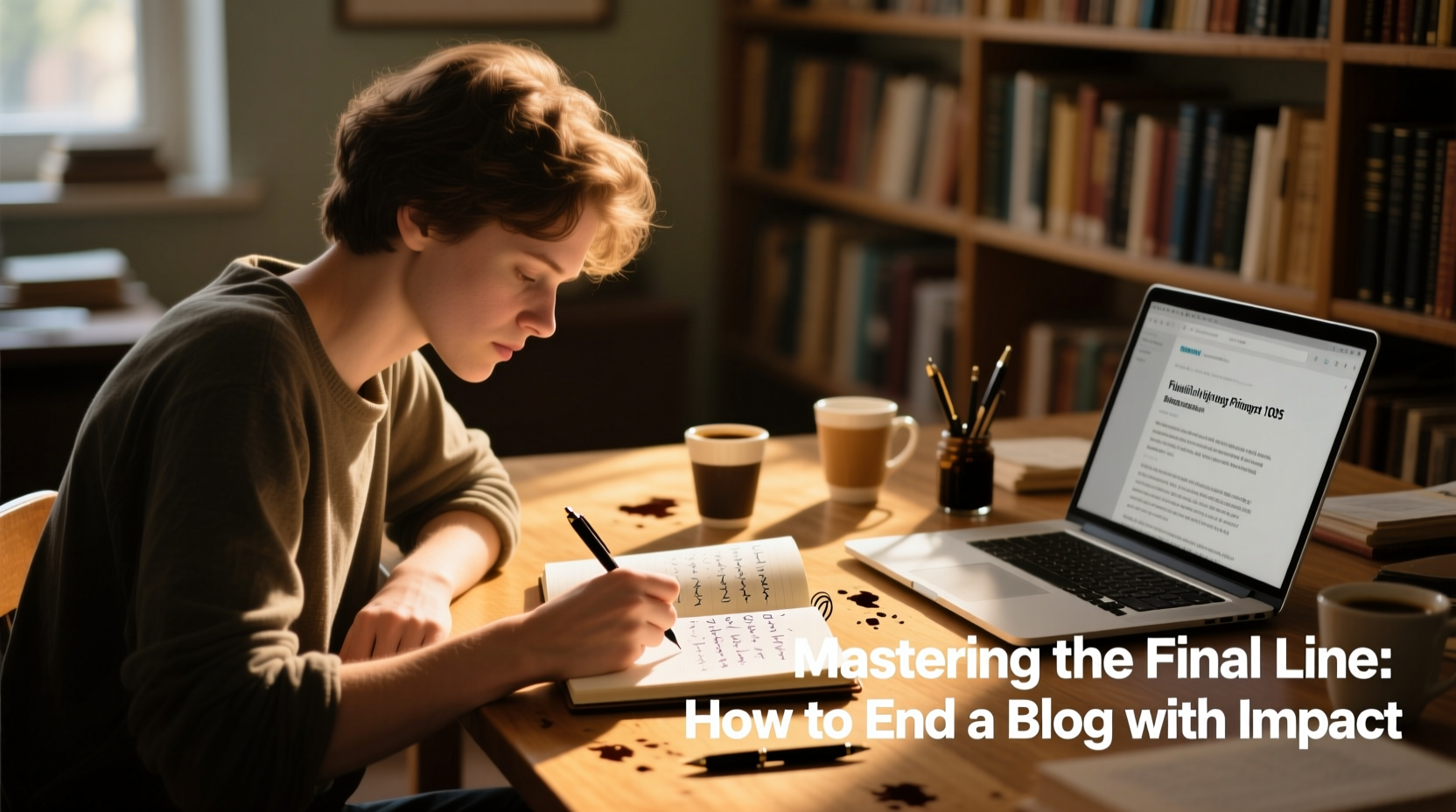
Readers often remember the last part of any piece more vividly than the middle—a psychological phenomenon known as the *recency effect*. This makes your conclusion one of the most influential sections of your article. It’s where you reinforce key ideas, clarify takeaways, and guide next steps. A purposeful ending doesn’t just summarize; it elevates.
Consider what happens when a conclusion lacks direction: readers may feel satisfied but unclear about what to do next. On the other hand, a compelling close can prompt sharing, commenting, subscribing, or even purchasing. The goal isn’t just closure—it’s momentum.
Core Techniques for Impactful Blog Endings
There are several proven methods to craft endings that resonate. The best approach depends on your content type, audience, and intent. Here are five high-impact strategies:
- The Call-to-Action (CTA): Direct readers toward a specific next step—comment, share, download, or explore related content.
- The Thought-Provoking Question: Invite reflection with an open-ended query that encourages deeper thinking or discussion.
- The Story Circle: Return to a theme, anecdote, or image from the introduction to create narrative symmetry.
- The Challenge or Invitation: Empower readers by inviting them to apply what they’ve learned in real life.
- The Visionary Close: Paint a picture of what’s possible if the reader acts on your insights.
Each technique serves a different purpose. Use CTAs for conversion-focused posts, questions for reflective pieces, and story circles for personal narratives.
Real Example: Turning Insight Into Action
One lifestyle blogger wrote a post about overcoming creative burnout. She opened with a confession: she hadn’t painted in eight months. Throughout the article, she shared journaling exercises, boundary-setting tips, and morning rituals. But the ending made the piece memorable.
Rather than summarizing, she closed with: “Pick up a pen today. Not tomorrow. Not when you’re ‘ready.’ Just write one sentence about why creativity matters to you. Then save it somewhere only you can find.”
This simple invitation created urgency and intimacy. Over 400 comments followed, with readers sharing their sentences. The ending didn’t just conclude—it catalyzed community.
“Your last paragraph should echo in the silence after the screen goes dark.” — Sarah Chen, Digital Storytelling Coach
Avoid These Common Conclusion Mistakes
Even experienced writers fall into traps that weaken their endings. Recognizing these pitfalls is half the battle.
| Mistake | Why It Hurts | Better Alternative |
|---|---|---|
| Repeating the intro verbatim | Feels lazy and redundant | Reframe the opening idea with new insight |
| Introducing new information | Confuses readers and undermines closure | Save new points for future posts |
| Ending with “Thanks for reading” | Passive and forgettable | Replace with engagement-driven language |
| Over-apologizing (“I hope this wasn’t too long…”) | Undermines confidence in your message | Stand by your content; own your voice |
| Being overly vague (“Let me know your thoughts!”) | Lacks direction | Ask a specific question or suggest an action |
Step-by-Step Guide to Crafting Your Final Paragraph
Writing a powerful conclusion doesn’t have to be guesswork. Follow this six-step process to refine your closing every time:
- Review your main points. Jot down the 2–3 key takeaways you want readers to remember.
- Identify your goal. Do you want engagement, reflection, or action? Align your tone accordingly.
- Choose your technique. Select one of the five core strategies based on your objective.
- Draft without editing. Write freely, focusing on emotion and resonance over perfection.
- Edit for brevity. Trim excess words. Aim for 75–150 words max.
- Add a forward-looking touch. Suggest what comes next—whether it’s another article, a habit to try, or a mindset shift.
Checklist: Is Your Conclusion Ready?
- ✅ Reinforces the central idea without repeating it word-for-word
- ✅ Matches the tone and depth of the rest of the article
- ✅ Includes a clear next step or thought-provoking prompt
- ✅ Avoids introducing new concepts or statistics
- ✅ Feels satisfying, not rushed or tacked on
- ✅ Uses active, confident language (no hedging or apologies)
FAQ: Frequently Asked Questions About Blog Conclusions
How long should a blog conclusion be?
Ideal length ranges from 75 to 150 words. It should be long enough to deliver impact but short enough to maintain attention. Prioritize clarity over volume.
Should I always include a call-to-action?
Not necessarily. While CTAs are effective for engagement and conversions, some articles benefit more from contemplative closes. Match the ending to your intent: inspire, provoke, or act.
Can I end with a quote?
Yes—but only if it adds unique value. Don’t use quotes as filler. Choose one that deepens the message or offers a fresh perspective, and always attribute it properly.
Conclusion: Leave a Lasting Impression
The way you end your blog determines whether your message lingers or vanishes. A powerful close respects the reader’s time, honors the journey they’ve taken through your words, and points toward what’s next. Whether you challenge them, move them, or simply remind them they’re not alone, make sure your final lines carry weight.
Great conclusions aren’t written—they’re crafted. They demand as much thought and care as any other part of your post. When done right, they transform readers into advocates, ideas into movements, and articles into milestones.




 浙公网安备
33010002000092号
浙公网安备
33010002000092号 浙B2-20120091-4
Comments
No comments yet. Why don't you start the discussion?