
Finding the product of a number is a foundational mathematical skill used in everyday life—from calculating grocery bills to solving complex engineering problems. At its core, multiplication is repeated addition, but mastering it goes beyond memorizing times tables. Understanding how to systematically compute products ensures accuracy, builds confidence, and lays the groundwork for advanced math. This guide breaks down proven techniques, walks through real-world applications, and equips you with strategies to multiply numbers efficiently—regardless of size or complexity.
Understanding the Concept of Product
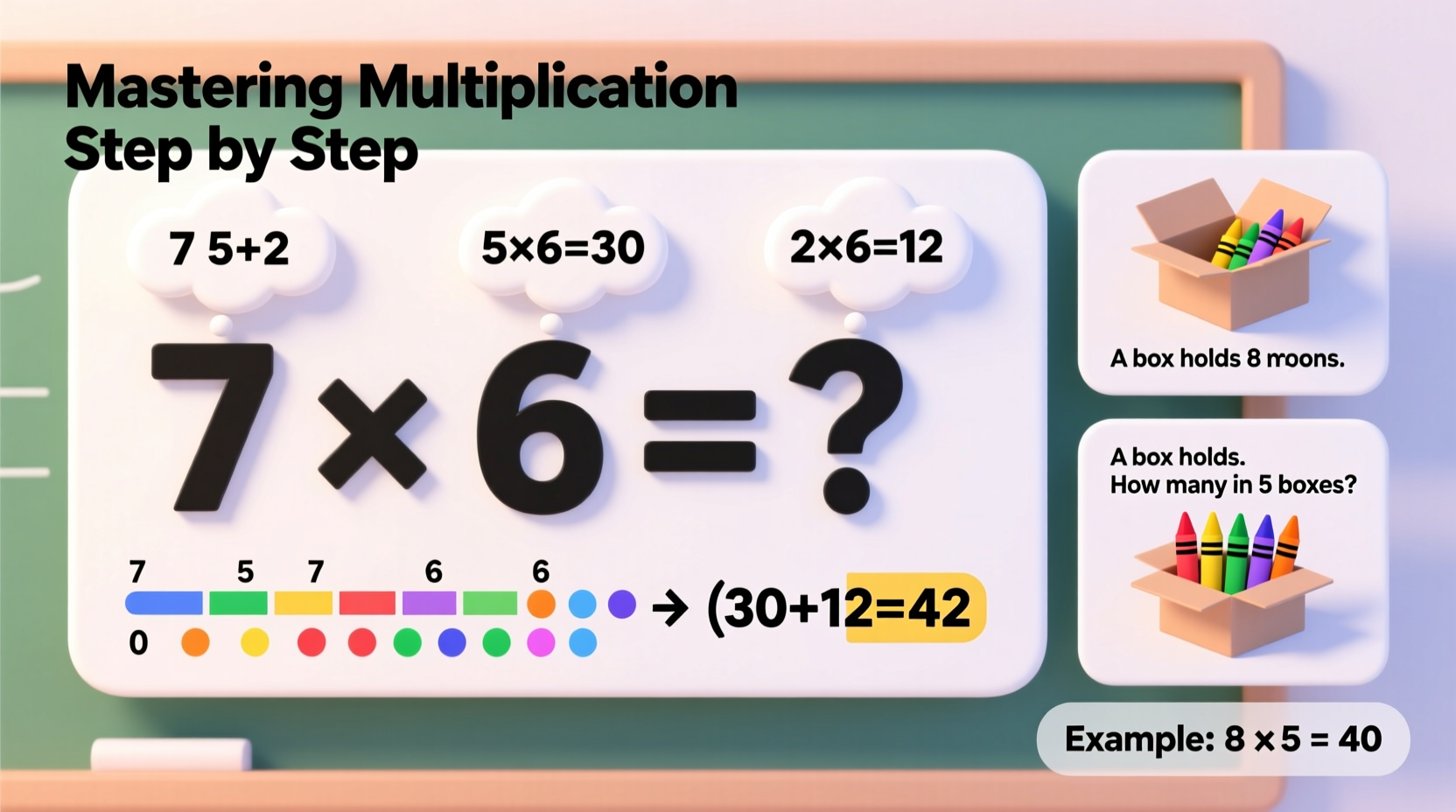
In mathematics, the term product refers to the result obtained when two or more numbers are multiplied together. For example, the product of 4 and 5 is 20 because 4 × 5 = 20. Unlike addition or subtraction, multiplication scales values rapidly, making it essential to apply correct methods, especially as numbers grow larger.
The process becomes more nuanced when dealing with decimals, negative numbers, or multiple factors. However, every multiplication problem follows the same basic principle: combine equal groups to determine a total value. Whether you're multiplying whole numbers or fractions, the approach should be methodical and grounded in understanding—not just rote calculation.
Step-by-Step Methods for Finding Products
Approaching multiplication with a structured method minimizes errors and improves speed over time. Below are three reliable techniques suitable for different levels of complexity.
1. Standard Algorithm (Long Multiplication)
This method works best for multiplying multi-digit numbers. Let’s calculate 123 × 45 using this technique.
- Multiply 123 by 5 (the ones digit): 123 × 5 = 615
- Multiply 123 by 40 (the tens digit): 123 × 4 = 492, then shift one place left → 4,920
- Add the partial products: 615 + 4,920 = 5,535
The final product is 5,535.
2. Lattice Multiplication
A visual alternative that breaks multiplication into smaller steps using a grid. Ideal for learners who benefit from spatial organization.
- Create a grid based on the number of digits (e.g., 2×2 for two 2-digit numbers).
- Place digits along the top and right side.
- Multiply each pair, placing tens above the diagonal and units below.
- Add diagonally from bottom-right to top-left.
This method reduces carrying errors and clarifies place value.
3. Breaking Down Factors (Distributive Property)
Useful for mental math. For instance, to solve 17 × 6:
Break 17 into 10 + 7 → (10 × 6) + (7 × 6) = 60 + 42 = 102.
This strategy leverages simpler calculations and reinforces number sense.
“Fluency in multiplication isn’t about speed—it’s about understanding relationships between numbers.” — Dr. Alan Reyes, Mathematics Education Researcher
Practical Examples in Real-Life Contexts
Math gains relevance when applied meaningfully. Here are three scenarios where finding products is essential.
Example 1: Grocery Shopping Budget
You buy 6 cans of soup at $3.25 each. What’s the total cost?
Product = 6 × 3.25 = 19.50
Answer: $19.50. Use decimal alignment carefully during multiplication.
Example 2: Area Calculation
A rectangular garden measures 24 feet by 18 feet. To find the area, multiply length by width.
24 × 18 = (20 + 4)(10 + 8) = 200 + 160 + 40 + 32 = 432 square feet.
Mini Case Study: Small Business Inventory
Sophia runs a boutique selling handmade candles. Each batch contains 15 jars, and she produces 8 batches per week. To forecast monthly supply:
Weekly product: 15 × 8 = 120 jars
Monthly estimate (4 weeks): 120 × 4 = 480 jars
Accurate multiplication helps Sophia manage materials, avoid shortages, and plan sales promotions effectively.
Common Pitfalls and How to Avoid Them
Even experienced individuals make mistakes when computing products under pressure. Awareness prevents recurring errors.
| Pitfall | Why It Happens | How to Fix It |
|---|---|---|
| Incorrect place value alignment | Forgetting to shift digits left in long multiplication | Use placeholders (zeros) clearly; write partial products with proper spacing |
| Miscounting decimal places | Overlooking total decimal digits in factors | Count decimal places before multiplying; apply them after computing the whole number product |
| Sign errors with negatives | Confusing rules for negative × negative vs. negative × positive | Memorize: Same signs → positive; Different signs → negative |
Checklist: Ensuring Accurate Multiplication Every Time
Follow this checklist to verify your work and boost confidence in results.
- ☑ Identify all factors clearly (including signs and decimals)
- ☑ Choose the most appropriate method (mental math, standard algorithm, etc.)
- ☑ Align place values correctly during written multiplication
- ☑ Double-check partial products and carries
- ☑ Estimate the answer first to assess reasonableness
- ☑ Verify using inverse operation (divide product by one factor to get the other)
Frequently Asked Questions
What does 'find the product' mean in math?
It means to perform multiplication. If asked to find the product of 7 and 9, you calculate 7 × 9 = 63.
Can the product of two numbers be smaller than both?
Yes—when working with fractions or decimals less than 1. For example, 0.5 × 0.4 = 0.2, which is smaller than both original numbers.
Is multiplication commutative? Does order matter?
No, order does not affect the product. The commutative property states that a × b = b × a. So 3 × 8 equals 8 × 3 (both give 24).
Conclusion: Build Confidence Through Practice
Mastery of multiplication is not an overnight achievement—it develops through consistent practice and thoughtful application. Whether you're balancing a budget, designing a room layout, or advancing in algebra, knowing how to accurately find the product of a number empowers decision-making and problem-solving. Start with small problems, use structured methods, learn from mistakes, and gradually tackle more complex challenges. With time, what once required careful steps will become second nature.




 浙公网安备
33010002000092号
浙公网安备
33010002000092号 浙B2-20120091-4
Comments
No comments yet. Why don't you start the discussion?