
Creativity isn’t reserved for artists or inventors. It’s a skill that thrives in everyday decisions—from resolving conflicts at work to planning meals or organizing your schedule. The ability to generate original, useful ideas on demand is one of the most valuable assets in both personal and professional life. Yet many people believe creativity is an elusive trait they simply don’t possess. The truth is, creativity can be cultivated through structured approaches and consistent practice. By mastering three core creative strategies—reframing problems, leveraging constraints, and combining unrelated concepts—you can unlock innovative solutions in real time and enhance your daily effectiveness.
Reframe Problems to Unlock New Solutions
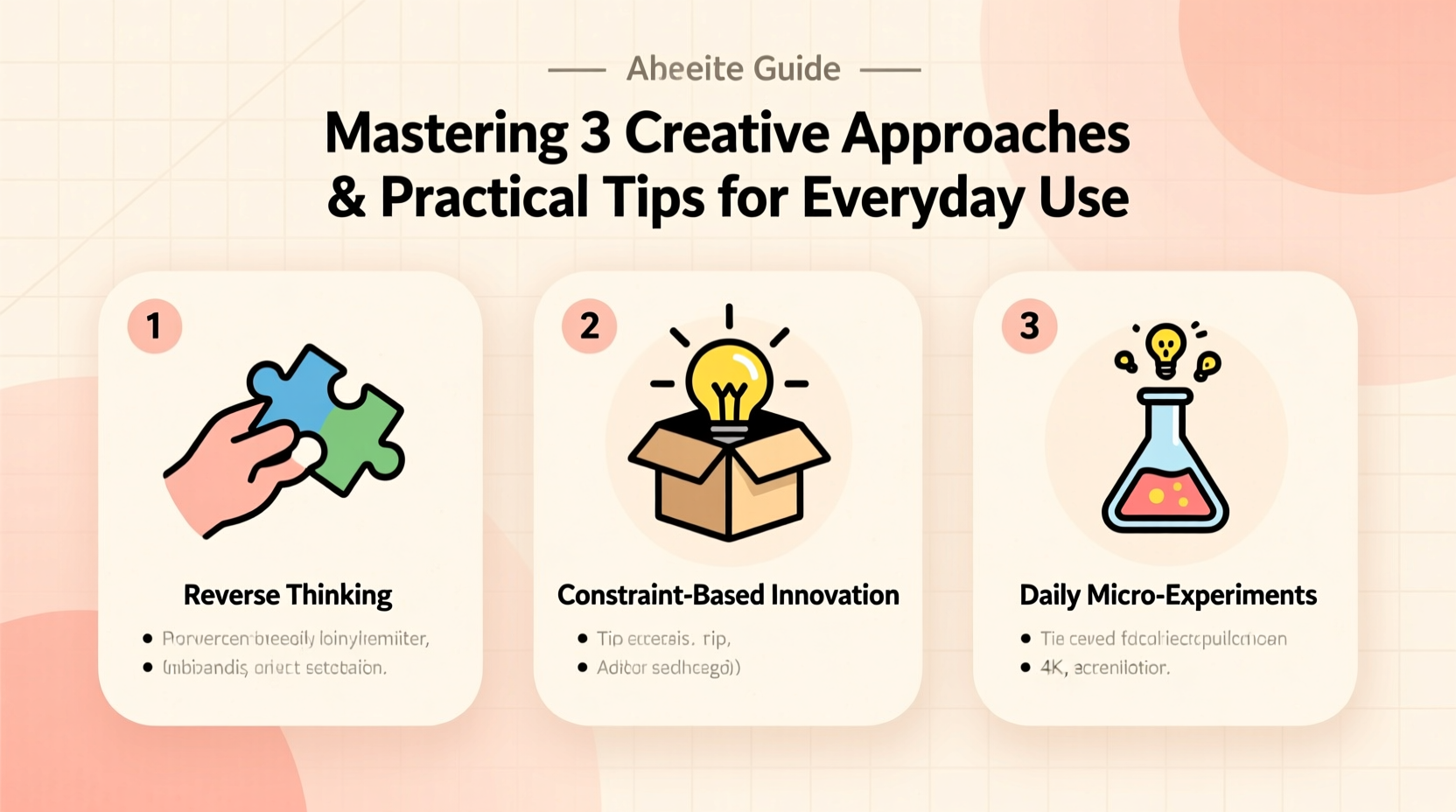
One of the most powerful yet underused tools in creative thinking is reframing. Instead of accepting a challenge at face value, ask: *How else can I look at this?* Reframing shifts your perspective and exposes hidden opportunities. For example, rather than asking, “How can I get my team to meet deadlines?” try, “How can we design a workflow that makes meeting deadlines effortless?” The second question invites systemic change instead of placing pressure on individuals.
This approach draws from cognitive psychology, where researchers have found that the way a problem is framed significantly influences the range of solutions generated. A study by Amos Tversky and Daniel Kahneman demonstrated that identical medical treatments were perceived differently based solely on whether outcomes were described in terms of survival rates versus mortality rates. The data was unchanged—but perception shifted dramatically.
A Step-by-Step Guide to Effective Reframing
- Write down the current definition of the problem.
- Identify assumptions embedded in that definition (e.g., “We must do X because it’s always been done that way”).
- Flip the problem: Turn a negative into a positive, or a limitation into an opportunity.
- Ask the “Why?” five times to reach the root issue.
- Rewrite the problem in at least three alternative ways.
“Creativity is just connecting things. When you ask creative people how they did something, they feel a little guilty because they didn’t really do it, they just saw something.” — Steve Jobs
Leverage Constraints to Fuel Innovation
Contrary to popular belief, unlimited freedom often stifles creativity. Without boundaries, options become overwhelming, leading to decision paralysis. Constraints, on the other hand, focus attention and force resourcefulness. Consider Dr. Seuss, who famously wrote Green Eggs and Ham using only 50 unique words after a bet with his publisher. The constraint didn’t limit his creativity—it catalyzed it.
In business, constraints are equally powerful. Startups often out-innovate larger companies not because they have more resources, but because they have fewer. Forced to prioritize, they experiment faster and pivot more efficiently. You can apply this principle daily by imposing artificial limits: write a report in 200 words, solve a client issue with zero budget, or plan a week’s meals using only five ingredients.
| Constraint Type | Practical Application | Expected Creative Benefit |
|---|---|---|
| Time | Set 10-minute brainstorming sprints | Reduces overthinking; increases idea flow |
| Budget | Solve a task with $0 spending | Encourages resourcefulness and barter thinking |
| Materials | Use only existing tools or items at hand | Promotes improvisation and repurposing |
| Format | Explain a complex topic in a 3-sentence email | Sharpens clarity and prioritization |
Mini Case Study: The 48-Hour Product Launch
A small software team needed to demonstrate a prototype to investors in two days. With no working code completed, traditional development was impossible. Instead, they reframed the goal: rather than building a functional product, they created a clickable mockup using presentation slides. They imposed strict constraints—only 10 features, no backend logic, and a single user journey. The result? A compelling demo that secured seed funding. The constraint of time forced them to focus on user experience over technical perfection, ultimately delivering a more persuasive pitch.
Combine Unrelated Concepts to Spark Original Ideas
Most breakthrough innovations come not from entirely new ideas, but from combining existing ones in novel ways. This technique, known as “combinatory play,” was a favorite of Albert Einstein. He once said, “I rarely think in words at all. A thought comes, and I may try to express it in words afterward.” His insights often emerged from imagining physical experiences—like riding alongside a beam of light—which blended physics with imagination.
To apply this method, select two seemingly unrelated domains and explore intersections. For example: What does customer service have in common with gardening? Both require patience, nurturing, and regular maintenance. Could a “customer care calendar” be designed like a planting schedule? Or consider merging productivity with music: Can Pomodoro sessions follow a rhythmic structure like verses and choruses?
Checklist: Daily Creativity Practice
- Reframe one challenge each morning using a different perspective.
- Impose a small constraint on a routine task (e.g., reply to emails in under 50 words).
- Combine two unrelated objects or ideas and sketch a potential application.
- At day’s end, reflect: Which solution felt unexpectedly effective?
- Share one original idea with a colleague or friend to test its clarity.
Common Pitfalls and How to Avoid Them
Even with the right techniques, creative efforts can falter. One major obstacle is the expectation of immediate brilliance. Most ideas aren’t home runs—they’re base hits that evolve with iteration. Another trap is self-censorship. People often dismiss ideas too quickly because they seem silly or impractical. But early-stage creativity thrives on quantity, not quality. Judgment should come later.
Environment also plays a crucial role. A cluttered workspace, constant interruptions, or lack of downtime can block insight. Research shows that moments of inspiration often occur during low-focus activities like walking, showering, or commuting. Schedule “thinking breaks” deliberately to allow subconscious processing.
“The best way to have a good idea is to have a lot of ideas.” — Linus Pauling, Nobel Laureate
FAQ
Can anyone become more creative, or is it an innate talent?
Creativity is a skill, not a fixed trait. While some people may have a natural inclination, everyone can improve through deliberate practice, exposure to diverse stimuli, and the use of structured techniques like reframing and combinatorial thinking.
How do I stay creative under pressure?
Pressure narrows focus, which can suppress divergent thinking. Counteract this by using quick creativity triggers: ask “What’s the opposite of the obvious solution?” or impose a playful constraint (“How would a child solve this?”). Even 90 seconds of reframing can shift your mental state.
Is brainstorming still effective?
Traditional group brainstorming has limitations—social loafing and production blocking reduce output. More effective alternatives include brainwriting (writing ideas silently before sharing) or staggered ideation (individual thinking first, followed by group discussion). These methods generate more diverse and higher-quality ideas.
Conclusion: Make Creativity a Daily Habit
Mastery doesn’t come from occasional bursts of inspiration—it comes from consistent application. The three approaches outlined here—reframing, embracing constraints, and combining disparate ideas—are not one-time tricks but lifelong practices. Integrate them into your daily routine, and over time, you’ll find yourself solving problems faster, communicating more effectively, and approaching challenges with curiosity rather than resistance. Creativity isn’t about waiting for the muse; it’s about showing up with the right mindset and tools, every single day.




 浙公网安备
33010002000092号
浙公网安备
33010002000092号 浙B2-20120091-4
Comments
No comments yet. Why don't you start the discussion?