
Success isn’t accidental. It’s the result of deliberate choices, consistent effort, and strategic planning. Whether you're aiming to launch a business, improve your health, or advance in your career, the journey from aspiration to achievement requires more than motivation—it demands a system. Many people set goals but fall short because they lack clarity, structure, or resilience. The difference between those who succeed and those who don’t often comes down to execution.
This guide breaks down the real-world mechanics of goal achievement. From defining what matters most to navigating setbacks, these principles are grounded in behavioral psychology, performance research, and proven frameworks used by high achievers across industries.
Clarify Your Vision with Precision
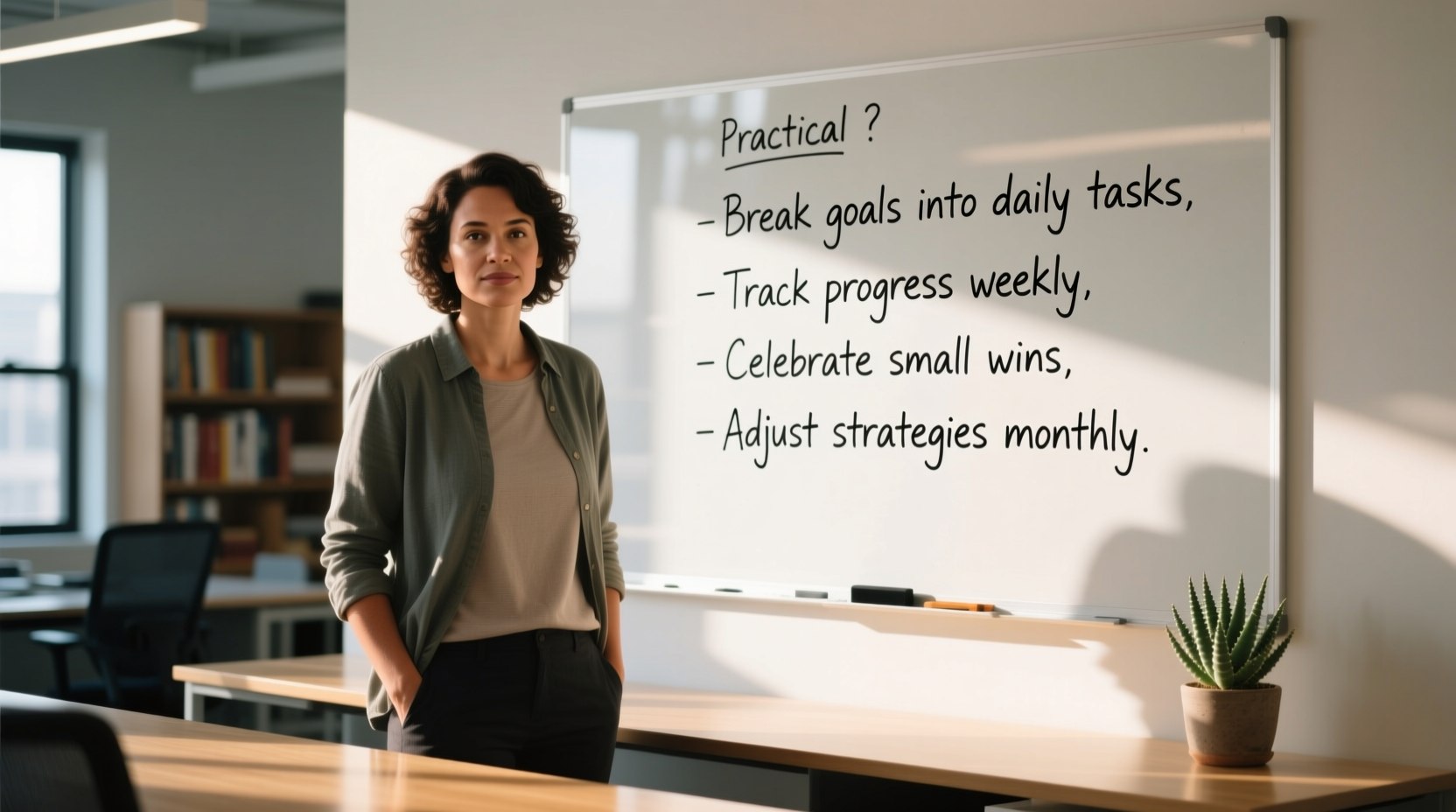
Vague goals lead to vague results. Saying “I want to be successful” or “I’d like to get healthier” doesn’t provide direction. To move forward, you must define what success looks like in measurable, specific terms.
Use the SMART framework—Specific, Measurable, Achievable, Relevant, Time-bound—to transform abstract desires into actionable targets. For example, instead of “get fit,” reframe it as: “Lose 15 pounds in six months by exercising four times a week and tracking daily calorie intake.” This version is clear, trackable, and time-sensitive.
Break Goals into Manageable Systems
Big goals can feel overwhelming. The key is not to focus on the end result but on the process that leads there. James Clear, author of *Atomic Habits*, emphasizes that goals are about outcomes, but systems are about behaviors. Winning the game is a goal; practicing every day is part of the system.
For instance, if your goal is to write a book, your system should include daily writing sessions, research blocks, and regular feedback loops. Success accumulates through small, repeatable actions—not grand gestures.
“You do not rise to the level of your goals. You fall to the level of your systems.” — James Clear
Step-by-Step Guide to Building Effective Goal Systems
- Define the outcome: What exactly do you want to achieve?
- Reverse-engineer milestones: Break the goal into quarterly, monthly, and weekly targets.
- Design daily habits: Identify the smallest actions that support progress.
- Schedule them: Attach new habits to existing routines (e.g., journal after morning coffee).
- Track consistently: Use a journal, app, or calendar to monitor adherence.
- Review weekly: Adjust based on what’s working or missing.
Avoid Common Pitfalls That Derail Progress
Even well-intentioned efforts fail when hidden obstacles go unchecked. Awareness is the first defense. Below is a comparison of common mistakes and their effective alternatives.
| Don’t | Do |
|---|---|
| Set goals without deadlines | Assign clear timelines to each milestone |
| Rely solely on motivation | Build accountability through tracking or partners |
| Go all-in too fast | Start small and scale gradually |
| Ignore setbacks | Analyze failures and adjust strategy |
| Work in isolation | Seek mentorship or peer support |
Real Example: From Idea to Launch in 90 Days
Sophia, a marketing professional, wanted to start an online course teaching digital storytelling. Instead of waiting for the “perfect moment,” she applied a structured approach:
- Week 1–2: Defined her audience and outlined course modules.
- Week 3–6: Recorded one module per week while maintaining her job.
- Week 7–8: Created sales pages and built an email list via LinkedIn outreach.
- Week 9–12: Soft-launched to 50 beta students, collected feedback, refined content.
By focusing on weekly outputs rather than the final product, Sophia launched her course within three months. She earned $4,200 in the first month and gained confidence to expand her offerings. Her success wasn’t due to extra time or resources—it came from consistency and clarity.
Stay Accountable and Measure Progress
Tracking progress increases commitment. A study published in the American Journal of Health Promotion found that participants who logged their behavior were twice as likely to achieve their goals compared to those who didn’t.
Create a simple dashboard—digital or paper-based—that includes:
- Key metrics (e.g., workouts completed, pages written, revenue generated)
- Milestone dates
- Weekly reflections (What worked? What needs change?)
Additionally, share your goals with someone who will check in regularly. Accountability partners increase follow-through by adding social pressure and encouragement.
Goal Achievement Checklist
- Define your goal using SMART criteria
- Identify potential obstacles and solutions
- Break the goal into phases or milestones
- Select tools for tracking (journal, app, spreadsheet)
- Find an accountability partner or group
- Schedule daily or weekly action steps
- Track progress every 7 days
- Adjust tactics if falling behind
- Celebrate small wins to maintain momentum
- Conduct a monthly review of results
- Reassess timeline and feasibility
- Update plan based on lessons learned
FAQ: Common Questions About Goal Success
How do I stay motivated when progress is slow?
Motivation fades; discipline sustains. Focus on identity-based habits—see yourself as someone who writes, exercises, or learns daily, regardless of immediate results. Track small wins to build evidence of progress, and revisit your “why” regularly to reconnect with purpose.
What if my goal feels too big to start?
Reduce friction by starting with a two-minute version of the habit. Want to run a marathon? Start by putting on your running shoes. Want to write a book? Open the document and write one sentence. Action precedes motivation, not the other way around.
Should I have multiple goals at once?
Limited focus drives better results. Research shows multitasking reduces efficiency by up to 40%. Prioritize one major goal at a time, especially if it requires significant energy or learning. Secondary goals can be maintained as habits (e.g., exercise, reading), but avoid launching several big projects simultaneously.
Conclusion: Make Success Inevitable
Mastering how to make it to practical tips for achieving your goals successfully isn’t about shortcuts—it’s about sustainability. Clarity, systems, accountability, and resilience form the foundation of lasting achievement. The most successful people aren’t necessarily the most talented or lucky; they’re the ones who keep going when others stop.
Your next breakthrough begins with a single decision: to act with intention. Revisit your goals, refine your plan, and commit to showing up—even slightly—every day. Momentum builds quietly, then suddenly.




 浙公网安备
33010002000092号
浙公网安备
33010002000092号 浙B2-20120091-4
Comments
No comments yet. Why don't you start the discussion?