
Learning a new skill—whether it’s playing the guitar, coding, cooking, or rock climbing—can be both exhilarating and intimidating. The initial excitement often gives way to doubt: “Can I really do this?” The truth is, everyone who has ever mastered a skill started exactly where you are now—with no experience, just curiosity. Confidence isn’t something you’re born with; it’s built through action, mindset, and consistent effort. With the right approach, you can not only start strong but also sustain momentum and grow into genuine mastery.
The Mindset of a Beginner Who Succeeds
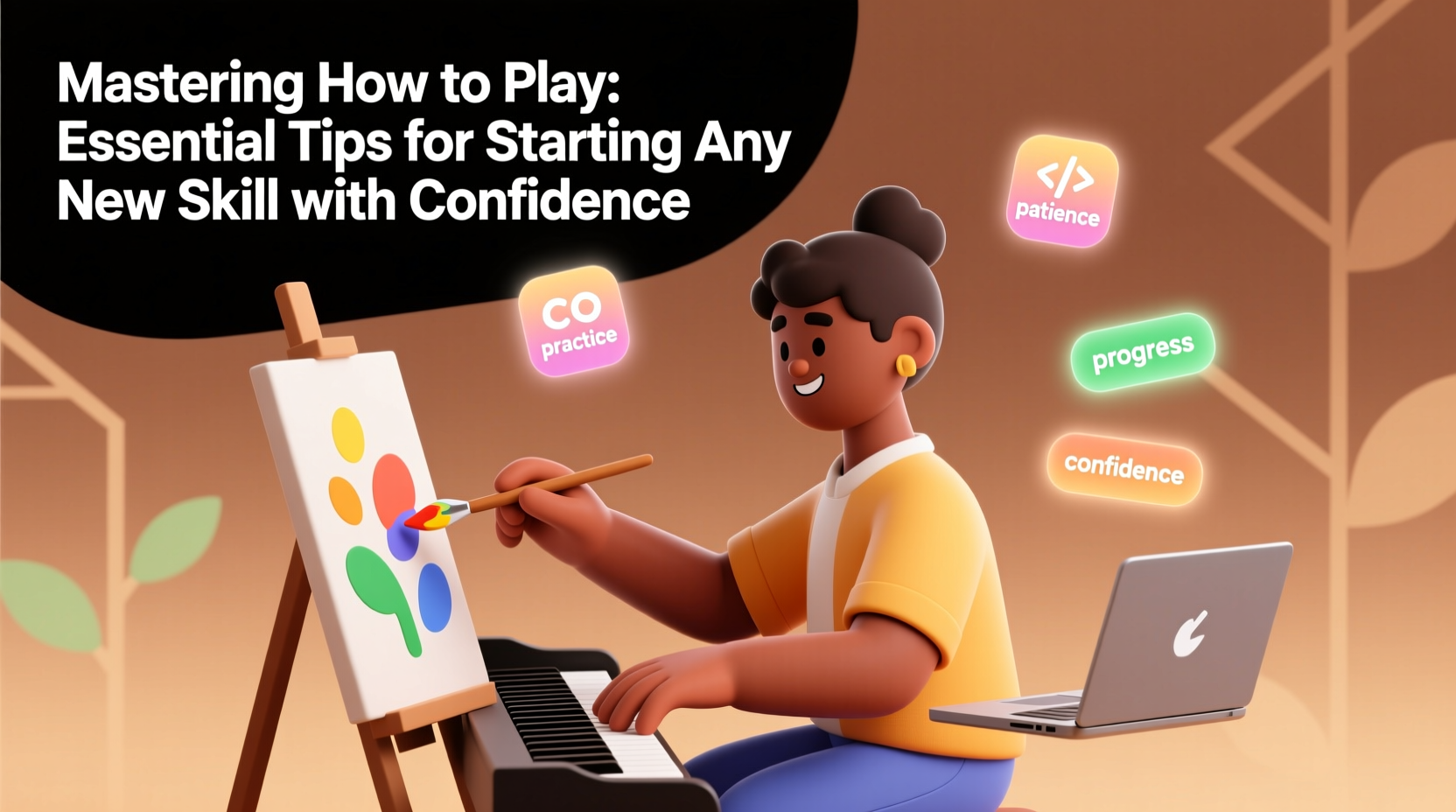
Success in learning begins long before the first practical step—it starts in your mind. A fixed mindset assumes ability is static: “I’m just not musical” or “I’ve never been good at math.” In contrast, a growth mindset sees ability as something that develops over time. Research by psychologist Carol Dweck shows that individuals with a growth mindset are more resilient, embrace challenges, and ultimately achieve higher levels of skill acquisition.
“We all start as beginners. The difference between those who succeed and those who quit is not talent—it’s persistence and the belief that effort compounds.” — Dr. Lena Patel, Cognitive Learning Specialist
To cultivate this mindset, reframe mistakes as data points, not failures. Every misstep teaches you what doesn’t work, narrowing the path toward what does. Instead of thinking, “I messed up,” try, “Now I know one way to adjust.” This subtle shift transforms frustration into forward motion.
Design Your First 30 Days for Momentum
The first month of learning sets the tone for everything that follows. It’s not about achieving mastery—it’s about building habits, reducing friction, and creating small wins. Focus on consistency, not intensity. Practicing for 15 minutes daily is far more effective than two hours once a week.
Step-by-Step Guide: Launch Your Skill Journey (Weeks 1–4)
- Week 1: Explore and Commit – Spend time understanding why this skill matters to you. Watch tutorials, read beginner guides, and define your \"why.\" Then commit to a daily micro-practice (e.g., 10 minutes).
- Week 2: Structure Your Practice – Break the skill into its smallest components. For example, if learning piano, focus on hand positioning and single-note melodies. Use a timer to stay focused.
- Week 3: Track and Adjust – Keep a simple log: date, duration, focus area, and one thing learned. Review weekly to identify patterns and adjust goals.
- Week 4: Celebrate Progress – Perform a mini self-assessment. Can you do something today that was hard a month ago? Acknowledge it. Reward yourself with reflection, not just results.
This timeline prevents overwhelm and builds a feedback loop that reinforces motivation. The goal is not flawless execution but steady engagement.
Essential Practices That Accelerate Learning
Not all practice is equal. Deliberate practice—focused, goal-oriented, and feedback-driven—is what separates casual dabblers from rapid improvers. Here are key practices to integrate from day one:
- Chunk the skill: Break complex abilities into manageable parts. Want to learn Spanish? Start with greetings, then numbers, then basic sentence structure.
- Use spaced repetition: Review material at increasing intervals to strengthen memory retention. Apps like Anki leverage this principle effectively.
- Seek immediate feedback: Whether through a coach, app, or recording yourself, knowing what needs correction speeds improvement.
- Teach someone else: Explaining a concept—even to an imaginary audience—reveals gaps in understanding and deepens learning.
| Practice Type | Effectiveness | Best For |
|---|---|---|
| Passive Watching | Low | Initial inspiration |
| Mindless Repetition | Medium | Rote memorization |
| Deliberate Practice | High | Skill mastery |
| Teaching Others | Very High | Deep understanding |
Avoid These Common Beginner Traps
Many learners sabotage their progress without realizing it. Awareness of these pitfalls can save months of frustration:
- Over-preparing: Buying every tool, book, or course before taking action leads to paralysis by analysis. Start with the bare minimum.
- Comparing too soon: Watching experts perform can be motivating, but comparing your Day 1 to someone’s Year 3 is demoralizing. Focus on your own curve.
- Skipping fundamentals: Jumping ahead to flashy techniques (like guitar solos or advanced coding) without mastering basics leads to shaky foundations.
- Practicing without rest: The brain consolidates learning during downtime. Overtraining causes burnout and diminished returns.
Real Example: From Clumsy to Confident—Maya Learns Pottery
Maya, a graphic designer in her 30s, had always admired handmade ceramics but assumed she “wasn’t crafty.” She enrolled in a beginner pottery class with low expectations. Her first attempts collapsed on the wheel. She felt embarrassed and nearly quit after week two.
Instead, she applied a few key principles: she committed to attending every class, practiced centering clay for just five minutes at home using dough, and asked her instructor for one specific tip each session. By week six, she centered clay consistently. By week ten, she threw her first intact bowl. It wasn’t perfect—but it was hers.
What changed? Not talent. She shifted her focus from outcome to process. She celebrated small improvements and stopped measuring herself against others. Today, Maya sells her pieces at local markets—and credits her success not to natural ability, but to showing up, staying curious, and trusting the process.
Your Action Checklist: Start Strong, Stay Consistent
Before your next practice session, run through this checklist to set yourself up for success:
- ✅ Define your \"why\" – Why does this skill matter to you?
- ✅ Gather only essential tools – Avoid over-investing upfront.
- ✅ Schedule practice time – Treat it like a non-negotiable appointment.
- ✅ Break the skill into 3 starter components – Focus on one at a time.
- ✅ Set a 30-day milestone – Something achievable, like “play a full song” or “write a 100-word story in a new language.”
- ✅ Find a feedback source – Teacher, peer, app, or video review.
- ✅ Prepare to be awkward – Embrace the beginner phase as necessary and temporary.
Frequently Asked Questions
How long does it take to become confident in a new skill?
Confidence typically emerges within 20 to 50 hours of deliberate practice. While mastery takes much longer, noticeable improvement—and the confidence that follows—often appears within the first month of consistent effort.
What if I don’t see progress after a few weeks?
Lack of visible progress usually stems from inconsistent practice, unclear goals, or insufficient feedback. Revisit your method: Are you practicing with focus? Are you tracking small wins? Consider adjusting your approach rather than quitting.
Should I learn alone or with a group?
Both have value. Solo practice builds discipline and self-awareness. Group settings provide accountability, motivation, and diverse perspectives. A balanced approach—personal drills plus occasional collaboration—often yields the best results.
Start Playing, Start Growing
Every expert was once a beginner who decided to keep going. Mastery isn’t reserved for the gifted; it’s earned by those willing to show up, make mistakes, and try again. The act of beginning—of placing your hands on the instrument, typing your first line of code, or stepping onto the mat—is the most courageous and important move you’ll make.
You don’t need permission. You don’t need perfection. You just need to start, with curiosity as your compass and patience as your guide. The skill you’re learning isn’t just about the outcome—it’s about becoming someone who learns, adapts, and grows.




 浙公网安备
33010002000092号
浙公网安备
33010002000092号 浙B2-20120091-4
Comments
No comments yet. Why don't you start the discussion?