
Learning to play the guitar is one of the most rewarding skills a person can develop. Whether you dream of performing on stage, writing songs, or simply playing around a campfire, the guitar offers endless creative possibilities. But like any instrument, mastery begins with solid fundamentals. For absolute beginners, the early stages are critical—not just for building technique, but for forming habits that support long-term progress. This guide breaks down the essential steps, tools, and mindsets needed to start strong.
1. Choose the Right Guitar and Gear
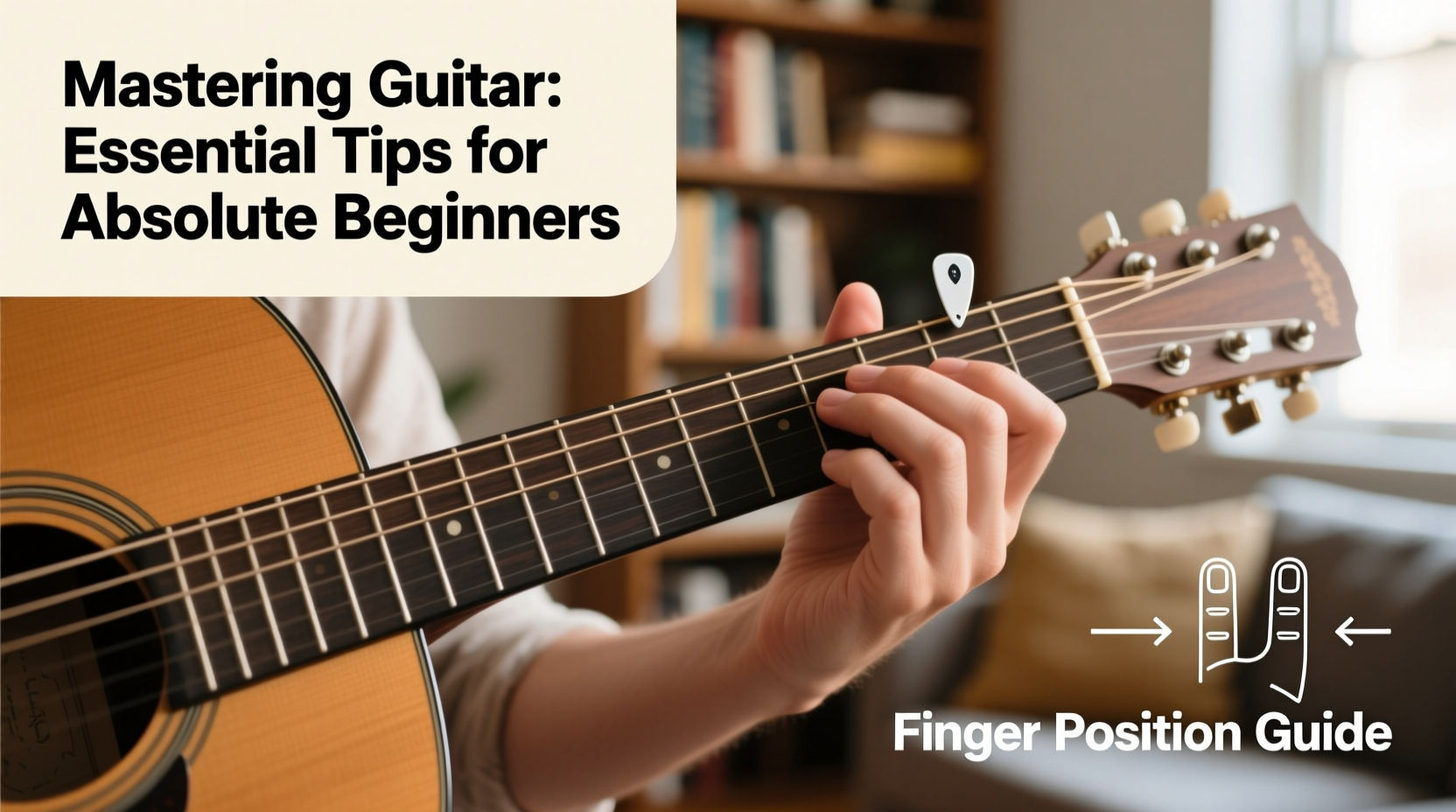
The first decision—your choice of guitar—can significantly influence your learning experience. While it's tempting to buy the cheapest option available, investing in a beginner-friendly instrument makes a real difference in comfort and motivation.
Beginners typically choose between acoustic and electric guitars. Acoustic models are portable and don’t require amplifiers, making them ideal for self-directed learners. Electric guitars have lighter strings and lower action (string height), which may be easier on the fingers at first, but they require additional gear like an amp and cables.
| Type | Best For | Drawbacks |
|---|---|---|
| Acoustic | Singer-songwriters, folk, strumming | Higher string tension, harder on fingertips |
| Electric | Rock, blues, jazz, lead playing | Requires amp, more accessories |
| Classical | Fingerstyle, classical music | Nylon strings limit genre versatility |
Beyond the guitar, you’ll need a few essentials: a tuner (clip-on or app-based), a strap, extra strings, and a case or gig bag. A footstool or supportive chair helps maintain proper posture during seated practice.
2. Master Proper Posture and Hand Positioning
Good posture prevents strain and supports accurate playing. Sit upright on a firm chair without armrests. Rest the curve of the guitar’s body on your dominant leg (right leg for right-handed players). Tilt the neck slightly upward at about a 30-degree angle. Keep your back straight and shoulders relaxed.
Your fretting hand (left hand for right-handed players) should approach the neck with the thumb centered behind it. Fingers should press the strings using their tips, just behind the frets—not directly on them—to minimize buzzing and effort. Avoid flattening your fingers or letting your thumb hang over the top of the neck.
The picking hand (right hand) rests lightly on the bridge or soundboard. When using a pick, hold it between your thumb and index finger with only a small portion extending out. For fingerpicking, anchor your palm near the bridge and use your fingers in sequence: thumb (bass strings), index, middle, and ring fingers (treble strings).
“Posture isn’t just about comfort—it shapes your tone, speed, and endurance from day one.” — Daniel Reyes, Classical Guitar Instructor, Berklee College of Music
3. Learn Your First Chords and Transitions
Most beginners start with open chords—chords that use open strings and are played in the first three frets. The most practical starting point includes G, C, D, E minor, and A minor. These chords appear in countless popular songs across genres.
Practice each chord slowly, ensuring every note rings clearly. Strum each string individually to check for muted or buzzing tones. Once comfortable with individual shapes, focus on switching between chords. Start with simple pairings like Em to Am, then progress to G to C or D to A.
Step-by-Step: Learning the G Major Chord
- Place your ring finger on the third fret of the low E string (6th string).
- Put your middle finger on the second fret of the A string (5th string).
- Position your index finger on the second fret of the high E string (1st string).
- Strum all six strings. Adjust finger placement if any notes buzz or mute.
- Practice transitioning to C major by lifting your ring finger and placing all three fingers in the C shape.
4. Build a Daily Practice Routine
Consistency beats intensity when learning guitar. Practicing 15–20 minutes daily yields better results than two-hour weekly sessions. Structure your time to cover multiple areas: warm-up, technique, chord changes, rhythm, and song application.
A balanced beginner routine might look like this:
- Warm-up (3 min): Finger exercises or chromatic runs across the fretboard.
- Chord Practice (5 min): Focus on two chords and transitions between them.
- Rhythm Training (4 min): Use a metronome to strum simple patterns (down-down-up-up-down).
- Song Application (5 min): Play along with a simple song using learned chords.
Mini Case Study: Sarah’s First Month
Sarah, a 28-year-old office worker with no prior music experience, committed to 20 minutes of daily practice. She started with Em and G, spending the first week mastering clean versions and smooth transitions. By week three, she added C and D and began playing “Horse with No Name” by America. Though her fingers ached initially, consistent short sessions built calluses within ten days. By the end of the month, she played through three songs confidently and reported feeling energized after each session. Her key insight: “Focusing on accuracy over speed made everything clearer.”
5. Avoid Common Beginner Mistakes
New guitarists often unknowingly adopt habits that slow progress. Recognizing these pitfalls early saves frustration and relearning later.
| Mistake | Why It’s Harmful | Solution |
|---|---|---|
| Pressing too hard on strings | Causes fatigue and tuning instability | Use minimal pressure needed for clear tone |
| Skipping the metronome | Leads to inconsistent timing | Practice all exercises with steady tempo |
| Only learning full songs | Misses foundational technique | Break songs into drills (e.g., chord changes only) |
| Ignoring maintenance | Dull strings and poor setup hinder playability | Change strings every 1–2 months; get annual setup |
FAQ
How long does it take to play a song comfortably?
With regular practice, most beginners can play simple songs like “Knockin’ on Heaven’s Door” or “Bad Moon Rising” within 3–6 weeks. Progress depends on consistency, not talent.
Why do my fingers hurt when I play?
Finger pain is normal at first. The skin on your fingertips will toughen into calluses within 10–14 days of regular practice. Avoid long sessions early on to prevent blisters.
Do I need to learn music theory as a beginner?
Not immediately. Focus on ear training, chord shapes, and rhythm first. Basic theory—like understanding scales and chord construction—becomes helpful after 2–3 months.
Conclusion
Mastering how to play guitar starts with smart choices and disciplined habits. From selecting the right instrument to practicing with purpose, every step builds toward fluency. Remember, every expert guitarist was once a beginner who showed up consistently, embraced mistakes, and celebrated small wins. Your journey doesn’t require perfection—just persistence.




 浙公网安备
33010002000092号
浙公网安备
33010002000092号 浙B2-20120091-4
Comments
No comments yet. Why don't you start the discussion?