
In a world filled with multitasking and constant distractions, the ability to focus on a single task—playing \"just one\"—has become both rare and powerful. Whether you're referring to mastering a solitary game, committing to a single goal, or learning to concentrate on one activity at a time, the principle remains the same: simplicity breeds mastery. For beginners, this approach can transform frustration into progress. By narrowing your focus to one objective, one skill, or one habit, you eliminate noise and amplify results. This guide breaks down practical methods to help you embrace the power of “just one” and use it to accelerate growth.
Why Focus on Just One?
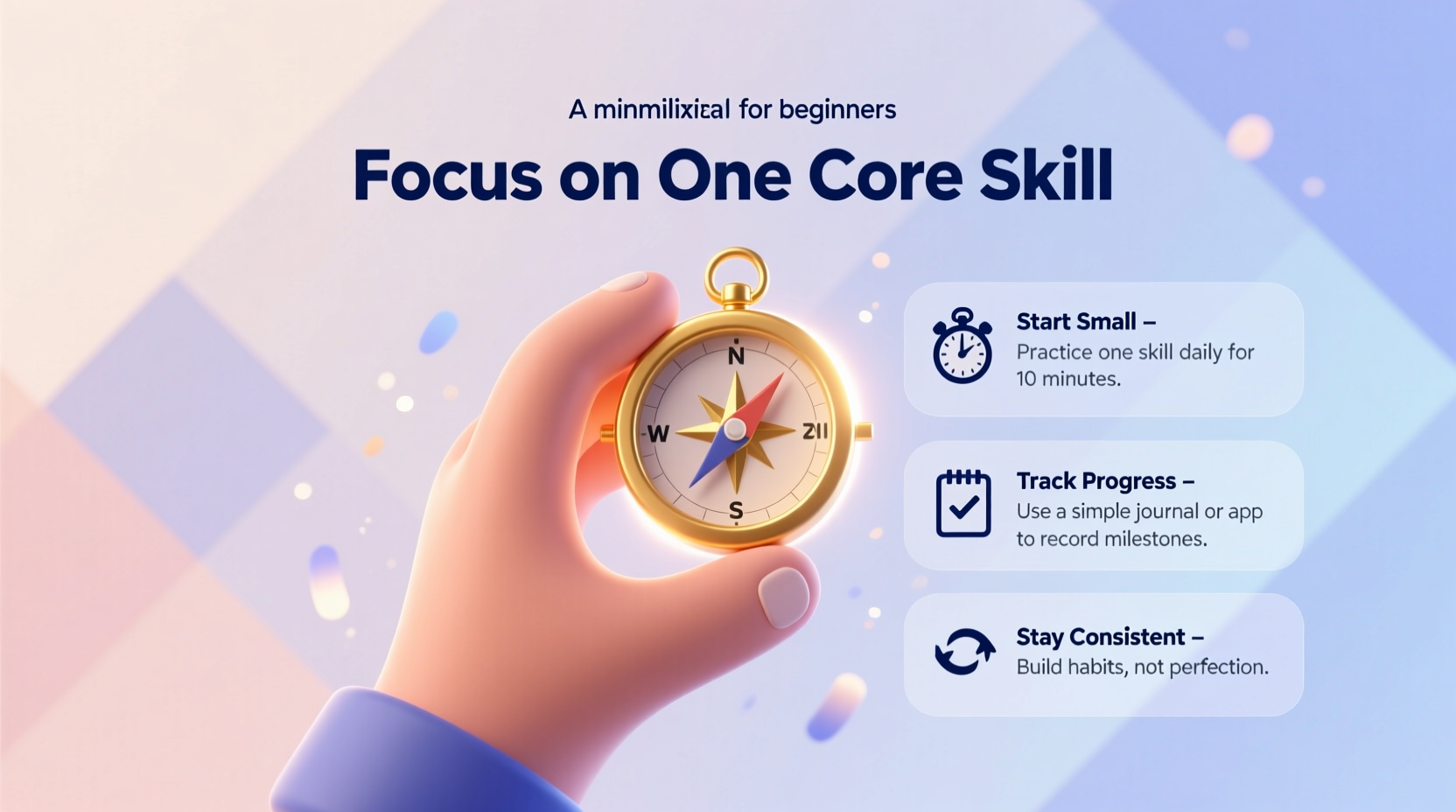
The human brain isn’t built for sustained multitasking. Research from Stanford University shows that people who frequently switch between tasks perform worse in memory, attention, and organization. In contrast, focusing on a single objective allows deeper cognitive engagement, faster learning, and greater retention. When you commit to just one thing—whether it’s learning guitar chords, completing a 30-day fitness challenge, or writing your first short story—you create space for deliberate practice.
Consider the example of elite athletes. Most don’t train every muscle group equally each day. Instead, they isolate movements, repeat them thousands of times, and master one technique before moving to the next. That same philosophy applies to any beginner looking to gain momentum.
“Mastery doesn’t come from doing many things poorly. It comes from doing one thing exceptionally well.” — Dr. Angela Patel, Cognitive Performance Coach
Step-by-Step Guide to Starting Your 'Just One' Journey
Adopting a “just one” mindset requires structure. Follow this six-step process to begin with clarity and purpose:
- Identify your primary goal. Ask yourself: What skill, habit, or outcome matters most right now? Write it down in one sentence.
- Break it into a single starting action. If your goal is to learn piano, your first action might be practicing C major scale for five minutes daily.
- Remove competing priorities. Temporarily set aside other projects or goals that distract from your chosen focus.
- Schedule dedicated time. Block 10–20 minutes daily in your calendar. Consistency trumps duration.
- Track daily progress. Use a notebook or app to mark completion. Visual cues reinforce commitment.
- Review weekly. Reflect: Did you stay focused? What helped or hindered you? Adjust as needed.
Essential Strategies for Maintaining Focus
Distractions are inevitable. The key is not to eliminate them entirely but to manage them effectively. These strategies help sustain your “just one” effort over time:
- Use environment design. Rearrange your space to support your focus. Keep your guitar on a stand instead of in its case, or place your journal on your pillow each night to prompt morning writing.
- Apply the “Do Not Disturb” rule. Silence notifications during your focused session. Even a glance at a message can disrupt concentration for up to 20 minutes.
- Leverage the two-minute rule. If a distracting thought arises (“I should check email”), write it down and promise to return to it—in two minutes. Often, the urge fades.
- Pair with a trigger. Anchor your new habit to an existing one. After brushing your teeth, spend two minutes meditating. This builds automaticity.
Common Pitfalls and How to Avoid Them
| Pitfall | Why It Happens | Solution |
|---|---|---|
| Starting too big | Overestimating motivation leads to burnout | Scale down: Practice for 5 minutes, not 60 |
| Switching goals too soon | Impatience for visible results | Commit to a minimum 21-day trial period |
| Perfectionism | Fear of doing it wrong stops action | Embrace “good enough” and iterate later |
| Isolation | Lack of accountability reduces consistency | Share progress with a friend or online community |
Real Example: From Overwhelmed to On Track
Meet James, a 28-year-old graphic designer who wanted to learn Spanish. He downloaded three language apps, bought flashcards, and signed up for weekly conversation classes—all at once. Within two weeks, he felt overwhelmed and quit. After reading about the “just one” method, he reset his approach. His new rule: Each day, open Duolingo and complete one lesson—no more, no less. He placed his phone on the kitchen counter each morning as a visual cue. Some days he did only the required lesson. Others, energized by completion, he did more. After 30 days, he had completed 97% of his streak and could introduce himself confidently in Spanish. The breakthrough wasn’t talent—it was singular focus.
Checklist: Launch Your 'Just One' Plan in One Hour
Ready to begin? Use this checklist to define and launch your focused effort today:
- ☐ Choose one skill, habit, or project to prioritize for the next 30 days
- ☐ Define the smallest possible action that moves you forward (e.g., “Read one page,” “Write one sentence”)
- ☐ Schedule a daily time block (even 5 minutes counts)
- ☐ Remove one major distraction (e.g., mute social media, clear workspace)
- ☐ Set up a tracking system (calendar, app, or journal)
- ☐ Tell one person about your goal to increase accountability
Frequently Asked Questions
What if my goal requires learning multiple skills?
Even complex goals benefit from sequential focus. Break the goal into phases. For example, if you want to start a podcast, phase one could be “record one 3-minute audio clip per week.” Master recording before editing, and editing before publishing. Layer skills over time.
How long should I stick with just one thing?
Aim for a minimum of 21 to 30 days to build consistency. After that, evaluate: Have you developed momentum? Is the habit automatic? You can then either deepen your focus or transition to the next priority—but never rush the process.
Can I still handle urgent tasks that come up?
Absolutely. The “just one” method isn’t about rigidity—it’s about intentionality. Handle urgent matters as needed, but return to your primary focus as soon as possible. The goal is not perfection but direction.
Conclusion: The Power of Singular Commitment
Mastering how to play just one isn’t about limitation—it’s about liberation. When you stop scattering your energy across endless possibilities, you unlock the capacity to make meaningful progress. Beginners often fail not because they lack ability, but because they lack focus. By choosing one thing and protecting it daily, you build competence, confidence, and momentum. The journey of a thousand miles begins with a single step. But more importantly, it continues with a series of singular, intentional choices.




 浙公网安备
33010002000092号
浙公网安备
33010002000092号 浙B2-20120091-4
Comments
No comments yet. Why don't you start the discussion?