
Poached eggs are a hallmark of refined breakfasts and elegant brunches—creamy yolks encased in silky, evenly set whites. Yet many home cooks shy away from them, fearing broken yolks, wispy whites, or murky water. The truth is, poaching eggs is not only achievable but repeatable with the right approach. With attention to water temperature, egg freshness, and a few clever tricks, you can produce flawless poached eggs every time. This guide demystifies the process, offering practical insights and tested methods for mastering this classic culinary skill.
The Science Behind the Perfect Poach
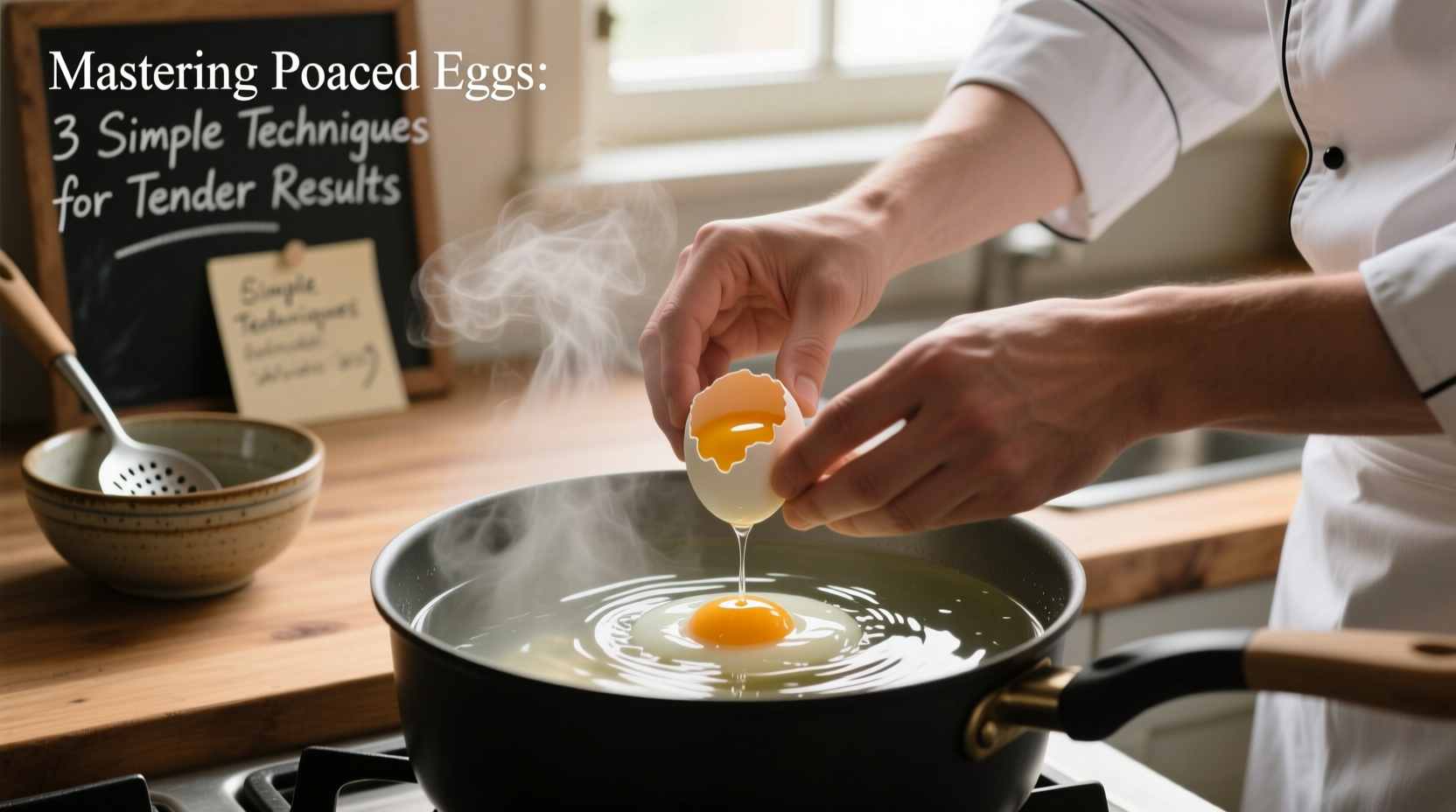
Egg whites begin to coagulate at around 140°F (60°C), while yolks set at about 158°F (70°C). To poach an egg properly, the water must be hot enough to cook the egg gently but not so turbulent that it shreds the delicate white. The ideal range is between 180°F and 190°F (82–88°C)—just below a simmer, where small bubbles rise slowly from the bottom of the pot without breaking the surface violently.
Freshness plays a crucial role. Fresher eggs have tighter albumen (the thick inner white), which holds its shape better during cooking. Older eggs tend to spread out in the water, creating stringy filaments. If you're unsure of your egg's age, perform a float test: place the egg in a bowl of water. If it sinks and lies flat, it’s fresh. If it stands upright or floats, it’s older and less ideal for poaching.
Step-by-Step Guide to Poaching Eggs
- Gather your tools: A deep saucepan, slotted spoon, fine-mesh strainer (optional), and timer.
- Fill the pan: Add 3–4 inches of water. Enough to submerge the egg fully.
- Add acid: Pour in 1 tablespoon of white vinegar or lemon juice per quart of water. This helps the proteins coagulate faster, reducing spread.
- Heat gently: Bring water to 180–190°F. Look for tiny bubbles rising steadily, but no rolling boil.
- Strain (optional): Crack each egg into a fine-mesh strainer over a bowl to remove the runny outer white. This yields a neater shape.
- Create a vortex: Stir the water vigorously in one direction to form a gentle whirlpool. This helps wrap the white around the yolk.
- Add the egg: Gently slide the egg from a small cup or ramekin into the center of the vortex.
- Cook for 3–4 minutes: For a runny yolk and tender white. Adjust up to 5 minutes for a firmer yolk.
- Remove carefully: Use a slotted spoon to lift the egg. Drain briefly on a paper towel to absorb excess water.
- Serve immediately: On toast, avocado, salads, or eggs Benedict.
Common Mistakes and How to Avoid Them
| Mistake | Why It Happens | Solution |
|---|---|---|
| Stringy, wispy whites | Water too hot or egg too old | Use fresher eggs and keep water under simmer |
| Broken yolks | Rough handling or aggressive stirring | Crack eggs gently; use a spoon to guide, not stir harshly |
| Overcooked or rubbery texture | Too long in water or excessive heat | Stick to 3–4 minutes and monitor temperature |
| Eggs sink and stick to the pot | Not enough depth or no stirring | Ensure sufficient water depth and create a vortex |
Variations and Pro Techniques
While the basic method works well, professional kitchens often employ advanced techniques for consistency—especially when serving multiple guests.
- Sous-vide poaching: Seal eggs in vacuum bags and cook in a water bath at 147°F (64°C) for 45 minutes. Results in perfectly uniform texture, though less traditional.
- Batch poaching: Simmer eggs in individual buttered ramekins placed in a bain-marie. Ideal for dinner parties.
- Resting in ice water: After poaching, plunge eggs into cold water to stop cooking. Reheat in warm water before serving—great for meal prep.
For those who struggle with timing during busy mornings, consider the “par-cook and finish” method. Poach eggs for 2.5 minutes, then shock in ice water. When ready to eat, reheat in 180°F water for 60 seconds. The yolk remains creamy, and whites stay intact.
“Poaching isn’t about perfection on the first try—it’s about understanding how heat, acidity, and motion affect the egg. Once you see the pattern, you’ll never fear the pot again.” — Chef Rafael Torres, Culinary Instructor at New York Kitchen Arts
Real Example: From Failure to Brunch Success
Sarah, a home cook in Portland, used to avoid poached eggs after several disastrous attempts. Her early efforts resulted in cloudy water filled with white strands and yolks that broke at the touch. She switched tactics: started buying local farm-fresh eggs, began using a thermometer to control water temperature, and adopted the vortex method. Within a week, her eggs transformed. Now, she regularly serves flawless poached eggs atop sourdough and sautéed spinach for weekend brunch. “The key,” she says, “was realizing I was boiling instead of poaching. Lower heat made all the difference.”
Checklist for Foolproof Poached Eggs
- Use fresh eggs (within 7–10 days)
- Gather a deep pot, slotted spoon, and timer
- Have vinegar or lemon juice ready
- Pre-crack eggs into small cups
- Heat water to 180–190°F (no rolling boil)
- Add 1 tbsp acid per quart of water
- Stir to create a gentle vortex
- Slide egg in from a close height
- Set timer for 3–4 minutes
- Lift egg gently with slotted spoon
- Drain on paper towel
- Serve immediately or shock for later use
FAQ
Can I poach multiple eggs at once?
Yes, but add them one at a time to separate areas of the pot. Ensure the water volume is sufficient—don’t overcrowd. Two to three eggs in a standard saucepan is ideal.
Is vinegar necessary?
It helps, but isn’t mandatory. Vinegar lowers the pH of water, speeding up protein coagulation and minimizing spread. If you dislike the taste, lemon juice works similarly. Alternatively, very fresh eggs may not need acid at all.
Can I make poached eggs ahead of time?
Absolutely. Poach for 2.5–3 minutes, then transfer to ice water. Store in the fridge for up to 24 hours. Reheat in 180°F water for 60 seconds to restore warmth and texture.
Conclusion: Elevate Your Everyday Cooking
Mastering how to poach eggs in water is more than a kitchen trick—it’s a gateway to refined, satisfying meals with minimal effort. Once you understand the balance of temperature, timing, and technique, poaching becomes second nature. Whether you’re crafting a quick weekday breakfast or hosting a leisurely Sunday brunch, a perfectly poached egg adds elegance and richness to any plate. Don’t let past failures discourage you. With fresh ingredients, controlled heat, and a little patience, success is just a simmer away.




 浙公网安备
33010002000092号
浙公网安备
33010002000092号 浙B2-20120091-4
Comments
No comments yet. Why don't you start the discussion?