
In today’s fast-paced digital world, texting has become one of the most common forms of communication—whether it's for personal conversations, professional coordination, or customer service interactions. Yet, despite its ubiquity, many people struggle to send messages that are both clear and impactful. A poorly worded text can lead to misunderstandings, delays, or even damaged relationships. Mastering how to text a message isn’t just about typing quickly; it’s about conveying your intent clearly, respectfully, and efficiently.
From choosing the right tone to avoiding ambiguity, the art of effective texting combines emotional intelligence with strategic clarity. This guide breaks down proven techniques to help you communicate better through text, whether you’re messaging a colleague, reconnecting with a friend, or confirming plans with family.
1. Know Your Audience and Adjust Tone Accordingly
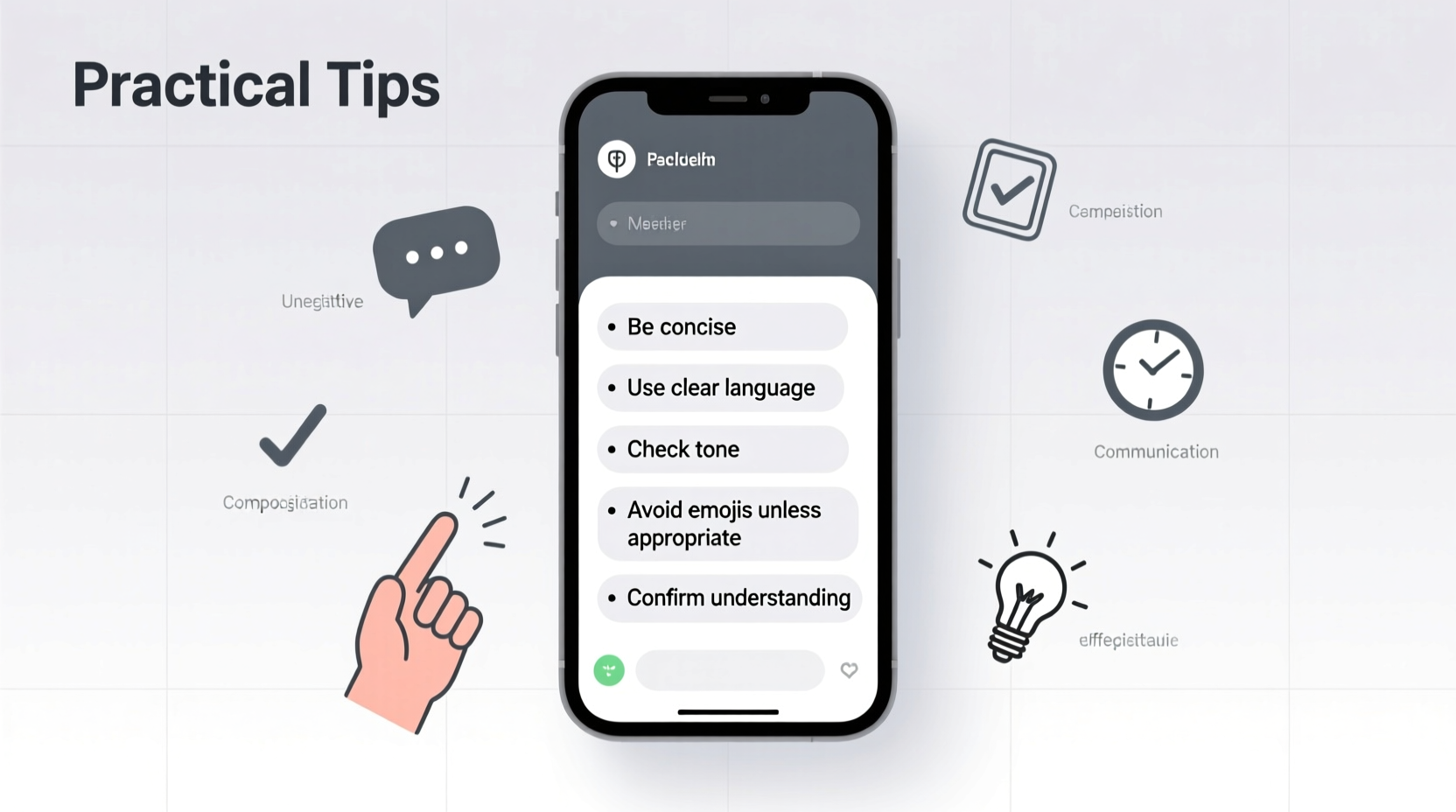
The first rule of effective texting is understanding who you're communicating with. The way you message your boss should differ from how you text your best friend. Misjudging tone can make you appear too casual in a professional setting or overly formal with someone close.
- Professional contacts: Use complete sentences, proper punctuation, and avoid slang or emojis unless you know the recipient well.
- Friends and family: Feel free to use contractions, expressive language, and emojis to reflect warmth and familiarity.
- New acquaintances: Start neutral—clear but friendly—and gradually adapt based on their responses.
2. Structure Your Message for Clarity
A well-structured text prevents confusion and ensures your point is received as intended. Think of your message like a mini-email: it should have a purpose, be concise, and guide the recipient toward action or response.
- Start with context (if needed): “Following up on our meeting earlier…” or “Just checking in about Saturday.”
- State your main point clearly: “Can we reschedule the call to Thursday?”
- End with a call to action or question: “Are you available at 3 PM?”
Avoid long paragraphs. Break complex messages into separate texts or use line breaks for readability.
| Poor Example | Better Version |
|---|---|
| hey are we still on for dinner tonight i forgot what time and also can we change the place cause something came up | Hi! Just checking—are we still meeting for dinner tonight? Also, would it be okay to change the location? Something came up. |
| meeting moved to friday pls b there | Quick update: Our meeting has been moved to Friday at 10 AM. Please confirm if you can attend. |
3. Avoid Common Texting Pitfalls
Even small habits can undermine your message. Here are frequent mistakes and how to fix them:
- Overusing abbreviations: While “u” instead of “you” might save time, it can come across as lazy or disrespectful in certain contexts.
- Using all caps: This reads as shouting. Even “THANKS” can seem aggressive.
- Replying too quickly without reading: Misunderstandings often stem from knee-jerk replies. Take five seconds to re-read the message.
- Assuming tone is obvious: Sarcasm and humor rarely translate over text. When in doubt, clarify with a smiley face—or better yet, pick up the phone.
“Text lacks vocal inflection and body language, so clarity must compensate. One extra sentence can prevent days of confusion.” — Dr. Lena Torres, Communication Psychologist
4. Optimize Timing and Responsiveness
When you send a message matters as much as how you write it. Sending a work-related text at midnight may signal urgency, but it can also feel intrusive.
Consider these timing guidelines:
- Work messages: Stick to business hours unless urgent. If sending late, add: “No need to reply until morning.”
- Personal messages: Respect the other person’s habits. If they typically reply in the evening, avoid pressuring them during work hours.
- Follow-ups: Wait at least 24 hours before nudging, unless the matter is time-sensitive.
5. Real-World Example: Resolving a Miscommunication
Sarah sent her client a brief text: “The report isn’t ready.” The client interpreted this as negligence and responded tersely: “This is unacceptable.” Tensions rose—until Sarah clarified: “Apologies for the confusion. The final draft is complete and will be formatted and sent by 5 PM today.”
The second message provided context, took responsibility, and set a clear expectation. The client immediately replied, “Thanks for the update. Appreciate the transparency.”
This scenario illustrates how a few missing details can escalate stress—and how clarity restores trust.
Step-by-Step Guide to Writing an Effective Text
Use this checklist every time you’re about to send an important message:
- Pause and define your goal: What do you want the recipient to know, feel, or do?
- Draft your message: Be direct but polite. Use full words and correct grammar when appropriate.
- Check tone: Read it aloud. Does it sound respectful and clear?
- Add context if needed: Reference prior conversations or explain urgency.
- Proofread: Look for typos, ambiguous phrasing, or unintended tone.
- Send—and wait: Give the recipient space to respond without double-texting immediately.
Do’s and Don’ts of Modern Texting
| Do’s | Don’ts |
|---|---|
| Use emojis sparingly to soften tone | Overuse emojis (e.g., “Let’s talk 😬🔥💥👀”) |
| Confirm receipt for critical messages | Assume your message was seen or understood |
| Ask open-ended questions when appropriate | Send multiple one-word questions back-to-back |
| Use “I” statements to express needs (“I’m running 10 mins late”) | Blame or accuse (“You never reply on time”) |
| Respond within a reasonable timeframe | Ghost important messages for days without explanation |
Frequently Asked Questions
How quickly should I reply to a text?
There’s no universal rule, but general etiquette suggests replying within 24 hours for personal messages and sooner for urgent or professional ones. If you can’t respond fully, a quick “Got your message—will reply properly later today” maintains goodwill.
Is it rude to use emojis at work?
It depends on workplace culture. In informal teams, a simple 👍 or 😊 can convey friendliness. In more traditional environments, stick to words. When unsure, mirror the tone of the person you’re texting.
What should I do if my text was misunderstood?
Apologize for the confusion, not necessarily the message. Say, “I realize my last text came across unclear—let me rephrase.” Then clarify your intent calmly and concisely.
Conclusion: Elevate Your Everyday Communication
Texting is more than convenience—it’s a reflection of how you show up in relationships, both personal and professional. By applying thoughtful structure, audience awareness, and emotional precision, you turn simple messages into tools of connection and efficiency. The next time you reach for your phone, remember: clarity isn’t just kind, it’s powerful.




 浙公网安备
33010002000092号
浙公网安备
33010002000092号 浙B2-20120091-4
Comments
No comments yet. Why don't you start the discussion?