
Understanding your menstrual cycle is one of the most powerful ways to take control of your health, fertility, and overall well-being. Despite its significance, many people lack consistent, accurate tracking habits—leading to confusion about ovulation, irregularities, or reproductive goals. Tracking your cycle length isn’t just for those trying to conceive; it’s essential for identifying hormonal patterns, predicting periods, managing symptoms, and detecting potential health concerns early.
A regular menstrual cycle typically ranges from 21 to 35 days, but what's “normal” varies widely. The key to mastery lies not in fitting a mold, but in understanding your unique rhythm through consistent observation and data collection.
Why Accurate Cycle Tracking Matters
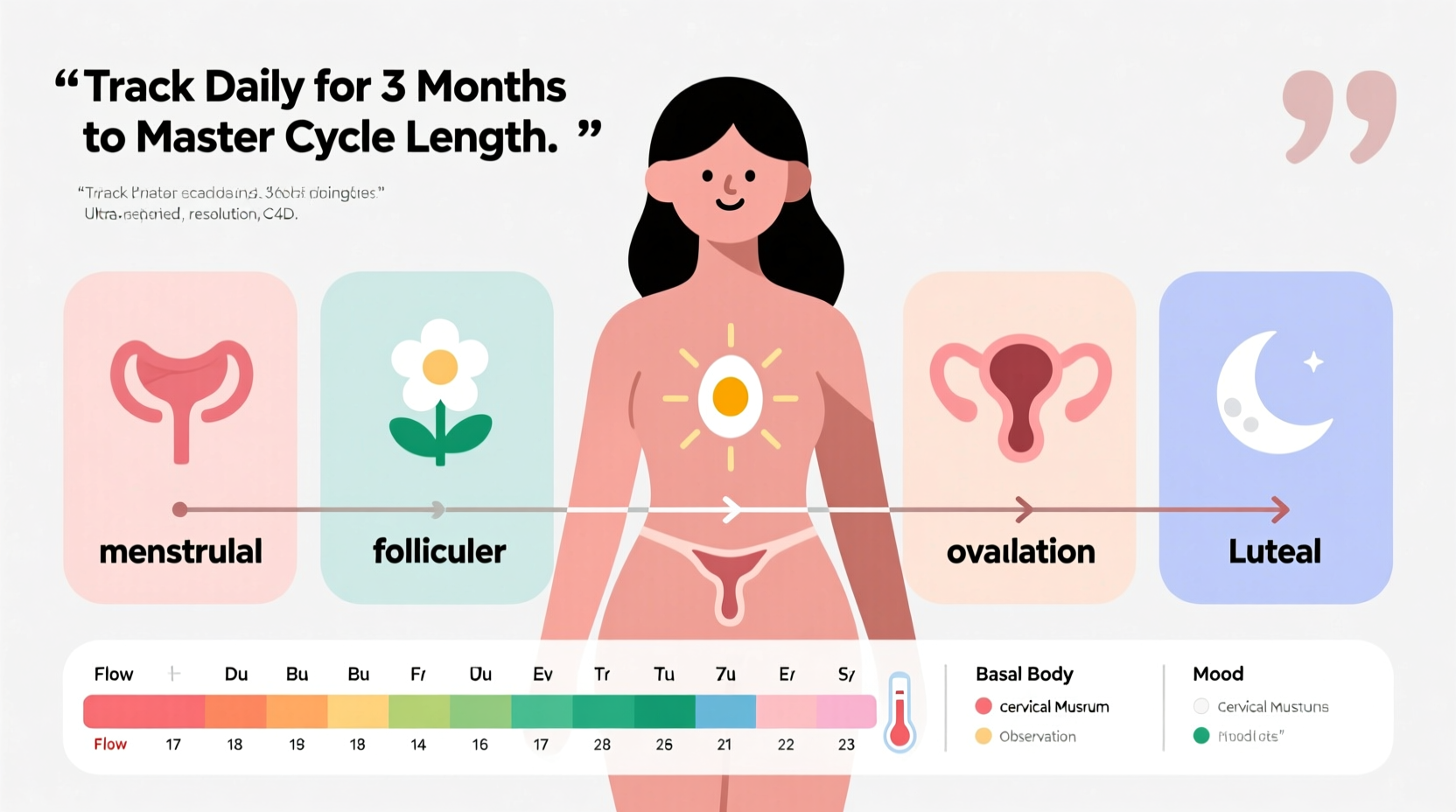
Tracking your cycle length goes beyond marking the start of your period on a calendar. It provides insight into your hormonal health, fertility window, energy fluctuations, mood changes, and even long-term conditions like PCOS, thyroid disorders, or endometriosis. When tracked properly, your cycle becomes a vital sign—just like blood pressure or heart rate.
Accurate monitoring helps you:
- Predict when your next period will arrive
- Identify fertile days for conception or contraception
- Detect irregularities that may signal underlying conditions
- Better manage PMS, cramps, or hormonal acne
- Improve communication with healthcare providers
“Cycle tracking is one of the most underutilized yet powerful tools in women’s health. When done consistently, it reveals patterns invisible during brief clinical visits.” — Dr. Lena Patel, OB-GYN and Hormonal Health Specialist
Step-by-Step Guide to Tracking Your Cycle Length
Effective tracking requires consistency, attention to detail, and the right method for your lifestyle. Follow these steps to build an accurate record of your menstrual cycle.
- Define Day One: The first day of your period (full flow, not spotting) marks Day 1 of your cycle. This is critical for accuracy.
- Record Each Period Start Date: Use a notebook, app, or calendar to log the date each new cycle begins.
- Count the Days Between Cycles: From one Day 1 to the next is your total cycle length. For example, if your last period started on May 3 and the next began on June 1, your cycle was 29 days long.
- Track for at Least Three Months: A single cycle doesn't reveal patterns. Track continuously for 3–6 months to identify averages and variations.
- Note Additional Symptoms: Include flow intensity, cramping, mood shifts, cervical mucus, and energy levels to enrich your data.
- Calculate Your Average Cycle Length: Add up the lengths of your last three cycles and divide by three. Example: (28 + 30 + 27) ÷ 3 = 28.3-day average.
Choosing the Right Tracking Method
Different methods suit different preferences. Some enjoy analog systems, while others prefer digital automation. Here’s a comparison to help you decide.
| Method | Pros | Cons |
|---|---|---|
| Paper Calendar | No screen time, simple, accessible | Easy to forget, no reminders, hard to analyze trends |
| Period Tracking Apps (e.g., Clue, Flo, Natural Cycles) | Automated predictions, symptom logging, data export for doctors | Privacy concerns, over-reliance on algorithms, subscription costs |
| Printable Cycle Charts | Structured format, offline use, visual pattern recognition | Limited space, not portable, manual calculations needed |
| Fertility Awareness Methods (FAM) with Basal Thermometer & Mucus Tracking | Highly accurate for ovulation, hormone insights | Requires daily discipline, learning curve, strict routine |
If privacy is a concern, opt for apps that offer local storage or do not require account creation. Look for tools certified as medical devices if using tracking for contraception or fertility planning.
Common Mistakes That Skew Accuracy
Even with good intentions, small errors can distort your data. Avoid these common pitfalls:
- Misidentifying Day 1: Counting spotting as the start of your period can shorten perceived cycle length.
- Inconsistent Logging: Skipping entries during busy weeks breaks continuity and reduces reliability.
- Ignoring Variability: Stress, illness, travel, or weight changes affect cycles. Note these factors alongside dates.
- Overrelying on Predictions: Apps estimate based on past data, but they can’t foresee sudden changes. Always verify with real-time signs.
- Not Tracking Beyond Bleeding: Ignoring symptoms like cervical mucus or basal body temperature limits insight into ovulation timing.
Real Example: How Tracking Changed Sarah’s Health Journey
Sarah, a 31-year-old teacher, had experienced unpredictable periods for years. She assumed her 35- to 42-day cycles were normal until she began tracking daily using a combination of a paper chart and basal thermometer. After three months, she noticed a pattern: she wasn’t ovulating regularly. Her temperatures never showed a sustained shift, indicating anovulatory cycles.
She brought her charts to her gynecologist, who diagnosed subclinical hypothyroidism—a condition affecting her ovulation. With treatment, her cycles shortened to a consistent 28 days within four months. Without tracking, the issue might have gone unnoticed for years, delaying family planning and increasing long-term metabolic risks.
Sarah’s experience underscores a crucial truth: raw data empowers informed decisions.
Essential Checklist for Effective Cycle Monitoring
To ensure your tracking is both consistent and meaningful, follow this checklist every month:
- ✅ Mark the first day of full menstrual flow (not spotting)
- ✅ Log daily or weekly—even if nothing feels “noteworthy”
- ✅ Record symptoms: mood, energy, cramps, sleep, skin changes
- ✅ Track cervical mucus daily (note texture and color)
- ✅ Take basal body temperature at the same time each morning (before getting up)
- ✅ Review monthly: Did you ovulate? Was your luteal phase at least 10 days?
- ✅ Share data with your healthcare provider annually—or sooner if irregularities arise
Frequently Asked Questions
What if my cycle length varies every month?
Some variation is normal—especially in teens and perimenopausal individuals. However, fluctuations greater than 8 days between shortest and longest cycles may indicate hormonal imbalance. Tracking helps determine whether variation is typical for you or a sign to seek evaluation.
Can I get pregnant on a short or long cycle?
Yes. Ovulation can occur on any cycle length. On a 21-day cycle, ovulation may happen as early as Day 7, meaning fertility begins shortly after bleeding ends. On a 35-day cycle, ovulation may not occur until Day 21. Tracking ovulation signs—not just dates—is key to understanding your fertile window.
How long should I track before seeing a pattern?
Most people see reliable patterns after 3–6 months of consistent tracking. Hormonal contraceptives suppress natural cycles, so tracking while on birth control reflects drug effects, not your innate rhythm. For true baseline data, track off hormonal medication if medically safe.
Take Control of Your Cycle—Start Today
Mastering how to track cycle length is more than a personal habit—it’s an act of self-knowledge and advocacy. Whether you’re planning a pregnancy, managing a condition, or simply seeking greater bodily awareness, accurate menstrual monitoring puts you in the driver’s seat.
You don’t need perfection—just consistency. Begin tonight: mark your current cycle start date, choose your method, and commit to logging for the next three months. Over time, you’ll gain clarity, confidence, and deeper alignment with your body’s natural intelligence.




 浙公网安备
33010002000092号
浙公网安备
33010002000092号 浙B2-20120091-4
Comments
No comments yet. Why don't you start the discussion?