
Handwriting remains a deeply personal and expressive skill, even in our digital age. Whether jotting down notes, writing a heartfelt letter, or signing a document, the way you form your letters speaks volumes. Clear and stylish letter formation isn’t just about aesthetics—it enhances readability, improves communication, and can even boost confidence in personal and professional settings. With deliberate practice and attention to detail, anyone can refine their handwriting into a polished, legible, and visually pleasing craft.
The Foundations of Letter Formation
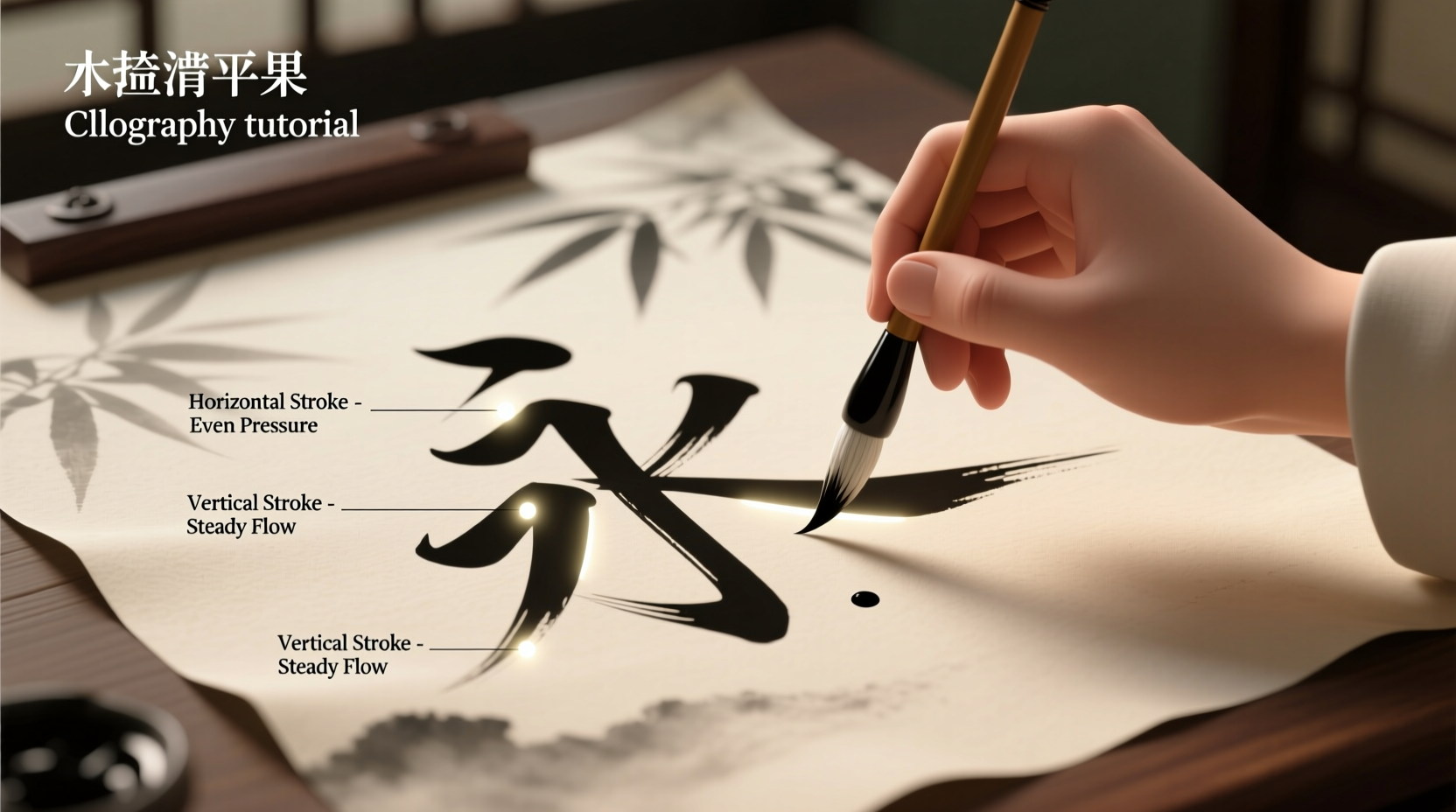
Effective handwriting begins with understanding the anatomy of letters. Each character has specific components: ascenders (like the stem of \"b\"), descenders (as in \"g\" or \"y\"), loops, curves, and crossbars. Consistency in these elements across your writing creates uniformity and clarity. Begin by focusing on three core aspects: posture, grip, and stroke control.
Sit upright with your feet flat on the floor and your forearm resting comfortably on the surface. Hold the pen with a relaxed tripod grip—using the thumb, index, and middle finger—allowing fluid movement without tension. This reduces fatigue and enables smoother transitions between strokes.
Step-by-Step Guide to Improving Letter Clarity
Improvement in handwriting doesn't happen overnight. It requires structured practice and mindful repetition. Follow this step-by-step approach to build precision and elegance into your script.
- Choose a reference style: Decide whether you prefer print, cursive, or a hybrid (such as italic or modern calligraphy-inspired hand). Study exemplars from handwriting manuals or online resources.
- Break down each letter: Analyze the starting point, direction, and sequence of strokes. Practice individual letters slowly, focusing on shape accuracy rather than speed.
- Practice letter families: Group similar letters (e.g., “o,” “c,” “d,” “g” all begin with a clockwise curve) to reinforce motor patterns.
- Focus on connections (for cursive): Ensure smooth joins between letters without lifting the pen unnecessarily. Avoid tangled or overlapping links.
- Incorporate spacing drills: Write words with exaggerated gaps first, then gradually reduce space until it feels natural and legible.
- Review and refine: Compare your writing to your model daily. Identify recurring inconsistencies and isolate them for targeted practice.
Do’s and Don’ts of Stylish Handwriting
Avoid common pitfalls that undermine legibility and visual appeal. The following table outlines essential guidelines for effective letter formation.
| Do | Don’t |
|---|---|
| Maintain consistent slant (vertical or slight right tilt) | Let letters lean inconsistently |
| Keep uniform letter height and spacing | Write some letters much larger or smaller than others |
| Use moderate pressure—firm but not heavy | Press so hard that the paper indents or tears |
| Lift the pen only when necessary (especially in cursive) | Lift after every letter, breaking flow |
| Practice daily for 10–15 minutes | Expect perfection after one session |
Developing Your Own Stylistic Flair
Once legibility is mastered, you can begin adding personality to your handwriting. Style should never compromise clarity, but subtle flourishes—such as elegant ascender loops, tapered finishes, or slightly elongated descenders—can elevate your script from functional to distinctive.
Start small. Experiment with modifying one letter at a time—perhaps giving your capital “Q” a graceful tail or shaping your lowercase “a” with a more closed bowl. Test these variations in full words to ensure they integrate smoothly.
“Good handwriting balances discipline and expression. The rules provide structure; the details reveal character.” — Dr. Helen Torres, Graphology Researcher & Penmanship Instructor
Over time, your unique rhythm and preferences will emerge. Some writers favor angular precision; others lean toward soft, flowing curves. Embrace what feels natural while maintaining coherence across your writing.
Real Example: From Illegible to Confident Script
Consider the case of Marcus, a university student who struggled with messy, rushed notes. His professors often had difficulty reading his exam responses, despite strong content. Determined to improve, he began practicing for ten minutes each morning using guided worksheets focused on lowercase cursive forms.
He started by printing neatly, then transitioned to connected script, paying close attention to baseline alignment and loop symmetry. After six weeks, he noticed fewer requests for clarification on submitted work. By week ten, classmates asked him to share his notes. What changed wasn’t just appearance—it was consistency, intention, and pride in presentation.
Marcus didn’t aim for calligraphy perfection. He aimed for clarity—and in doing so, developed a clean, readable hand that still carried his personal rhythm.
Essential Checklist for Daily Practice
- ✅ Warm up with basic strokes (curves, lines, loops)
- ✅ Choose a consistent letter model to emulate
- ✅ Write slowly and deliberately, focusing on form
- ✅ Check alignment and spacing against ruled paper
- ✅ Review your work objectively—circle one strength and one area to improve
- ✅ Limit sessions to 10–15 minutes to maintain focus and prevent strain
- ✅ Track progress weekly by saving dated samples
Frequently Asked Questions
Can adults really improve their handwriting?
Absolutely. While childhood is ideal for establishing habits, neuroplasticity allows adults to retrain fine motor skills at any age. With regular, mindful practice, significant improvement is achievable within weeks.
Should I learn cursive if I only print now?
Not necessarily. Cursive offers speed and flow, but clear print can be equally effective. Choose the style that suits your needs. Many professionals use a semi-connected “print-cursive hybrid” for optimal balance of legibility and efficiency.
How do I stop my writing from slanting unevenly?
Practice on slanted guide sheets or rotate your paper slightly counterclockwise (about 30–45 degrees) if you’re right-handed. This natural angle encourages a consistent upward slope. Left-handed writers may benefit from a steeper tilt to avoid smudging.
Cultivating Confidence Through Craft
Mastering how to write as tips for clear and stylish letter formation goes beyond penmanship—it’s about cultivating presence, patience, and self-expression. In a world saturated with typed text, a well-formed handwritten note stands out as intentional and human. Every loop, line, and letter becomes a quiet testament to care and attention.
Begin today. Take out a notebook, select a pen that feels right, and dedicate a few minutes to shaping just one letter perfectly. Repeat tomorrow. And the day after. Progress compounds quietly, but powerfully. Before long, your handwriting won’t just communicate words—it will reflect who you are.




 浙公网安备
33010002000092号
浙公网安备
33010002000092号 浙B2-20120091-4
Comments
No comments yet. Why don't you start the discussion?