
When applying for jobs, your resume and cover letter are only part of the equation. How you communicate your availability can significantly influence whether a hiring manager schedules an interview or moves on to the next candidate. A vague or poorly worded availability statement may raise concerns about reliability, commitment, or readiness. On the other hand, a clear, professional note about when you can start and work demonstrates professionalism, transparency, and respect for the employer’s timeline.
Writing availability effectively isn’t just about stating dates—it’s about aligning your message with the expectations of recruiters while maintaining flexibility and clarity. Whether you're transitioning between roles, finishing academic commitments, or managing personal obligations, knowing how to articulate your availability strengthens your candidacy.
Why Availability Matters in Job Applications
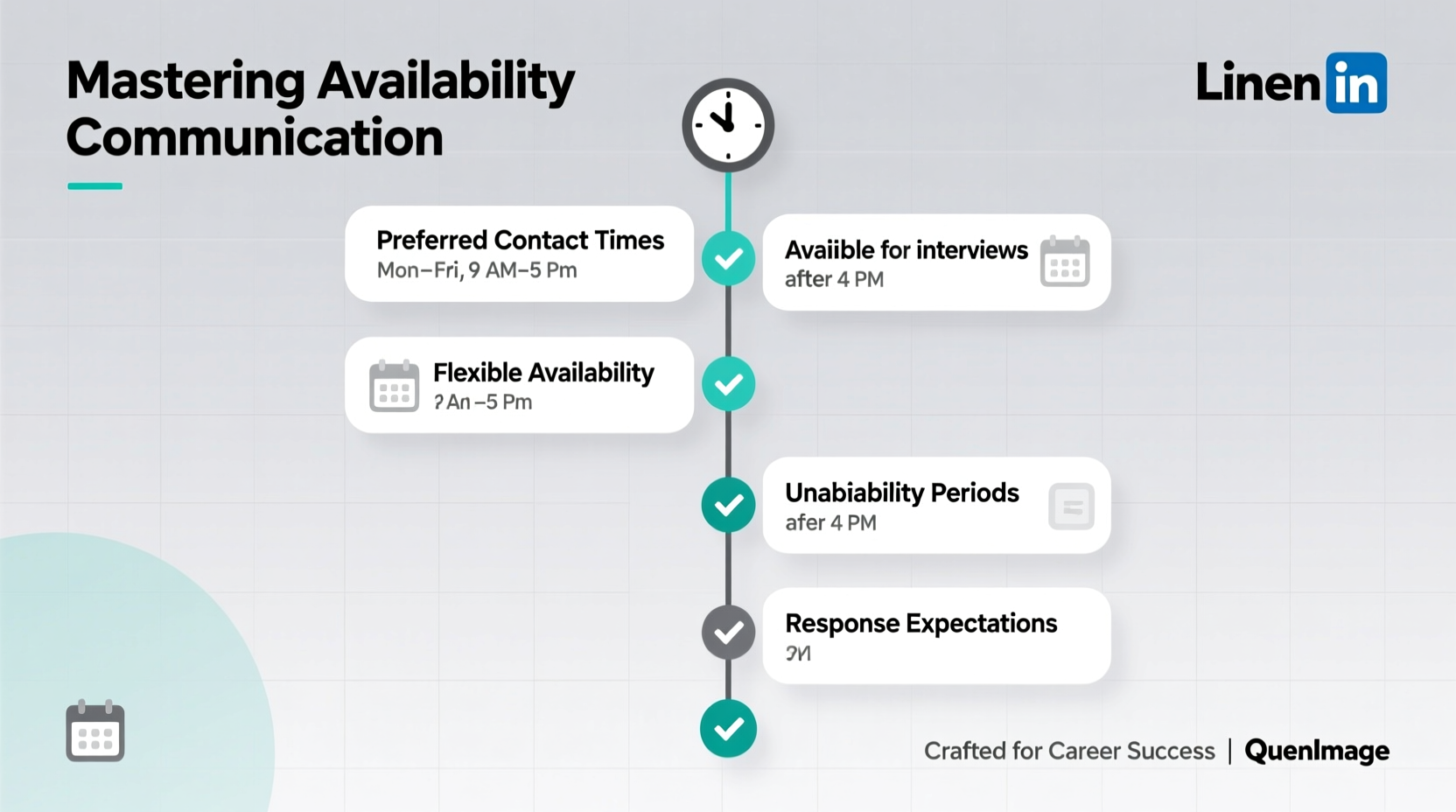
Recruiters often operate under tight deadlines. They need to fill positions quickly and efficiently, especially in competitive industries. When they review applications, they look not only at qualifications but also at logistical fit. If your availability doesn't align with their hiring timeline, even a strong candidate might be passed over—especially if another applicant is ready to start immediately.
A well-written availability statement reduces uncertainty. It shows that you’ve thought ahead and are serious about the role. It also prevents back-and-forth emails asking, “When could you start?” or “Are you available for full-time hours?” By addressing these questions proactively, you streamline the hiring process and position yourself as organized and considerate.
“Candidates who clearly state their availability save us time and show attention to detail—a trait we value across all roles.” — Sarah Lin, Talent Acquisition Manager at NexaTech Solutions
How to Structure Your Availability Statement
There’s no one-size-fits-all format, but effective availability statements follow a consistent structure: clarity, context, and confidence. Here's how to build one:
- State your current status – Are you currently employed? A student? Unemployed and available immediately?
- Specify your earliest start date – Be precise (e.g., “June 15, 2024”) rather than vague (“in a few weeks”).
- Mention any constraints – If you have a notice period or academic obligations, explain them briefly.
- Highlight flexibility where possible – Show willingness to accommodate onboarding timelines.
This approach ensures transparency without oversharing personal details.
Do’s and Don’ts of Writing Availability
| Do’s | Don’ts |
|---|---|
| Be specific: “Available to start July 1, 2024, after completing my final semester.” | Be vague: “I should be free sometime in summer.” |
| Keep it concise: One to two sentences in a cover letter or email. | Overshare: Avoid lengthy explanations about personal circumstances. |
| Use professional tone: “I am able to begin full-time employment as of August 5.” | Sound casual: “I can probably start around then, depending on stuff.” |
| Offer flexibility: “I can adjust my start date slightly based on team needs.” | Be rigid: “I cannot start until exactly September 1.” |
| Align with application context: Tailor wording for resumes, emails, or forms. | Copy-paste generic text across all applications. |
Real-World Example: From Confusion to Clarity
Jamal was applying for marketing coordinator roles while finishing his degree. His initial cover letter said: “I’ll be done with school soon and can start working after that.” Recruiters didn’t respond—he assumed his experience wasn’t strong enough.
After coaching, he revised his statement: “I am scheduled to graduate on May 24, 2024, and will be available for full-time roles starting June 3, 2024. I’m happy to discuss flexible onboarding options if needed.” Within a week, he received three interview invitations.
The difference wasn’t his background—it was clarity. Employers knew exactly when he could contribute, reducing perceived risk.
Step-by-Step Guide to Crafting Your Availability Message
Follow this five-step process to create a polished, professional availability statement tailored to each opportunity:
- Assess your real availability – Calculate your earliest realistic start date, accounting for notice periods, travel, or personal transitions.
- Determine placement – Decide where to include it: cover letter (most common), email body, job application form, or LinkedIn message.
- Choose your tone – Match the company culture. Formal for corporate roles, slightly more conversational for startups.
- Draft a clear sentence or two – Use the formula: [Current Status] + [Start Date] + [Flexibility Note].
- Review and customize – Never use the same line for every job. Adjust based on the role’s urgency and requirements.
For example:
- If currently employed: “I am serving a two-week notice period and can start on July 12, 2024. I’m open to discussing earlier onboarding if required.”
- If unemployed: “I am available for full-time employment immediately and can begin as early as next week.”
- If a student: “My final exams conclude on June 10, and I will be available for full-time roles starting June 17, 2024.”
Checklist: Is Your Availability Statement Effective?
- ✅ States your earliest start date clearly
- ✅ Explains brief context (if necessary)
- ✅ Uses professional, confident language
- ✅ Shows willingness to be flexible
- ✅ Matches the tone of the rest of your application
- ✅ Is customized for the specific role
Frequently Asked Questions
Should I mention my availability in my resume?
Generally, no—resumes focus on skills and experience. However, if a job posting specifically asks for availability, you can add a brief line under your contact information: “Available for full-time roles starting July 1, 2024.” Otherwise, save it for your cover letter or email.
What if I’m not sure of my exact start date?
It’s okay to provide a range if needed, but avoid being too broad. Instead of saying “sometime in August,” say “between August 5 and August 19, depending on lease termination.” This shows planning and responsibility.
Can I negotiate my start date after receiving an offer?
Yes—many candidates do. But your initial availability sets expectations. If you later request a significant delay, be prepared to justify it professionally. It’s best to be honest upfront while leaving room for minor adjustments.
Final Thoughts: Turn Availability Into an Advantage
Your availability is more than a logistical detail—it’s a signal of professionalism and preparedness. A well-crafted statement removes friction from the hiring process and reinforces your image as a reliable, forward-thinking candidate. Whether you’re ready to start tomorrow or need a few weeks to transition, clarity builds trust.
Treat your availability statement with the same care as your resume summary or cover letter closing. Precision, honesty, and a touch of flexibility go a long way in making a positive impression.




 浙公网安备
33010002000092号
浙公网安备
33010002000092号 浙B2-20120091-4
Comments
No comments yet. Why don't you start the discussion?