
Rap is more than rhythm and rhymes—it’s storytelling, precision, and identity fused into syllables. The best rappers don’t just flow; they command attention with every bar. Writing compelling rap lines isn’t about copying legends; it’s about developing a voice that’s authentic, sharp, and technically sound. Whether you're freestyling in the mirror or crafting lyrics for a studio session, the foundation of great rap lies in deliberate practice, structural awareness, and emotional honesty.
Understand the Anatomy of a Rap Line
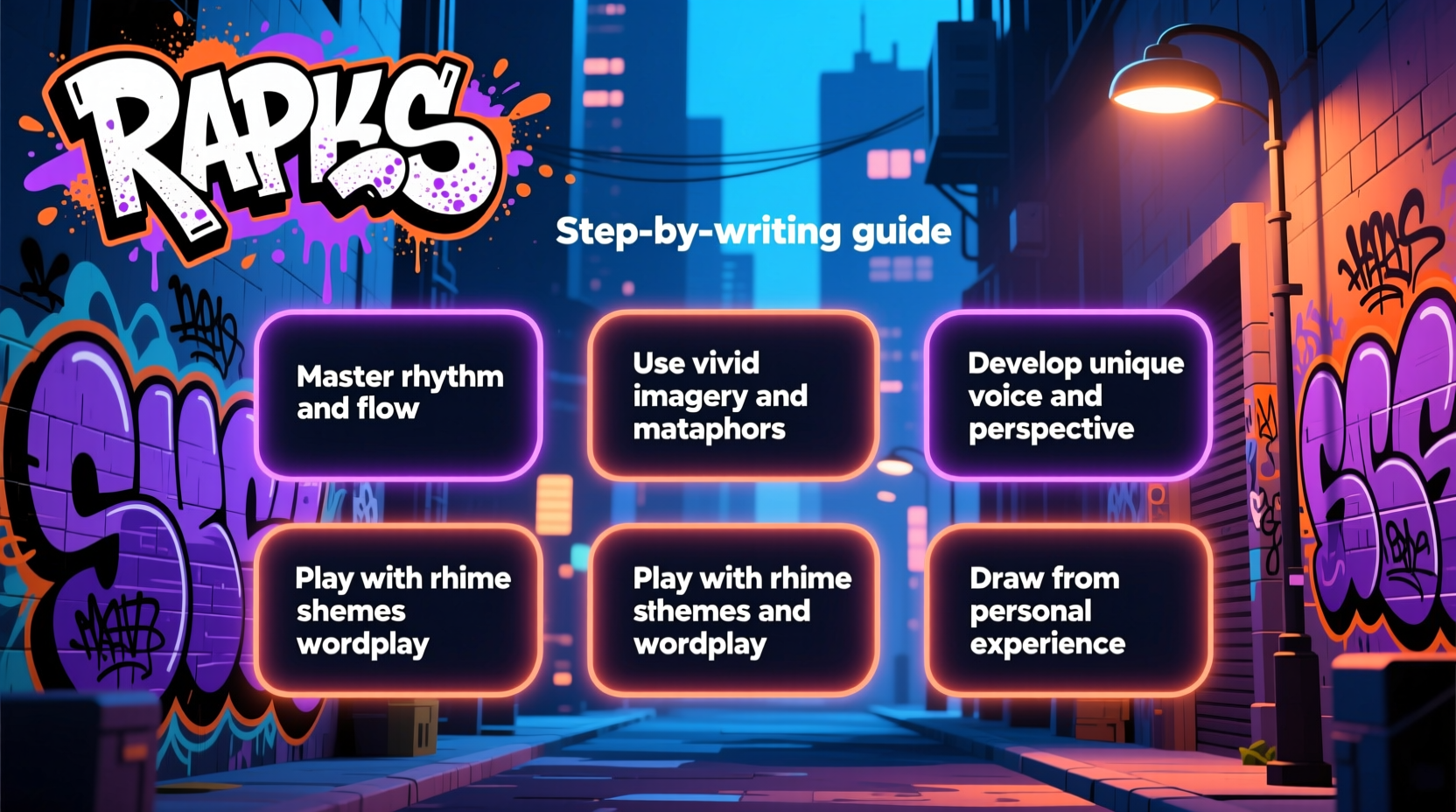
A single rap line—often called a \"bar\"—is deceptively simple. It can carry rhythm, meaning, metaphor, and attitude all at once. But not all bars are created equal. Great rap lines balance three core elements: content, cadence, and clarity.
- Content: What are you saying? Is it insightful, clever, or emotionally resonant?
- Cadence: How does it sound when delivered? Does it ride the beat naturally?
- Clarity: Can listeners understand your message without replaying it three times?
A bar like “I’m on that next-level s**t, call me ascension” may have punch, but if the delivery lacks rhythm or the metaphor feels forced, it falls flat. Conversely, a line like “Used to dream in color, now I live in grayscale” combines imagery, emotion, and flow potential—making it memorable.
Build a Strong Foundation: Flow, Rhyme, and Rhythm
Flow is the heartbeat of rap. It determines how your words align with the beat—whether you’re riding the snare, floating over triplets, or pausing for dramatic effect. To master flow, study how syllables interact with tempo.
Rhyme goes beyond end rhymes (e.g., “cat” and “hat”). Advanced rappers use internal rhyme, multisyllabic patterns, and slant rhymes to create texture. Consider this example:
“Life’s a gamble, I’m all in, no half wins / Stackin’ pain like my pockets need tax bins.”
Here, “gamble” and “all in,” “half wins” and “tax bins” form layered rhymes within the same bar. This complexity elevates the lyricism without sacrificing clarity.
| Rhyme Type | Description | Example |
|---|---|---|
| End Rhyme | Words at the end of lines rhyme | \"I spit fire, take me higher\" |
| Internal Rhyme | Rhyme within a single line | \"I plot drops where the stock pop\" |
| Multisyllabic | Multiple matching syllables | \"Institutional decisions breed division\" |
| Slant Rhyme | Imperfect but phonetically close | \"Dark heart\" and \"spark part\" |
Step-by-Step Guide to Developing Your Flow
- Listen closely: Pick a track and count the syllables per bar. Note where emphasis lands.
- Tap the beat: Use your hand or a metronome to internalize timing.
- Write to a grid: Map out 16 bars with 4 beats each. Assign syllables to match kick and snare hits.
- Record yourself: Play back your delivery. Adjust pacing and stress.
- Experiment: Try syncopation, pauses, or double-time flows.
Craft Lyrics That Resonate: Theme, Voice, and Originality
The most enduring rappers aren’t just technically skilled—they have something to say. Whether it’s personal struggle, social commentary, or unfiltered confidence, your theme gives your verses weight.
Start by identifying your lane. Are you introspective? Streetwise? Philosophical? Humorous? Once you define your voice, consistency becomes key. A rapper who flips between vulnerability and bravado without transition risks sounding inauthentic.
“You gotta rap from experience, not imagination. People feel truth.” — Kendrick Lamar
Originality doesn’t mean avoiding influences. It means filtering them through your lens. If you admire Nas’s storytelling, don’t mimic his metaphors—study his structure and apply it to your own stories.
Mini Case Study: From Cliché to Unique Perspective
A beginner might write: “I’m the king, crown strong, throne long.” It’s rhythmic but generic. Now consider an evolved version:
“I earned this chain link by link, no handouts / Now every verse is a court session, I stand proud.”
This revision replaces clichéd royalty imagery with a narrative of hard work and legal defiance. It’s specific, vivid, and rooted in personal struggle—transforming a flat boast into a statement.
Avoid Common Pitfalls
Even skilled writers fall into traps that weaken their impact. Recognizing these early saves time and sharpens your craft.
- Over-rhyming: Forcing rhymes at the cost of meaning (“I flew to space, now I’m winnin’ the race / With a face full of grace in outer space”)
- Vagueness: Using broad statements without concrete details (“I’ve been through pain, it’s all a game”)
- Ignoring the beat: Writing lyrics without considering how they’ll sit rhythmically
- Chasing trends: Adopting slang or flows just because they’re popular
| Do | Don’t |
|---|---|
| Use metaphors grounded in real experience | Use metaphors just to sound “deep” |
| Vary sentence length for dynamic flow | Stick to short, choppy lines only |
| Edit ruthlessly—cut filler words | Keep lines because they “sound cool” |
| Test lyrics aloud before finalizing | Assume written lines will flow perfectly when spoken |
Checklist: Building a Killer Verse
Before recording or performing, run through this checklist to ensure your verse is tight and impactful:
- ✅ Does each line advance the theme or story?
- ✅ Are rhymes varied and purposeful?
- ✅ Does the flow match the beat’s energy?
- ✅ Have I eliminated clichés and filler words?
- ✅ Is there at least one standout bar (a “punch” or “killer line”)?
- ✅ Would this sound natural when performed?
- ✅ Have I read it aloud at least twice?
Frequently Asked Questions
How do I make my rap lines more original?
Focus on specificity. Instead of saying “I hustle hard,” describe how you hustle: “Up at 5 AM, coffee black, contracts stacked, no breaks.” Details breed originality. Also, draw from your unique experiences—no one else has lived your life.
Should I write fast or slow when starting out?
Start slow. Precision matters more than speed. Write one bar, refine it, then move on. As your vocabulary and rhythmic sense grow, writing will naturally accelerate. Rushing leads to lazy rhymes and weak concepts.
Can I be a good rapper without complex rhymes?
Absolutely. Clarity and emotion often trump technical flair. Artists like Earl Sweatshirt and MF DOOM use dense rhyme schemes, but others like Drake or J. Cole prioritize storytelling and melody. Match your style to your strengths.
Conclusion: Your Voice, Your Weapon
Writing powerful rap lines isn’t about perfection—it’s about progress. Every bar you write strengthens your ear, sharpens your pen, and clarifies your voice. The most influential rappers weren’t born with flawless flows; they rewrote verses, studied silence, and turned pain into poetry.
Carry a notebook. Record ideas on your phone. Freestyle daily, even if it sounds bad. Revise, perform, repeat. Your perspective is needed in the culture—not a copy of someone else’s greatness, but your own truth, articulated with courage and craft.




 浙公网安备
33010002000092号
浙公网安备
33010002000092号 浙B2-20120091-4
Comments
No comments yet. Why don't you start the discussion?