
The biceps brachii are one of the most visible and sought-after muscles in the upper body. While many focus on overall arm size and peak development, few pay close attention to the inner head of the bicep—a crucial component for achieving balanced, full-looking arms. The inner bicep doesn’t respond to generic curls alone; it requires strategic exercise selection, proper form, and consistent tension. Understanding how to effectively engage this region can transform your arm development from flat to sculpted.
Contrary to popular belief, the biceps consist of two primary heads: the long (outer) head and the short (inner) head. The inner bicep, or short head, originates closer to the midline of the body and contributes significantly to the width and fullness of the upper arm when viewed from the front. Without targeted stimulation, this area often lags, resulting in arms that lack three-dimensional definition.
Anatomy and Function of the Inner Bicep
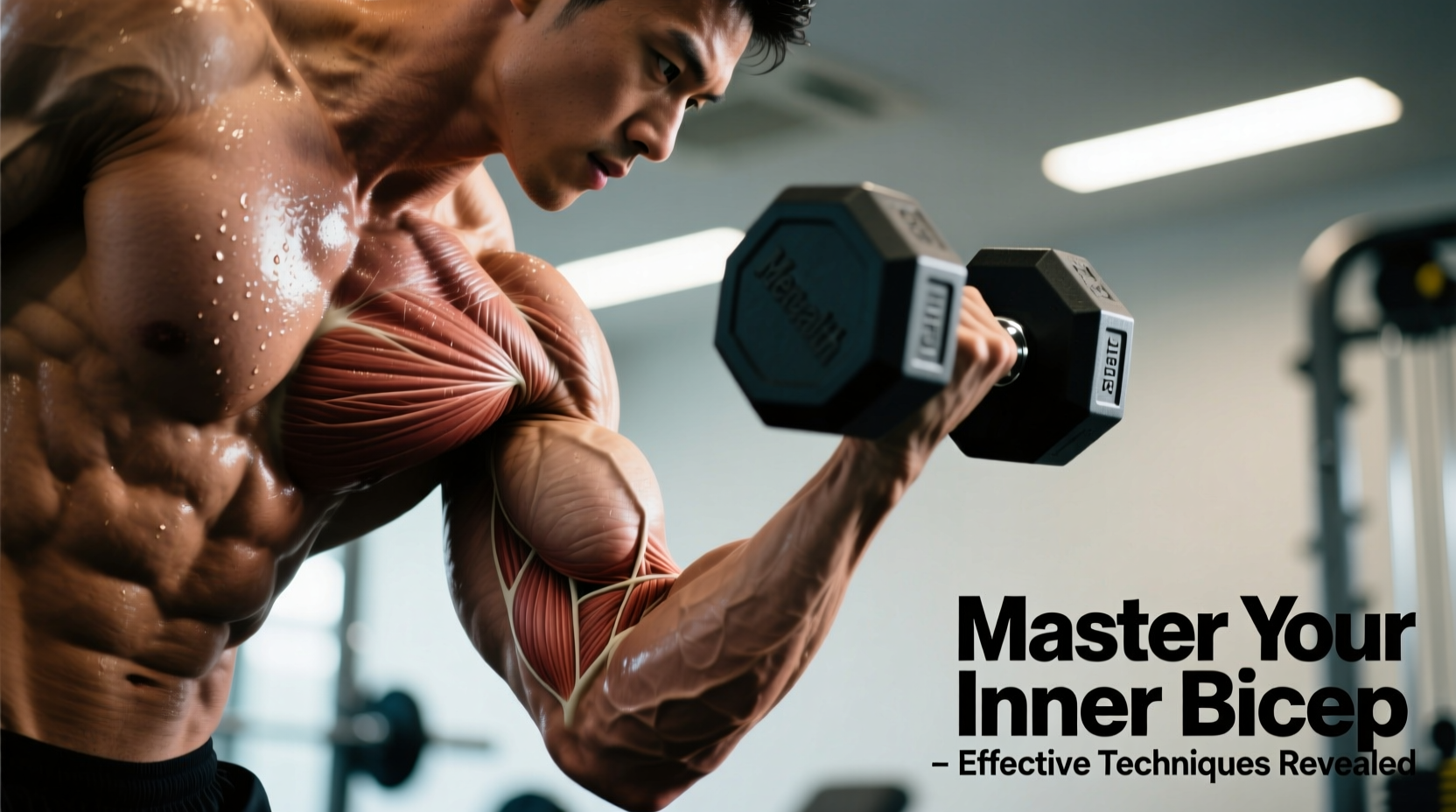
The short head of the biceps arises from the coracoid process of the scapula, while the long head attaches to the supraglenoid tubercle. Because the short head has a more medial origin, exercises that bring the arms across the body or emphasize shoulder flexion tend to activate it more intensely. Its primary actions include elbow flexion and supination of the forearm, but its contribution to shoulder movement is often overlooked.
Maximizing inner bicep growth isn’t just about lifting heavier weights—it’s about optimizing muscle recruitment through joint angles, grip variations, and contraction quality. Research in electromyography (EMG) studies shows that certain curl variations elicit higher activation in the short head, particularly those involving a neutral or semi-supinated grip and slight forward lean.
“Most people train their biceps with the same few movements, missing out on regional hypertrophy. By adjusting hand position and torso angle, you can shift emphasis between the inner and outer heads.” — Dr. Jordan Lee, Sports Biomechanist
Top 5 Exercises for Targeting the Inner Bicep
To isolate and stimulate the short head effectively, incorporate these scientifically supported movements into your routine:
- Incline Dumbbell Curl: Performed on a bench set at 45–60 degrees, this stretch-position exercise increases time under tension on the short head due to shoulder extension.
- Close-Grip Barbell Curl: Narrow hand placement brings both arms closer to the body’s midline, increasing inner bicep engagement.
- Concentration Curl: With the elbow pressed against the inner thigh, this move isolates the biceps and emphasizes peak contraction—ideal for inner head activation.
- Spider Curl (Prone Incline Curl): Lying face-down on an incline bench eliminates momentum and places constant tension on the biceps, especially the short head.
- Neutral-Grip Hammer Curl (with focus on slow eccentric): Though traditionally associated with brachialis development, controlled hammer curls also recruit the short head when performed with strict form and full range of motion.
Form Cues and Technique Adjustments
Even with the right exercises, poor execution can shift work away from the target muscle. Use these cues to enhance inner bicep activation:
- Keep elbows slightly in front of the torso during curls to maintain tension on the short head.
- Use a shoulder-width or narrower grip to align force vectors toward the inner arm.
- Initiate the curl by externally rotating the forearm slightly as you lift—this increases supination torque and engages the short head more fully.
- Avoid swinging or using back momentum; strict form ensures isolation.
- Control the negative phase (lowering) over 3–4 seconds to increase metabolic stress.
Step-by-Step Guide: How to Perform the Incline Dumbbell Curl for Inner Bicep Activation
- Set an adjustable bench to a 45-degree incline and sit down with a dumbbell in each hand.
- Allow arms to hang straight down behind your body, palms facing forward (supinated).
- Begin the movement by flexing the elbows slowly, leading with the pinky side of your hand.
- As you curl upward, rotate your wrists slightly outward at the top for maximum contraction.
- Squeeze the biceps hard at the peak—feel the inner portion tighten.
- Lower the weight with control, resisting gravity for 3–4 seconds per rep.
- Perform 3 sets of 8–12 reps with 60–90 seconds rest between sets.
Training Variables That Influence Inner Bicep Growth
Volume, frequency, and intensity must be tailored to optimize hypertrophy in the short head. Consider the following framework:
| Variable | Recommendation for Inner Bicep Development |
|---|---|
| Frequency | Train biceps 2–3 times per week with at least 48 hours between sessions |
| Volume | 10–18 total sets per week, spread across multiple sessions |
| Rep Range | 6–12 reps for strength-hypertrophy; 12–15 for metabolic stress |
| Tempo | Emphasize slow eccentrics (3–4 sec) and explosive concentrics |
| Rest Periods | 60–90 seconds for hypertrophy-focused sets |
Common Mistakes to Avoid
- Using excessive weight: Sacrificing form reduces muscle activation and increases injury risk.
- Neglecting the stretch phase: The incline position maximizes sarcomere stretch, which is critical for growth signaling.
- Over-relying on preacher curls: These favor the long head due to shoulder flexion limitation.
- Ignoring unilateral training: One-arm variations help correct imbalances and improve mind-muscle connection.
Mini Case Study: Transforming Arm Definition in 8 Weeks
Mark, a 32-year-old fitness enthusiast, had well-developed arms but noticed his inner biceps lacked fullness compared to his outer peaks. After consulting a strength coach, he revised his bicep routine to prioritize inner head activation. He replaced standard barbell curls with incline dumbbell curls and added concentration curls twice weekly. He also adjusted his tempo, focusing on a 4-second eccentric phase.
After eight weeks of consistent training with progressive overload, Mark gained 0.75 inches in upper arm circumference, with noticeable improvement in inner bicep sweep. His progress photos showed increased frontal fullness, confirming the effectiveness of targeted programming.
Checklist: Optimizing Your Inner Bicep Workout Routine
- ✅ Include at least one stretch-position exercise (e.g., incline curl)
- ✅ Use a narrow or neutral grip to emphasize the short head
- ✅ Perform 1–2 unilateral movements per session
- ✅ Control the eccentric phase of each repetition
- ✅ Squeeze at the top of every rep for 1–2 seconds
- ✅ Train biceps twice weekly with adequate recovery
- ✅ Track progress through measurements and performance
Frequently Asked Questions
Can you isolate the inner bicep completely?
No single exercise isolates only the inner bicep, as both heads work together during elbow flexion. However, specific techniques—such as close-grip positioning, shoulder extension, and supination control—can significantly increase relative activation of the short head.
Why don’t I feel my inner biceps working during curls?
Lack of mind-muscle connection is common. Try reducing weight, slowing down the movement, and visualizing the muscle contracting. Practicing in front of a mirror or using tactile feedback (touching the area) can enhance awareness.
How long does it take to see inner bicep development?
With consistent training, proper nutrition, and recovery, noticeable changes can appear within 6–10 weeks. Genetic factors influence muscle shape, but targeted training improves fullness regardless of structure.
Final Thoughts and Call to Action
Building impressive arms goes beyond lifting heavy and chasing pump. True mastery lies in understanding muscle anatomy, applying biomechanical principles, and executing with precision. The inner bicep responds best to intelligent programming—not brute force. By incorporating stretch-based movements, controlling tempo, and refining technique, you can achieve balanced, three-dimensional arm development that stands out from every angle.




 浙公网安备
33010002000092号
浙公网安备
33010002000092号 浙B2-20120091-4
Comments
No comments yet. Why don't you start the discussion?