
Integrating XEX—a hypothetical but representative system or data format used in advanced computational workflows—requires precision, planning, and a deep understanding of both the source and target environments. Whether you're working in software development, data engineering, or enterprise automation, efficient integration ensures seamless data flow, reduces latency, and minimizes errors. This guide walks through proven integration techniques, from initial assessment to post-deployment monitoring, offering actionable steps and real-world context to help you implement XEX integration with confidence.
Understanding XEX and Its Integration Challenges
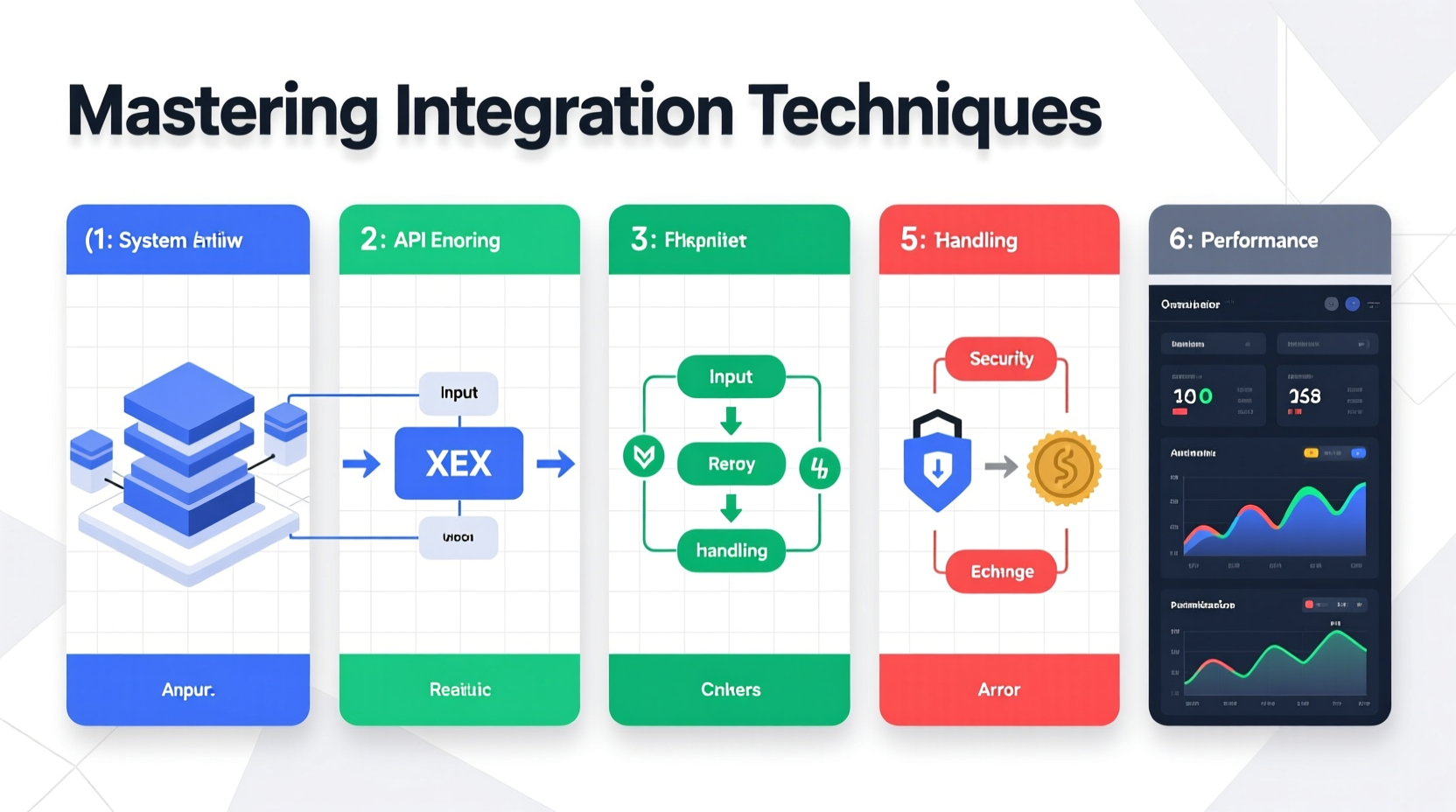
XEX is often used as a placeholder for complex binary or encrypted execution formats, particularly in systems requiring secure, high-performance processing. In practice, integrating XEX involves parsing structured binary data, managing dependencies, and ensuring compatibility across platforms. Common challenges include:
- Lack of standardized documentation
- Platform-specific decoding requirements
- Security constraints due to encryption or obfuscation
- Data type mismatches during transformation
- Performance bottlenecks when handling large payloads
To overcome these issues, integration must be approached methodically. A well-designed strategy not only ensures technical success but also future-proofs the implementation against evolving system demands.
Step-by-Step Guide to Efficient XEX Integration
Efficient integration isn't about speed alone—it's about reliability, scalability, and maintainability. Follow this six-phase process to integrate XEX effectively.
- Assessment & Discovery: Identify the origin of the XEX data, its purpose, and the systems involved. Document all known specifications, including version, encoding, and access protocols.
- Environment Setup: Create isolated development and testing environments that mirror production. Install required libraries (e.g., decryption tools, binary parsers) and ensure proper permissions.
- Schema Analysis: Use hex editors or dedicated XEX analyzers to reverse-engineer the structure if documentation is incomplete. Map fields to target system requirements.
- Transformation Logic Development: Write modular code to parse XEX binaries into usable formats (e.g., JSON, XML). Include error handling for malformed inputs.
- Integration Testing: Test with sample datasets covering edge cases—empty payloads, corrupted headers, oversized files. Validate output accuracy and performance.
- Deployment & Monitoring: Deploy incrementally using feature flags or canary releases. Monitor logs, latency, and failure rates in real time.
Timeline Example: 4-Week Integration Plan
| Week | Milestones | Deliverables |
|---|---|---|
| 1 | Discovery, team alignment, tool selection | Requirements document, environment setup |
| 2 | Schema analysis, parser prototype | Parsed sample output, field mapping |
| 3 | Code development, unit testing | Stable transformation module |
| 4 | End-to-end testing, deployment | Integrated pipeline, monitoring dashboard |
Best Practices for Reliable XEX Integration
Even with a solid plan, integration can fail without adherence to best practices. These guidelines help avoid common pitfalls.
- Use abstraction layers: Separate parsing logic from business logic to improve modularity and testability.
- Log everything: Record input hashes, timestamps, and transformation outcomes for auditability.
- Implement retry mechanisms: For network-dependent stages, use exponential backoff to handle transient failures.
- Secure sensitive data: If XEX contains encrypted payloads, ensure keys are managed via secure vaults—not hardcoded.
- Validate early and often: Check file signatures, checksums, and size limits at ingestion.
“Trying to integrate binary formats like XEX without proper validation is like flying blind. One malformed header can cascade into system-wide failures.” — Dr. Lena Torres, Systems Integration Lead at Nexora Labs
Common Mistakes and How to Avoid Them
Many integration projects stall due to preventable errors. The following table outlines key Do’s and Don’ts:
| Do | Don’t |
|---|---|
| Test with real-world data samples | Rely solely on theoretical schemas |
| Version control your integration scripts | Hardcode paths or credentials |
| Monitor memory usage during parsing | Load entire XEX files into RAM without streaming |
| Document field mappings and assumptions | Assume backward compatibility across versions |
| Use automated regression tests | Manually verify outputs after each change |
Real-World Example: Integrating XEX in a Financial Data Pipeline
A fintech company needed to ingest transaction logs stored in a proprietary XEX-like format from legacy ATMs. The data contained encrypted transaction metadata critical for fraud detection. Initial attempts failed due to inconsistent endianness and missing decryption keys.
The engineering team took a phased approach:
- Collaborated with the ATM vendor to obtain a formal specification
- Developed a lightweight C++ parser for high-speed binary reading
- Used Hashicorp Vault to securely retrieve decryption keys at runtime
- Transformed parsed data into Parquet format for analytics
Within three weeks, the pipeline processed over 2 million daily transactions with 99.98% success rate. The key to success was treating integration as a discovery process rather than a one-time coding task.
Essential Checklist for XEX Integration Success
Before launching your integration, verify the following:
- ✅ Confirmed XEX version and format specifications
- ✅ Set up isolated development and staging environments
- ✅ Verified access to decryption keys or authentication tokens
- ✅ Built and tested a working parser with sample data
- ✅ Implemented error logging and alerting
- ✅ Conducted load testing with realistic data volumes
- ✅ Documented field mappings and transformation rules
- ✅ Established rollback procedures in case of failure
Frequently Asked Questions
Can XEX files be integrated without decryption?
No—if the XEX payload is encrypted, decryption is mandatory before meaningful integration can occur. Attempting to parse encrypted binary data will result in garbage output. Ensure you have authorized access to the necessary keys or certificates.
What programming languages are best suited for XEX integration?
C++, Rust, and Python are most effective. C++ and Rust offer fine-grained memory control ideal for binary manipulation, while Python—with libraries like struct and binascii—provides rapid prototyping capabilities. Choose based on performance needs and team expertise.
How do I handle updates to the XEX format?
Treat format changes like API versioning. Maintain backward-compatible parsers, use semantic versioning for your integration modules, and subscribe to vendor update channels if available. Automated tests should include historical formats to catch regressions.
Conclusion: Turn Integration Into a Strategic Advantage
Mastering XEX integration isn’t just about connecting systems—it’s about unlocking data that drives decisions, automates processes, and enhances security. By following a disciplined, step-by-step approach, avoiding common traps, and learning from real-world implementations, you transform a technically complex task into a reliable, scalable asset.
The difference between a failed integration and a successful one often comes down to preparation and persistence. Start small, validate continuously, and build with extensibility in mind. Your ability to integrate XEX efficiently today sets the foundation for tomorrow’s more advanced systems.




 浙公网安备
33010002000092号
浙公网安备
33010002000092号 浙B2-20120091-4
Comments
No comments yet. Why don't you start the discussion?