
Texting is the backbone of daily communication for millions of iPhone users. Whether it’s coordinating plans, sharing updates, or sending quick replies, the Messages app plays a central role in staying connected. Yet most people only scratch the surface of its capabilities. With the right techniques, you can transform mundane texting into a seamless, expressive, and time-saving experience. From hidden gestures to smart automation, mastering iPhone texting means doing more with less effort—without sacrificing clarity or personality.
1. Optimize Your Keyboard for Speed and Accuracy
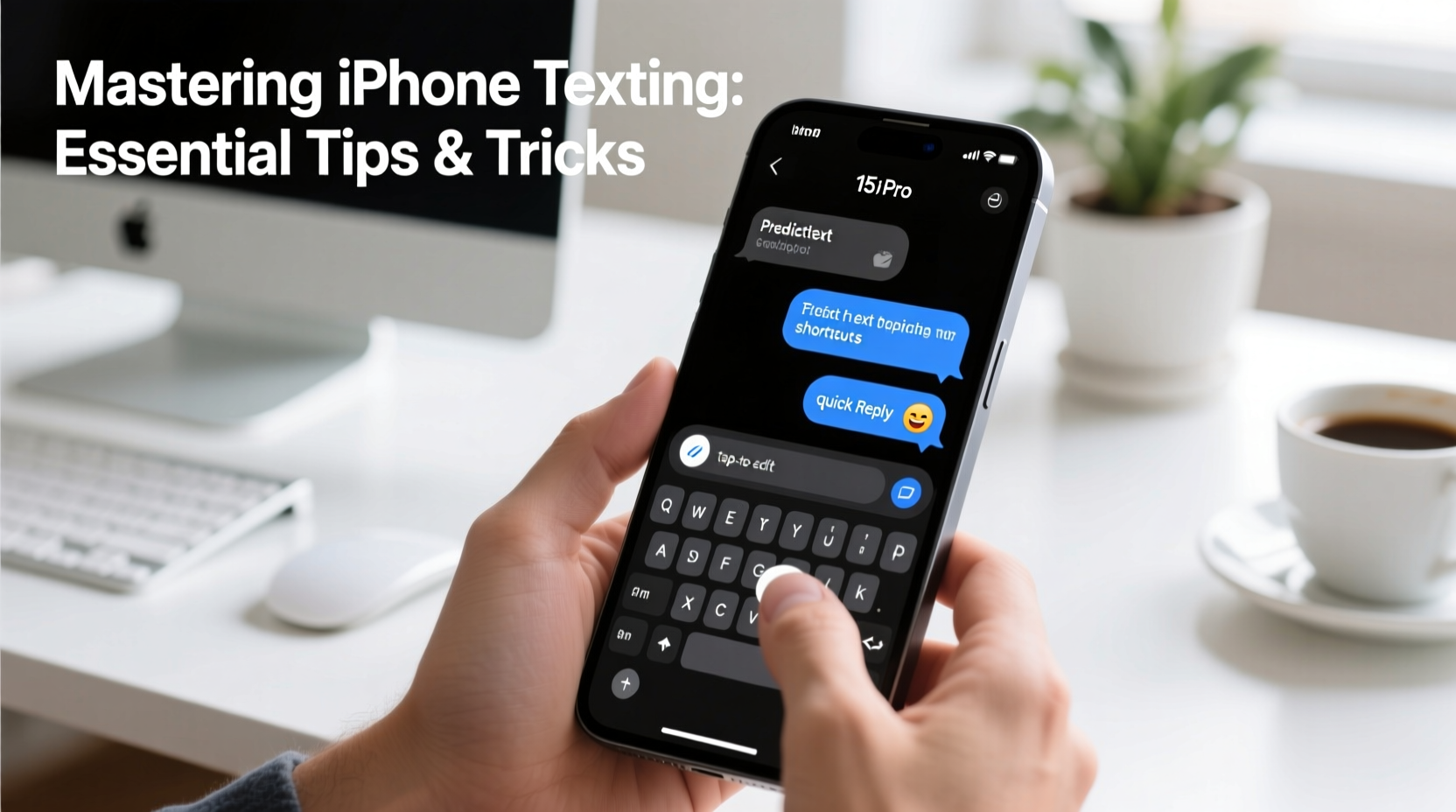
The iPhone keyboard is more than just a way to type—it’s a powerful tool designed to adapt to your habits. By understanding how it works, you can reduce typos, speed up input, and communicate more efficiently.
iOS uses predictive text powered by on-device machine learning that learns from your writing style over time. This means the longer you use your iPhone, the better it gets at anticipating your next word. To make the most of this:
- Tap the suggested word above the keyboard to accept predictions.
- Use swipe typing (QuickPath) by dragging your finger from letter to letter without lifting.
- Enable “AssistiveTouch” or one-handed mode if you frequently text with one hand.
This gesture turns the entire keyboard into a touch-sensitive pad, letting you move the cursor exactly where you need it. It’s especially useful when editing long messages or correcting mistakes deep within a sentence.
2. Leverage iMessage Features for Richer Conversations
iMessage isn’t just about sending texts—it supports rich media, interactive effects, and contextual cues that enhance tone and intent. Knowing when and how to use these tools can prevent misunderstandings and add flair to your conversations.
For example, tap and hold the send button to choose how your message appears: “Gentle,” “Loud,” “Slam,” or “Invisible Ink.” These effects change the animation and emphasis of your message, helping convey emotion beyond words.
“Visual feedback in messaging reduces miscommunication by up to 40%.” — Dr. Lena Torres, Digital Communication Researcher, Stanford University
You can also send audio messages by holding the microphone icon, which is faster than typing for complex explanations. And don’t forget about Read Receipts and typing indicators—these subtle cues help manage conversational flow naturally.
Do’s and Don’ts of iMessage Effects
| Do | Avoid |
|---|---|
| Use “Loud” for exciting news (e.g., concert tickets) | Overusing bubble animations in professional chats |
| Send invisible ink for playful surprises | Using slam effects during sensitive conversations |
| Try handwritten messages via Apple Pencil on iPad | Sending full-screen effects repeatedly in group threads |
3. Streamline Replies with Text Replacement and Shortcuts
If you find yourself typing the same phrases—like “On my way,” “Let me check,” or even your address—you’re wasting valuable seconds every day. iOS offers a built-in solution: Text Replacement shortcuts.
To set them up:
- Go to Settings > General > Keyboard > Text Replacement.
- Tap the + button.
- Enter a phrase (e.g., “See you at 6!”) and assign a shortcut (e.g., “@seeu”).
- Save and start using it anywhere you type.
Once configured, typing your shortcut automatically expands it into the full message. Power users often create shortcuts for email signatures, common responses, or even emojis.
Combine this with Siri Shortcuts for hands-free messaging. For instance, create a voice command like “Send I’m parking now” that auto-sends a pre-written text to a specific contact.
4. Real-World Example: Saving Time During Commute Chaos
Jamal, a project manager in Chicago, used to spend 15–20 minutes each morning updating his team about delays due to train issues. He’d manually type variations of “Running 10 mins late – train delay” across multiple messages.
After setting up a shortcut “/late” that expanded to “Running behind – train delay. Will be there by [time],” he cut his update time to under 10 seconds. He later added a Siri Shortcut so saying “Hey Siri, I’m delayed” triggered the message automatically.
Within a week, his punctuality communications became instant, consistent, and stress-free—even during rush hour chaos.
5. Organize Chats Like a Pro
As conversations pile up, finding important messages becomes harder. The key is proactive organization, not cleanup after the fact.
Pin your most critical conversations—family, close colleagues, or roommates—by swiping right on the chat and tapping the pin icon. Pinned threads stay at the top of your inbox, making them instantly accessible.
Use the search function wisely. Tap the search bar at the top of Messages and enter keywords, phone numbers, or even dates. iOS indexes message content, attachments, links, and photos, so you can find that shared restaurant reservation from three weeks ago in seconds.
Essential Chat Management Checklist
- ✅ Pin 3–5 high-priority contacts
- ✅ Delete old group chats you no longer need
- ✅ Mute noisy groups with “Do Not Disturb”
- ✅ Archive inactive one-on-one threads
- ✅ Regularly clear attachments to free up storage
Muting a group chat stops notifications without leaving the conversation—ideal for neighborhood boards or event planning groups that are useful but noisy.
Frequently Asked Questions
Can I edit or unsend a message after sending it?
Yes, starting with iOS 16, you can edit a message within 15 minutes of sending. Simply long-press the message, select “Edit,” make changes, and re-send. You can also undo a sent message within two minutes by choosing “Undo Send.” Both actions leave a small indicator (“Edited” or “Unsent”), so transparency is maintained.
Why do some texts appear green while others are blue?
Blue messages are iMessages (Apple-to-Apple encrypted texts over data or Wi-Fi). Green messages are standard SMS/MMS sent through your cellular carrier, typically to non-iPhone users. iMessages offer more features like read receipts, typing indicators, and effects; SMS does not.
How do I stop spam messages from cluttering my inbox?
Enable Filter Unknown Senders in Settings > Messages. This separates messages from contacts not saved in your phone into a separate tab. Additionally, report spam by tapping and holding the message, selecting “Report Junk,” then confirming. This helps Apple improve filtering over time.
Become a Messaging Power User
Mastering iPhone texting isn’t about memorizing every feature—it’s about integrating small efficiencies that compound over time. The difference between average and expert users isn’t raw typing speed; it’s knowing how to reduce friction, express intent clearly, and reclaim mental energy spent on routine communication.
Start by implementing one or two of these strategies today. Set up a single text replacement shortcut. Pin one important conversation. Try using an effect to clarify tone. Small steps lead to big gains in productivity and peace of mind.




 浙公网安备
33010002000092号
浙公网安备
33010002000092号 浙B2-20120091-4
Comments
No comments yet. Why don't you start the discussion?