
Jacket sets—coordinated outerwear paired with matching or complementary pieces—are more than just a fashion statement. When styled intentionally, they offer versatility, cohesion, and an elevated sense of personal style that transitions seamlessly from spring breezes to winter chills. The key to mastering jacket sets lies not in rigid adherence to trends but in understanding fabric, fit, layering techniques, and seasonal adaptability. Whether you're navigating urban commutes or weekend getaways, the right approach ensures you stay both warm and stylish throughout the year.
Understanding Jacket Sets: Beyond the Matched Look
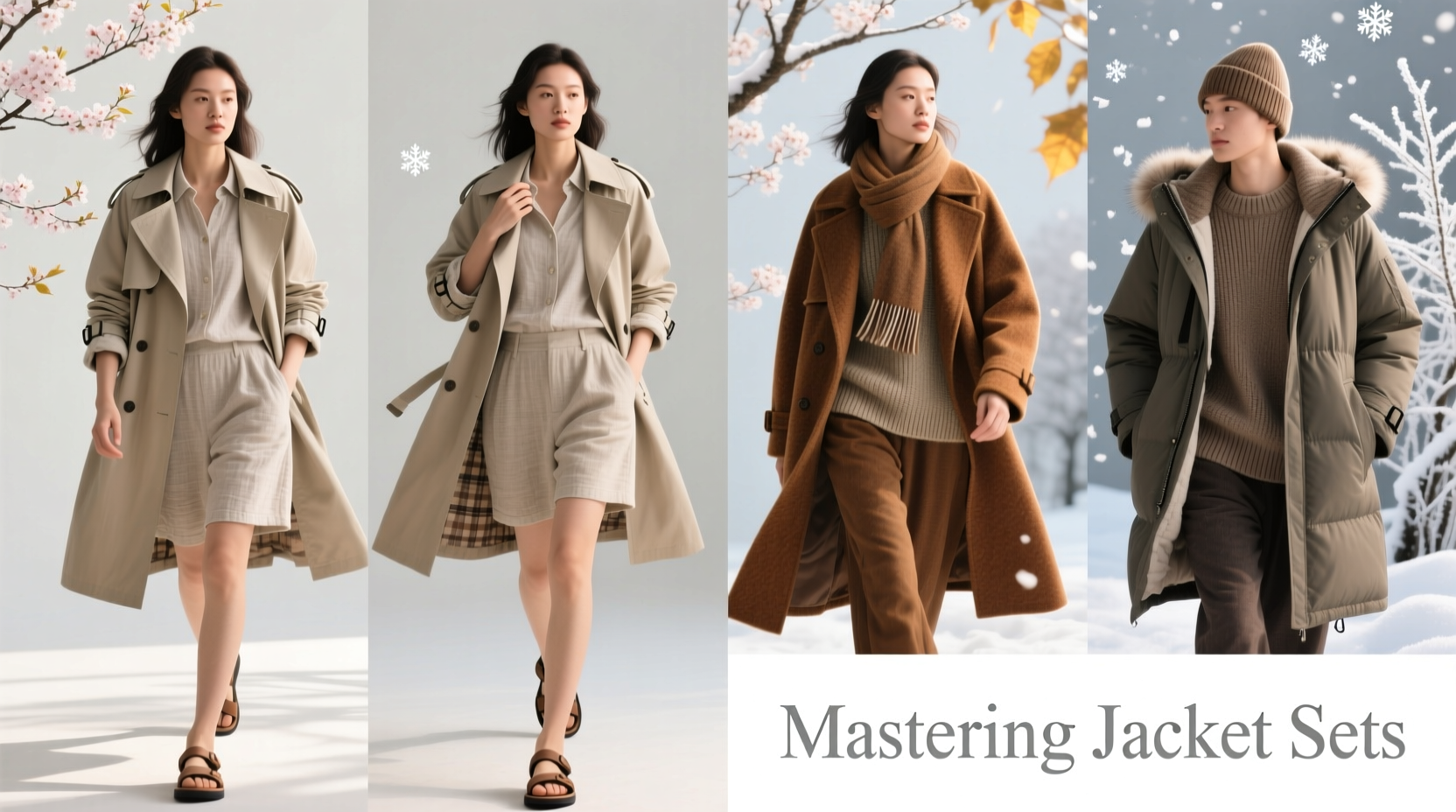
A jacket set traditionally refers to a coordinated ensemble where the outer layer (jacket) is designed to pair with another garment—such as trousers, vests, skirts, or even inner layers like sweaters or shirts. While early interpretations leaned toward formal tailoring, modern fashion embraces relaxed fits, mixed textures, and modular styling.
The evolution of jacket sets has made them accessible beyond boardrooms. Today’s versions include denim-on-denim combos, quilted nylon sets for outdoor adventures, and knit twinsets ideal for transitional weather. What unites these variations is intentionality: each piece complements the other in color, proportion, or material, creating visual harmony without sacrificing mobility.
“Modern dressing isn’t about matching head-to-toe—it’s about balance. A well-coordinated jacket set draws attention through subtlety, not uniformity.” — Lena Park, Menswear & Lifestyle Stylist
Spring: Lightweight Layers and Transitional Textures
Spring demands adaptability. Mornings may be crisp, while afternoons turn mild. This makes lightweight jacket sets—especially those in cotton twill, linen blends, or unlined wool—ideal choices.
Consider a neutral-toned cotton jacket paired with tapered chinos. Roll the sleeves slightly for a casual touch, and wear with a breathable T-shirt underneath. Footwear should reflect the season: suede loafers or minimalist sneakers keep the look grounded yet fresh.
For women, a cropped blazer set in pastel tones pairs beautifully with slip dresses or high-waisted jeans. Add sheer tights early in the season and swap them out as temperatures rise.
Spring Styling Checklist
- Choose breathable fabrics like cotton, linen, or blended rayon
- Opt for unstructured jackets without heavy padding
- Use color coordination rather than exact matches (e.g., navy jacket with slate trousers)
- Layer over tees, light polos, or sleeveless tops
- Switch to low-profile footwear: espadrilles, clean sneakers, or ballet flats
Summer: Staying Cool Without Sacrificing Style
Wearing a jacket in summer might seem counterintuitive, but lightweight sets serve practical purposes—from UV protection to air-conditioned indoor spaces. The trick is selecting ultra-thin materials and strategic timing.
Linen-blend jackets are top performers here. Though prone to wrinkling, their breathability and natural drape make them perfect for beachside dinners or evening events. Pair with relaxed-fit shorts or cropped pants in complementary earth tones. Avoid black; instead, go for sand, ivory, olive, or sky blue.
Another smart move: invest in utility-style jacket sets made from ripstop or moisture-wicking synthetics. These work well for travel or active days, offering sun coverage and pocket functionality without overheating.
| Season | Recommended Fabric | Avoid | Best Use Case |
|---|---|---|---|
| Spring | Cotton Twill, Light Wool | Heavy Padding, Fleece Lining | Daytime Errands, Casual Meetings |
| Summer | Linen, Ripstop Nylon | Dark Colors, Non-Breathable Synthetics | Outdoor Events, Evening Outings |
| Fall | Wool Blend, Corduroy | Thin Knits Alone | Commute, Layered Looks |
| Winter | Waxed Cotton, Insulated Down | Unlined Jackets | Extended Outdoor Exposure |
Fall: Embrace Texture and Depth Through Layering
Fall is where jacket sets truly shine. As temperatures drop, layering becomes essential—and a well-designed set provides the foundation for building dimension.
Start with a structured wool-blend jacket and pair it with corduroy trousers or pleated wool skirts. Underneath, add a turtleneck or flannel shirt. For extra warmth, insert a waistcoat or vest between layers. This creates depth without bulk, maintaining silhouette integrity.
Color palettes shift toward richer tones: burgundy, forest green, mustard, and charcoal dominate. These hues not only suit autumnal landscapes but also allow for greater mixing across wardrobes. A brown leather jacket set, for example, can transition into winter with darker underlayers and insulated accessories.
Winter: Function Meets Fashion in Coordinated Warmth
In colder months, performance matters as much as appearance. Winter-ready jacket sets often feature thermal lining, water-resistant shells, or down insulation. Think ski-inspired ensembles, parka-and-pant combos, or tailored overcoat sets with matching trousers.
The challenge lies in avoiding a “costume” effect. To prevent this, vary textures within the same tonal family. For instance, pair a matte-finish puffer jacket with ribbed-knit cuffs and a brushed-wool pant. Keep colors monochromatic or tonal—navy with gray, charcoal with black—to maintain elegance.
Accessories play a critical role. Gloves, scarves, and beanies should complement rather than clash with the set. Consider wearing a beanie in a hue pulled from the jacket’s accent stitching, or gloves that mirror the lining color.
Step-by-Step Guide: Building a Four-Season Jacket Wardrobe
- Evaluate your climate: Identify how many months you experience each season to prioritize purchases.
- Invest in one core set per temperature range: e.g., linen for summer, wool for fall, insulated for winter, cotton for spring.
- Ensure mix-and-match compatibility: Choose sets in neutral bases (khaki, gray, navy) so pieces can cross over.
- Test layering potential: Try each set with at least three different under-layers to assess versatility.
- Rotate and store properly: Use breathable garment bags and avoid plastic to preserve fabric integrity off-season.
Real-World Example: Alex’s Year-Round Commute Style
Alex, a graphic designer in Portland, Oregon, faces unpredictable weather year-round. His solution? A capsule system built around three jacket sets.
In spring, he wears a sage-green cotton jacket with matching chinos and white sneakers—a clean, professional look suitable for client meetings. During summer, he swaps the trousers for rolled linen pants and adds sunglasses for outdoor café lunches.
Fall sees him layering a charcoal herringbone blazer set over a cream turtleneck, transitioning easily from studio work to evening shows. By winter, he relies on a black technical shell set with thermal lining, pairing it with boots and a scarf for his bike commute.
By breaking apart sets and rotating elements, Alex maximizes fewer garments while always appearing polished. His strategy proves that thoughtful planning beats quantity.
Frequently Asked Questions
Can I wear a jacket set casually?
Absolutely. Swap formal trousers for jeans or chinos, remove ties or structured shirts, and opt for sneakers or boots. The key is softening the formality through footwear and relaxed fits.
How do I avoid looking too “matchy”?
Vary textures, roll sleeves, or leave the jacket open. You can also introduce contrasting accessories—like a patterned pocket square or colored belt—to disrupt total uniformity.
Are jacket sets worth the investment?
Yes, if chosen wisely. A high-quality set in a timeless cut and neutral tone offers dozens of outfit combinations across years. They reduce decision fatigue and streamline packing for travel.
Final Thoughts: Master Your Look, One Season at a Time
Mastering jacket sets isn’t about perfection—it’s about preparation. With the right materials, mindful layering, and seasonal awareness, you can craft outfits that are as functional as they are fashionable. The most stylish people aren’t those with the most clothes, but those who know how to use what they have with confidence and consistency.




 浙公网安备
33010002000092号
浙公网安备
33010002000092号 浙B2-20120091-4
Comments
No comments yet. Why don't you start the discussion?