
Selecting the right jacket is more than just about style—it’s about proportion, comfort, and longevity in your wardrobe. A well-fitting jacket enhances posture, complements your body shape, and transitions seamlessly from casual to formal settings. Yet, many men and women struggle with inconsistent sizing across brands, misleading labels, or misunderstanding what constitutes a truly good fit. The result? Jackets that bunch, pull, or hang awkwardly, undermining even the most thoughtfully curated outfit.
The key to mastering jacket sizing lies not in memorizing measurements alone, but in understanding how different cuts, fabrics, and intended uses influence fit. Whether you're investing in a tailored wool blazer, a rugged denim jacket, or a sleek bomber, precision in fit ensures versatility and timelessness. This guide breaks down the essential elements of jacket sizing, offering practical advice, real-world examples, and expert-backed principles to help you make smarter choices every time you shop.
Understanding Body Proportions and Jacket Silhouettes
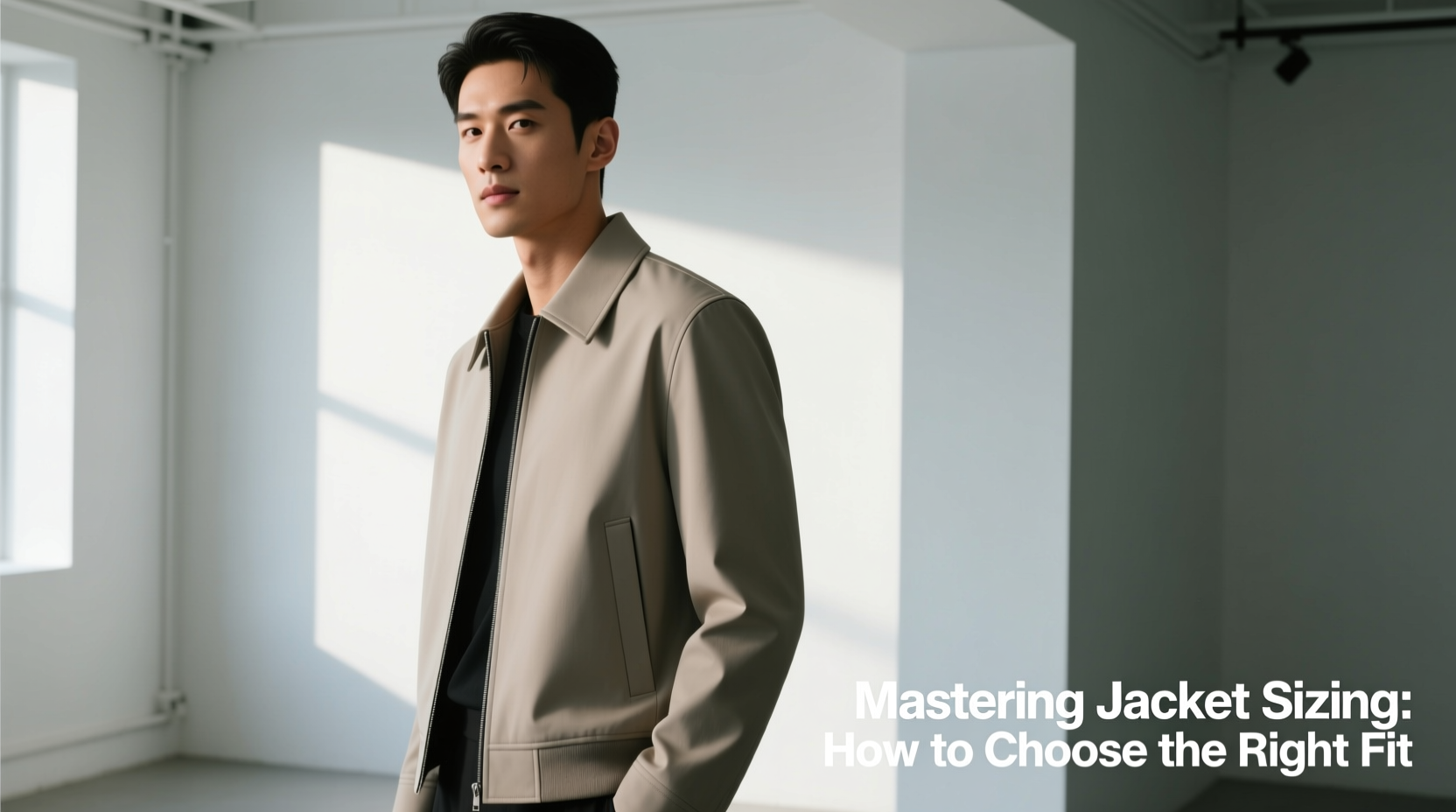
Jacket fit begins with recognizing your body type and how various silhouettes interact with it. Common body shapes—athletic, slim, broad-shouldered, or rectangular—respond differently to cuts like slim, regular, or relaxed. A slim-fit jacket may look sharp on a slender frame but strain across the chest on someone with broader shoulders. Conversely, a boxy cut might drown a petite figure while providing balance for a taller individual.
Shoulder alignment is the most critical factor. The seam where the sleeve meets the shoulder should sit precisely at the edge of your natural shoulder line. If it extends beyond, the jacket is too large; if it cuts into your arm, it's too tight. This rule applies universally, regardless of style.
Sleeve length matters just as much. Ideally, the cuff should rest at the base of your thumb, allowing about 1/4 to 1/2 inch of shirt cuff to show. Too long, and the jacket overwhelms your hands; too short, and it appears undersized.
Key Measurements for Precision Fit
To evaluate fit accurately, focus on three primary measurements: chest, waist, and sleeve length. While brands provide size charts, these often vary significantly. Taking your own measurements ensures consistency.
- Chest: Measure around the fullest part of your chest, keeping the tape snug but not tight. Your arms should be slightly raised during measurement.
- Waist: For structured jackets, measure around your natural waistline, typically an inch above the navel.
- Sleeve Length: From the base of your neck (at the spine) over the shoulder to the wrist bone. Alternatively, measure an existing well-fitting jacket from shoulder seam to cuff.
Once measured, compare your numbers to the brand’s specific chart—not generic “medium” or “large” labels. Many premium brands now list actual garment measurements rather than body sizes, making this comparison easier.
| Measurement | How to Measure | Tolerance Range |
|---|---|---|
| Chest | Around fullest part, under arms | 1–2 inches of ease recommended |
| Shoulder Width | From one shoulder seam to the other | Must align exactly with natural shoulder |
| Sleeve Length | From shoulder seam to wrist bone | Allow 1/4–1/2 inch past shirt cuff |
| Jacket Length | From base of collar to bottom hem | Hem should cover seat |
Fit by Jacket Type: Matching Style to Function
Not all jackets serve the same purpose, and their ideal fit varies accordingly. Recognizing these differences prevents misjudging a jacket based on standards meant for another category.
- Blazers & Suit Jackets: Should feel snug but not restrictive. Minimal gaping when buttoned. Lapels lie flat. Ideal for structured, professional environments.
- Bomber & Field Jackets: Designed with slight ease for layering. Shoulder seams stay aligned, but chest allows room for sweaters.
- Denim & Chore Jackets: Often meant to fit closer to the body. Slight break-in softening is expected.
- Overcoats & Trench Coats: Require additional room for suits or heavy layers. Focus on shoulder structure and length—typically falling below the knee.
“Fit isn’t about squeezing into the smallest size. It’s about creating clean lines that follow the body without constriction.” — Daniel Reed, Menswear Tailor & Fit Consultant
Mini Case Study: From Ill-Fitting to Impeccable
James, a 34-year-old architect, consistently bought off-the-rack blazers labeled ‘slim fit’ because he assumed they looked modern. However, his broad shoulders caused the fabric to pull across the back, and the sleeves covered his shirt cuffs. After measuring himself and comparing to actual garment specs, he discovered he needed a 42R instead of a 40S. The new jacket had slightly more chest room but perfect shoulder alignment and sleeve length. The difference was immediate: cleaner lines, better posture, and greater confidence in client meetings. He now prioritizes precise measurements over assumed size categories.
Step-by-Step Guide to Testing Jacket Fit In-Store or Online
Whether shopping physically or online, use this five-step process to assess fit effectively:
- Put it on with appropriate layers. Wear a dress shirt or light sweater, depending on intended use.
- Check the shoulders first. The seam should hit exactly at the shoulder’s edge—no drooping or pulling.
- Button and assess the chest. There should be no tension or diagonal pulling near the buttons. You should be able to comfortably fit a fist between the jacket and your torso.
- Evaluate sleeve and body length. Cuffs should expose a small portion of shirt; hem should cover the seat without riding up.
- Move around. Raise your arms, sit down, reach forward. The jacket should move with you, not restrict motion.
For online purchases, refer to detailed size charts and customer reviews mentioning fit. Brands like Bonobos, Suitsupply, and Arket provide garment-specific measurements, reducing guesswork.
Common Fit Mistakes and How to Avoid Them
Even experienced shoppers fall into common traps. Awareness helps prevent costly errors:
- Ignoring shoulder fit because the chest feels okay. A jacket can have ample chest room but still fail due to poor shoulder alignment.
- Choosing shorter lengths for a “trendy” look. A jacket that doesn’t cover the seat disrupts proportion and looks unbalanced.
- Overlooking fabric stretch. Blends with elastane allow more flexibility, which can compensate slightly for minor sizing discrepancies—but shouldn’t replace proper fit.
- Assuming all “slim” fits are the same. One brand’s slim may be another’s regular. Always check cut descriptions.
“People focus on chest size, but the shoulders are non-negotiable. That’s why tailors charge so much to fix them—it’s nearly impossible without rebuilding the entire structure.” — Lila Chen, Bespoke Tailor, London
Frequently Asked Questions
Can a jacket be altered if the shoulders are wrong?
No. Shoulder seams cannot be adjusted without reconstructing the entire jacket, which is rarely cost-effective. Always prioritize correct shoulder fit when purchasing.
How much ease should a jacket have in the chest?
For a tailored jacket, 2–3 inches of ease (chest measurement minus body measurement) is standard. Casual jackets may have 4–6 inches for layering.
Is it better for a jacket to be slightly big or slightly small?
Slightly big is preferable—if only in the chest or length—as long as the shoulders and sleeves are correct. A too-small jacket will always look strained and uncomfortable.
Final Checklist: Before You Buy
- ✅ Shoulder seam aligns with natural shoulder edge
- ✅ Chest allows 1–2 inches of ease (more for casual styles)
- ✅ Sleeve length shows 1/4–1/2 inch of shirt cuff
- ✅ Jacket hem covers the seat
- ✅ No pulling when buttoned
- ✅ Full range of motion when raising arms or sitting
- ✅ Fabric drapes smoothly without wrinkles or puckering
Conclusion
Mastering jacket sizing transforms your wardrobe from a collection of garments into a cohesive, adaptable system of style. The right fit does more than flatter—it builds confidence, improves posture, and ensures each piece earns its place in your closet. By focusing on objective measurements, understanding silhouette nuances, and testing fit methodically, you eliminate guesswork and invest wisely in pieces that last.




 浙公网安备
33010002000092号
浙公网安备
33010002000092号 浙B2-20120091-4
Comments
No comments yet. Why don't you start the discussion?