
Learning to write in Japanese is one of the most rewarding challenges a language learner can undertake. Unlike alphabetic systems, Japanese uses three distinct scripts—hiragana, katakana, and kanji—each serving unique functions in written communication. For beginners, this tripartite system can seem overwhelming. However, with structured learning, consistent practice, and the right techniques, anyone can develop strong writing skills in Japanese. This guide provides actionable methods, expert-backed strategies, and real-world insights to help you build confidence and competence from day one.
Understanding the Three Scripts
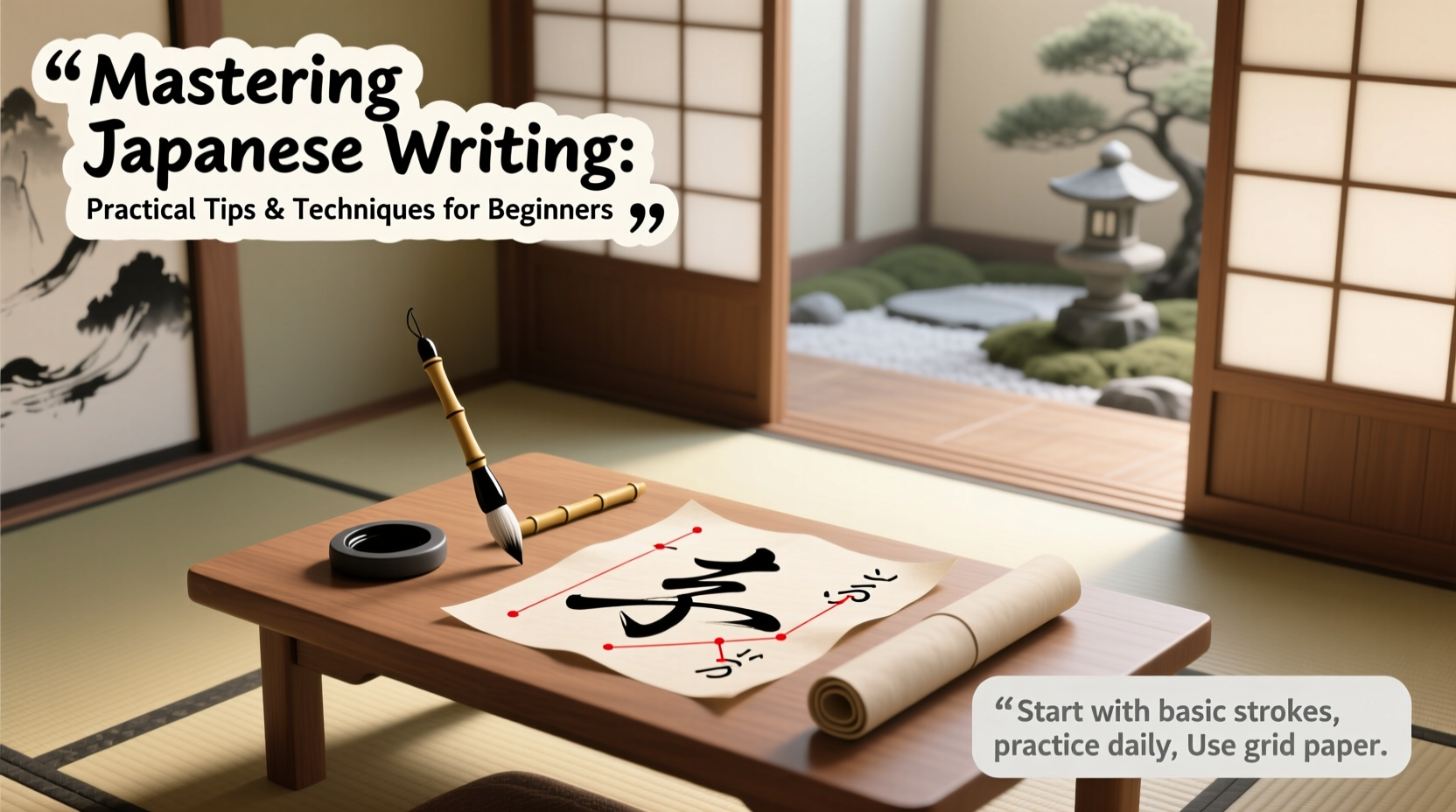
Before writing begins, it's essential to understand what each script does:
- Hiragana: Used for native Japanese words, grammatical particles, and verb endings.
- Katakana: Reserved for foreign loanwords, onomatopoeia, and emphasis.
- Kanji: Chinese-derived characters representing meaning and used in nouns, verbs, and adjectives.
Beginners should master hiragana and katakana first. These phonetic syllabaries consist of 46 basic characters each (plus variations), making them manageable within a few weeks of focused study. Kanji follows, starting with the most common characters used in daily life.
Step-by-Step Guide to Learning Kana Efficiently
Here’s a proven timeline to master hiragana and katakana in under four weeks:
- Week 1: Focus on hiragana. Break it into groups (e.g., a, i, u, e, o columns) and learn five per day.
- Week 2: Review hiragana daily while beginning katakana using the same grouping method.
- Week 3: Mix both scripts in reading and writing exercises. Use worksheets to trace and reproduce characters.
- Week 4: Test yourself without prompts. Write full sentences using only kana (e.g., “わたしのなまえはたろうです。”).
This method ensures gradual absorption and prevents cognitive overload. Writing by hand significantly improves retention compared to typing alone.
Kanji Mastery: Techniques That Work
Kanji is often the biggest hurdle. With over 2,000 commonly used characters, memorization seems daunting. But effective strategies make it manageable.
Start with the JLPT N5 list—the 100–150 most basic kanji. Each character has readings (on’yomi and kun’yomi), meanings, and stroke order. Prioritize meaning and writing first; readings come with vocabulary exposure.
Use the Heisig method (from *Remembering the Kanji*) to associate characters with imaginative stories. For example, the kanji 木 (tree) might be remembered as “a trunk with branches spreading out.” This builds visual memory before introducing pronunciation.
| Kanji | Meaning | On’yomi | Kun’yomi | Example Word |
|---|---|---|---|---|
| 水 | water | スイ (sui) | みず (mizu) | 水道 (すいどう) – water supply |
| 火 | fire | カ (ka) | ひ (hi) | 火花 (かせつ) – spark |
| 人 | person | ジン (jin) | ひと (hito) | 日本人 (にほんじん) – Japanese person |
Daily Practice Routine for Long-Term Progress
Consistency beats intensity when learning Japanese writing. A short, focused daily session yields better results than sporadic long sessions.
Follow this 30-minute daily checklist:
- Write 10 hiragana/katakana characters from memory (5 min)
- Review 5 previously learned kanji with full stroke order (10 min)
- Learn 1–2 new kanji using story-based memorization (10 min)
- Copy a short sentence from a textbook or app (5 min)
Over time, increase complexity. After one month, begin composing original sentences using known vocabulary. For example: “きょうは あめ です。” (Today is rainy.) Gradually incorporate new grammar and kanji.
“Writing by hand activates different parts of the brain than typing. Students who write kanji manually retain characters longer and read faster.” — Dr. Yuki Tanaka, Cognitive Linguist at Osaka University
Common Mistakes to Avoid
Many beginners unknowingly adopt habits that slow progress. Recognizing these pitfalls early helps maintain momentum.
| Mistake | Why It’s Problematic | What to Do Instead |
|---|---|---|
| Skipping stroke order | Leads to illegible handwriting and confusion in advanced characters | Use grid paper and follow official stroke sequences |
| Focusing only on recognition | You may recognize kanji but fail to write them independently | Balanced practice: read, write, and recall from memory |
| Trying to learn too many kanji at once | Causes burnout and poor retention | Limit to 5–10 new kanji per week initially |
Real Example: How Maya Learned to Write Her First Paragraph
Maya, a university student in Canada, began studying Japanese with no prior experience. She committed to 25 minutes of writing practice every morning using a kana workbook and a beginner kanji app.
In her first week, she mastered hiragana and could write simple phrases like “おはよう” (good morning). By week three, she was writing diary entries: “きのう、ねこをみました。ちいさいでした。” (Yesterday, I saw a cat. It was small.)
She used sticky notes around her apartment labeled in Japanese—“ドア” (door), “みず” (water)—to reinforce daily exposure. Within two months, she wrote a 50-word paragraph describing her weekend using 12 kanji and proper grammar.
Her secret? Daily consistency and embracing mistakes as part of the process. “I didn’t wait until I was perfect,” she said. “I just started writing, even if it was wrong.”
Essential Tools and Resources
Leverage modern tools to support your learning:
- Anki: Custom flashcard decks for kana and kanji with spaced repetition.
- WaniKani: A gamified platform teaching kanji through radicals and mnemonics.
- Tae Kim’s Guide: Free online resource explaining grammar needed for writing.
- Genki Workbooks: Structured exercises that integrate writing with speaking and listening.
- Grid Paper (Squares): Essential for maintaining proportion and stroke alignment in kanji.
Combine digital tools with analog practice. Always write with pen and paper—it strengthens motor memory more effectively than typing.
FAQ
How long does it take to learn basic Japanese writing?
With daily practice, most learners master hiragana and katakana in 3–4 weeks. Basic kanji (JLPT N5 level) takes 3–6 months depending on study intensity. Full functional literacy requires 1–2 years of consistent effort.
Do I need to learn all kanji to write properly?
No. The Japanese government designates 2,136 joyo kanji as standard, but fluency starts with the most frequent 500–800. Focus on high-frequency characters first and expand gradually through reading and writing.
Is handwriting still important in the digital age?
Absolutely. Handwriting improves memory, comprehension, and cultural connection. Many Japanese still write by hand for notes, forms, and personal messages. It also aids in reading complex characters later on.
Conclusion: Start Writing Today
Mastering Japanese writing isn’t about perfection—it’s about persistence. Every stroke, every miswritten character, and every corrected sentence builds your ability. Begin with kana, embrace kanji one step at a time, and write something in Japanese every single day, no matter how small.




 浙公网安备
33010002000092号
浙公网安备
33010002000092号 浙B2-20120091-4
Comments
No comments yet. Why don't you start the discussion?