
Dining is more than just eating—it's a social ritual. Whether you're attending a business lunch, a wedding reception, or a dinner party at a friend’s home, your table manners speak volumes before you say a word. Among the most visible signs of refinement are how confidently and correctly you handle your cutlery. Mastering knife, fork, and spoon etiquette isn’t about rigid rules; it’s about grace, awareness, and respect for others at the table.
This guide breaks down essential dining practices into actionable steps, helping you navigate any meal with quiet confidence—no matter the setting.
The Basics: Where Each Utensil Belongs
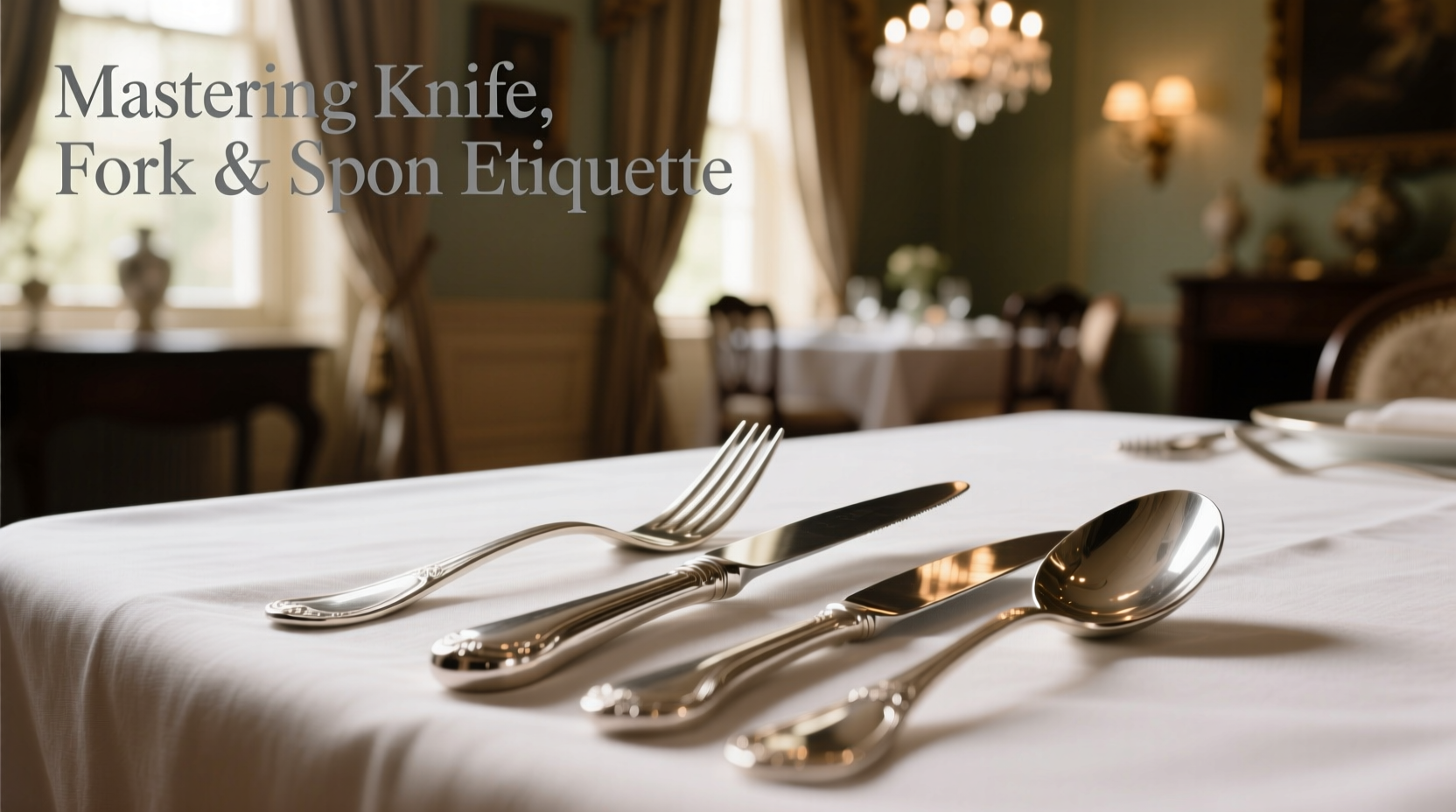
Cutlery placement follows a logical pattern: utensils are arranged in the order they’ll be used, from the outside in. This rule applies whether you're facing a simple three-course meal or an elaborate seven-course tasting menu.
Your outermost fork is typically for salad or appetizers, the one next to your plate is for the main course, and any fork on the far right (or above the plate) may be a dessert fork. Knives are always placed to the right of the plate, spoons to the right of the knives. Dessert spoons or forks often rest horizontally above the plate.
Setting the Table: A Quick Reference
| Position | Utensil | Purpose |
|---|---|---|
| Left of Plate | Forks | Salad (outer), Main Course (inner) |
| Right of Plate | Knives & Spoons | Knife for entrée, spoon for soup or fish |
| Above Plate | Dessert Spoon/Fork | Served with dessert course |
| Upper Right | Teaspoon | For tea, coffee, or cereal if applicable |
| On Plate | Bread Plate Knife | Small knife for butter on bread plate |
How to Hold Your Utensils: The American vs. European Style
Two dominant styles govern how people hold their cutlery: the American “zig-zag” method and the Continental (European) “static hand” technique.
In the American style, you cut food with the knife in your right hand and fork in your left. After cutting, you set down the knife and switch the fork to your right hand to eat. This back-and-forth motion gives it the nickname “zig-zag.”
The Continental style keeps the fork in the left hand throughout the meal. You cut food with the knife in your right, then spear and eat with the same fork—tines down—without switching hands. This method is considered more efficient and elegant by many etiquette experts.
“Eating with tines down isn’t pretentious—it’s precision. It keeps food securely on the fork and reduces noise.” — Isabelle Laurent, Etiquette Instructor, Geneva Academy of Social Conduct
Using the Knife, Fork, and Spoon: Practical Scenarios
Each utensil has its moment. Knowing when and how to use them prevents awkward pauses or missteps during a meal.
Using the Knife
- Always use the knife to cut food into bite-sized pieces—one at a time.
- Never wave your knife while gesturing; lay it diagonally across your plate when not in use.
- If no knife is provided, it means the dish doesn’t require cutting (e.g., soft fish or stew).
Handling the Fork
- Use the fork to spear food, never to scoop like a shovel.
- When finished, place the fork tines-down on the plate at the 4:20 position to signal completion.
- Never rest your fork on the tablecloth—always keep it on the plate or bowl.
Employing the Spoon
- Tilt soup away from you to avoid splashing.
- Sip from the side of the spoon, not the tip.
- After each sip, return the spoon to the bowl—not on the table or your plate.
Step-by-Step Guide: Navigating a Formal Meal
Formal dining can feel intimidating, but following a clear sequence simplifies everything.
- Wait to be seated. Let the host or senior guest begin first.
- Unfold your napkin and place it on your lap after everyone is seated.
- Start with the outermost utensils. Use the salad fork first, then move inward.
- Cut food quietly. Use gentle pressure and saw smoothly—don’t stab or tear.
- Pause properly. Rest utensils in a “V” shape on the plate during breaks.
- Signal you’re finished. Place knife and fork parallel at 4:20 (fork tines down, knife blade facing in).
- Leave the napkin loosely folded to the left of your plate upon leaving.
“At high-level diplomatic dinners, I’ve seen careers subtly advanced—or damaged—based on something as small as how someone handled their spoon.” — Ambassador Robert Haines, Retired Foreign Service Officer
Common Mistakes and How to Avoid Them
Even well-meaning diners make errors. Awareness is the first step toward improvement.
| Mistake | Why It Matters | Correct Approach |
|---|---|---|
| Using the wrong fork | Signals inattention to detail | Work from the outside in |
| Elbows on the table | Appears lazy or aggressive | Keep elbows off except between bites |
| Blowing on hot soup | Can spray droplets; looks impatient | Let it cool naturally or stir gently |
| Reaching across the table | Disrupts others’ space | Ask politely for items to be passed |
| Eating with mouth open | Unhygienic and distracting | Chew with lips closed, moderate bite size |
Mini Case Study: The Business Dinner That Almost Went Wrong
Julia, a marketing manager, was invited to a client dinner at a Michelin-starred restaurant. She dressed impeccably and knew her pitch—but nearly undermined it over soup. As the amuse-bouche arrived, she picked up her spoon incorrectly, scooping away from herself and splashing broth on her blouse. Then, after finishing, she laid her spoon on the tablecloth instead of the bowl.
Luckily, her companion didn’t notice, but Julia later researched proper spoon use. At the next dinner, she executed every step flawlessly. Her client remarked, “You carry yourself so comfortably in these settings—it makes collaboration feel seamless.”
It wasn’t her clothes or pitch that sealed the deal. It was poise at the table.
Checklist: Essential Dining Etiquette Habits
- ✅ Napkin on lap immediately after sitting
- ✅ Start with outermost utensils
- ✅ Cut food one piece at a time
- ✅ Keep elbows off the table
- ✅ Chew with mouth closed
- ✅ Place utensils at 4:20 when finished
- ✅ Wait for host to begin eating
- ✅ Ask for items to be passed rather than reaching
- ✅ Sip, don’t slurp, soup
- ✅ Leave napkin neatly folded to the left when done
FAQ: Common Questions About Dining Etiquette
What do I do if I drop my fork?
Remain calm. Quietly say, “Excuse me,” and ask the server for a replacement. Never pick it up from the floor or continue using it.
Is it rude to leave food on my plate?
In Western cultures, finishing your meal shows appreciation. However, if you’re full, it’s acceptable to leave a small amount—especially at formal events where portion control is expected. Avoid pushing food around excessively.
Can I use my finger for certain foods?
Yes. Items like asparagus, sandwiches, pizza, and shellfish are traditionally eaten by hand—even in formal settings. When in doubt, observe others or follow the host’s lead.
Final Thoughts: Elevate Every Meal
Polished dining skills aren’t reserved for aristocrats or diplomats. They’re accessible to anyone willing to learn. Mastery of knife, fork, and spoon etiquette reflects self-respect and consideration for others. These habits build confidence, enhance professional presence, and deepen personal connections over shared meals.
You don’t need silver service experience to dine with dignity. Start small: focus on one habit this week—perhaps holding your fork correctly or remembering the 4:20 finish signal. With practice, these actions become second nature.




 浙公网安备
33010002000092号
浙公网安备
33010002000092号 浙B2-20120091-4
Comments
No comments yet. Why don't you start the discussion?