
Navigating parenthood often means being prepared at a moment’s notice. Whether it’s a quick grocery run or an all-day park adventure, your diaper bag is your lifeline. Large capacity bags offer space for everything—but without proper organization, that extra room can quickly become a chaotic mess. A disorganized bag leads to frustration, forgotten items, and unnecessary stress. The solution lies not in using a smaller bag, but in mastering smart organization techniques tailored to real-life needs.
With thoughtful planning and consistent systems, you can transform your oversized diaper bag into a well-oiled command center. This guide delivers actionable strategies to help parents streamline packing, maintain order, and reclaim peace of mind during daily outings.
Designate Zones for Core Essentials
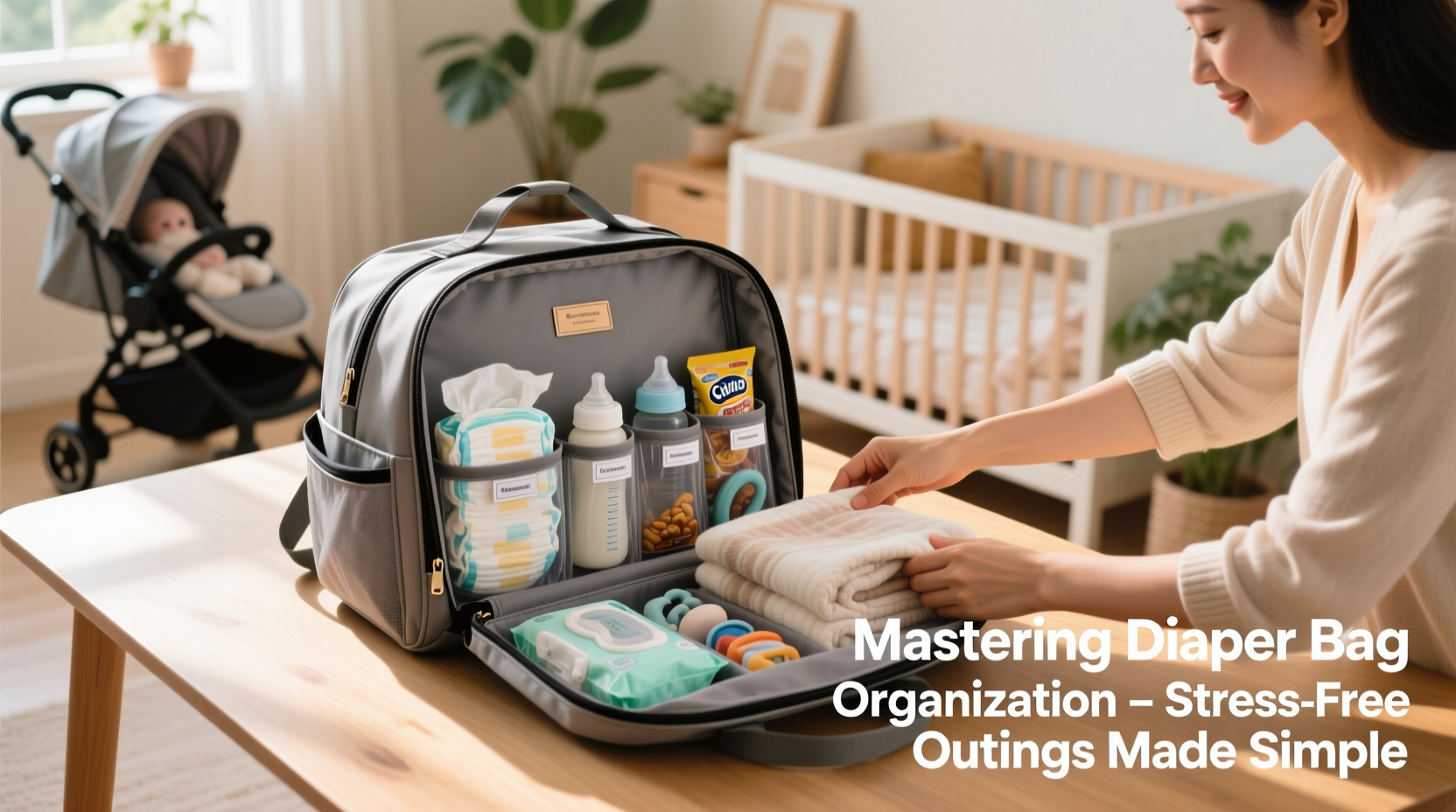
One of the most effective ways to manage a large diaper bag is to divide it into functional zones. Think of your bag like a home: each category of items should have its own dedicated “room.” This prevents random stuffing and makes retrieval intuitive—even when you're juggling a crying baby.
Break down your bag into these primary zones:
- Diaper Station: Diapers, wipes, changing pad, disposal bags
- Feeding Zone: Bottles, formula, snacks, bibs, sippy cups
- Clothing & Comfort: Extra outfits, socks, pacifiers, lovey
- Parent Essentials: Wallet, phone charger, hand sanitizer, keys
- Emergency Kit: Medications, thermometer, rash cream, mini first aid
Use internal pockets, zippered compartments, or small organizers to physically separate these categories. When every item has a designated spot, restocking becomes faster and mid-outing searches take seconds instead of minutes.
Optimize Storage with the Right Accessories
The best organizational system relies on tools that complement your bag’s design. Not all diaper bags are created equal, but even the most basic model can be upgraded with simple accessories.
| Accessory | Best For | Recommended Material |
|---|---|---|
| Insulated bottle holder | Keeping bottles warm/cold | Neoprene or thermal fabric |
| Clear toiletry organizer | Wipes, creams, medicines | PVC or wipeable polyester |
| Compression cubes | Bulk reduction of clothing | Nylon with zippers |
| Magnetic closure pouches | Quick-access items (pacifiers, tissues) | Durable canvas or TPU |
| Detachable key leash | Preventing lost keys | Silicone or braided nylon |
Investing in just two or three of these tools can dramatically improve accessibility and cleanliness. For example, a clear vinyl pouch allows you to see contents at a glance, eliminating the need to rummage through layers of fabric.
Step-by-Step: Building Your Daily Packing Routine
Consistency reduces decision fatigue. Follow this six-step process every evening to ensure your bag is ready by morning:
- Empty and assess: Remove all items and check expiration dates on snacks, formula, and medications.
- Sanitize compartments: Wipe down interior surfaces with a baby-safe disinfectant wipe weekly.
- Restock core supplies: Refill diapers, wipes, and feeding essentials based on next day’s schedule.
- Layer by priority: Place least-used items at the bottom, frequently accessed ones near the top.
- Double-check weather needs: Add sun hat, rain cover, or extra blanket as needed.
- Final scan checklist: Verify keys, phone, wallet, and emergency items are included.
This routine takes less than ten minutes but prevents last-minute panic. Over time, it becomes automatic—like brushing your teeth.
Real Example: How Sarah Regained Control
Sarah, a mother of twins, used to dread leaving the house. Her 32-liter diaper bag was overflowing, and she’d often forget one twin’s medication or leave behind a clean bottle. After adopting a zoned system with labeled pouches and nightly resets, her outings transformed. “Now I know exactly where everything is,” she says. “When one baby is screaming and the other is spitting up, I don’t have to dig—I reach, grab, and solve.” Within two weeks, she reported fewer meltdowns—not just from her kids, but from herself too.
Common Pitfalls and How to Avoid Them
Even well-intentioned systems fail when common mistakes creep in. Here’s what to watch for:
- Overpacking \"just in case\": Carrying every possible item weighs you down and clutters access. Pack for the outing’s actual duration and needs.
- Ignoring weight distribution: Heavy bottles or toys at the top can make the bag unstable. Keep heavier items low and centered.
- Letting spills go uncleaned: A spilled juice box today leads to sticky straps and mold tomorrow. Clean immediately.
- Using the diaper bag as a general tote: Avoid storing non-baby items like work documents or gym clothes. It dilutes purpose and increases chaos.
“Organization isn’t about perfection—it’s about creating systems that support you during high-pressure moments. A well-organized diaper bag is a form of emotional self-care for parents.” — Dr. Lena Torres, Child Development Psychologist
Essential Checklist for Stress-Free Outings
Print or save this checklist to verify your bag before heading out:
☐ Diapers (minimum 3) ☐ Wipes (sealed pack) ☐ Changing pad + disposal bags ☐ Bottles/formula/snacks ☐ Extra outfit (including socks) ☐ Pacifier & teething toy ☐ Sunscreen/hat ☐ Hand sanitizer & tissues ☐ Emergency meds (fever reducer, etc.) ☐ Keys, wallet, phone, charger ☐ Stroller attachment secured (if applicable)
Frequently Asked Questions
How do I keep my diaper bag from getting smelly?
Odors usually stem from trapped moisture or old food residue. After each use, remove any damp items like wet clothes or used bottles. Once a week, empty the entire bag and wipe the interior with a vinegar-water solution (1:3 ratio) or baby-safe disinfectant. Let it air dry completely before repacking.
Should I have more than one diaper bag setup?
Yes—for many families, having a “mini” bag for short trips and a “full” version for long outings works best. The mini bag holds only the critical five: diaper, wipes, change of clothes, snack, and pacifier. The full bag includes everything else. Switching between them prevents overloading for simple errands.
What’s the best way to wash a diaper bag?
Most large-capacity bags aren’t machine-washable. Instead, spot-clean with mild soap and a soft cloth. For deep cleaning, remove all inserts and use a mixture of baking soda and water to neutralize odors. Never submerge the bag unless the manufacturer specifies it’s safe.
Conclusion: Turn Chaos into Confidence
A large diaper bag doesn’t have to mean disorganization. By implementing structured zones, using supportive accessories, and sticking to a simple daily routine, you can turn what was once a source of stress into a reliable partner in parenting. The goal isn’t minimalism—it’s functionality. When you know where every item lives and can access it effortlessly, outings become less daunting and more enjoyable.




 浙公网安备
33010002000092号
浙公网安备
33010002000092号 浙B2-20120091-4
Comments
No comments yet. Why don't you start the discussion?