
Large capacity handbags offer unmatched convenience—room for everything from laptops to gym clothes, groceries to emergency kits. Yet their size often leads to disorganization, wasted space, and the dreaded “black hole” effect where essentials vanish into the depths. The solution isn’t less space—it’s smarter use of it. With strategic packing techniques, organizational tools, and a few expert-backed habits, you can transform your spacious bag into a highly efficient personal command center.
The Hidden Cost of Overpacking
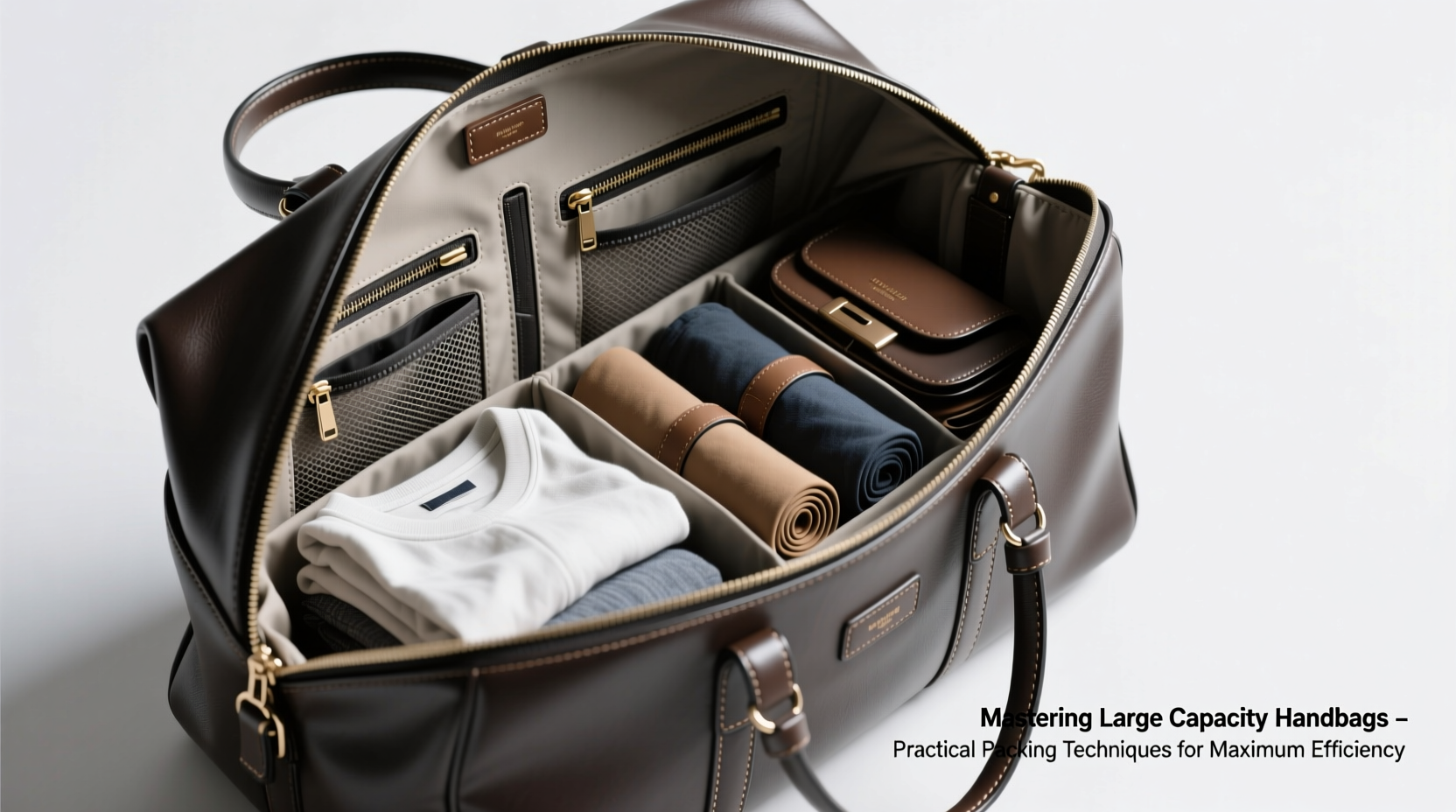
Many assume that because a handbag is roomy, filling it completely is harmless. In reality, overstuffing creates multiple issues: strain on zippers and seams, difficulty locating items quickly, increased weight that causes shoulder discomfort, and accelerated wear from constant rummaging. A study by the American Chiropractic Association found that carrying more than 10% of body weight in a shoulder bag can lead to postural imbalance and muscle fatigue.
Efficiency isn’t about fitting as much as possible—it’s about optimizing access, balance, and usability. A well-packed large handbag should feel light relative to its volume, with key items instantly reachable and unnecessary bulk eliminated.
Step-by-Step: Building an Efficient Packing System
Transforming your handbag starts with intentionality. Follow this timeline to establish a sustainable system:
- Empty & Audit (Day 1): Remove all contents. Lay them out and categorize each item: Daily Necessities, Occasional Use, Seasonal, and Clutter.
- Declutter (Day 1): Discard expired products, duplicates, and unused items. Donate or store seasonal goods elsewhere.
- Invest in Organizers (Day 2): Purchase slim pouches, zip-top cubes, or foldable organizers tailored to your bag’s interior dimensions.
- Zone Your Bag (Day 3): Assign specific areas: tech zone, hygiene kit, documents, snacks, etc.
- Pack by Priority (Ongoing): Place most-used items at the top or in outer pockets. Heavier objects near the base for balance.
- Weekly Reset (Every Sunday): Reassess contents, clean compartments, and adjust based on upcoming needs.
Essential Tools for Maximum Efficiency
Not all organizers are created equal. Choose accessories that enhance structure without sacrificing flexibility. Consider these options:
- Modular Pouches: Zippered fabric cubes in varying sizes help compartmentalize categories like cosmetics, chargers, or first aid supplies.
- Slip Pockets: Open-top sleeves keep phones, keys, and transit cards visible and accessible.
- Roll-Up Toiletry Bags: Compact and spill-resistant, ideal for liquids and grooming tools.
- Mini Wallets: Separate everyday cash/cards from backup funds or travel documents.
- Expandable Document Holders: Protect papers while allowing quick retrieval.
| Organizer Type | Best For | Avoid If... |
|---|---|---|
| Hard-shell inserts | Rigid structure, protecting delicate items | Your bag changes shape frequently or folds flat |
| Fabric zip cubes | Flexible storage, easy to wash | You need rigid separation between zones |
| Magnetic closure pouches | Quick access to frequently used items | You carry strong magnets or sensitive electronics nearby |
| Hanging organizers | Bags with internal hooks or open frames | Interior lacks anchor points |
Real-World Example: From Chaos to Control
Sarah, a freelance designer and frequent traveler, carried a 20-liter tote daily. She often missed trainings because she couldn’t find her laptop charger and complained of back pain. After auditing her bag, she discovered three sets of headphones, expired coupons, and a full-size lotion bottle she never used.
She implemented zoning: a padded sleeve for her tablet, a small pouch for cords, and a foldable laundry bag for used clothes during commutes. She replaced bulky items with travel-sized alternatives and began using color-coded pouches—one for work, one for wellness, one for emergencies.
Within two weeks, Sarah reported faster morning prep, reduced physical strain, and even saved time during airport security checks due to better accessibility. Her bag now weighs 40% less despite holding the same functional capacity.
“Efficiency in a large handbag isn’t about minimalism—it’s about intelligent redundancy. Keep what you need, when you need it, exactly where you expect it.” — Lena Torres, Professional Organizer & Author of *Carry Smart*
Do’s and Don’ts of Large Bag Management
- ✅ Pack only items needed for the day
- ✅ Use labeled pouches for quick identification
- ✅ Store heavy items at the bottom
- ✅ Keep a mini inventory list inside the flap
- ✅ Clean compartments monthly with microfiber cloth
- ❌ Don’t let receipts or wrappers accumulate
- ❌ Avoid mixing food with personal care products
- ❌ Never overload beyond structural limits
Frequently Asked Questions
How do I prevent my bag from becoming unbalanced?
Distribute weight symmetrically. Place heavier items like laptops or water bottles in the center or against the back panel. Avoid placing all dense objects on one side, which shifts your posture and stresses stitching.
What’s the best way to pack fragile items?
Wrap delicate objects (glasses, vials) in soft fabric or padded cases, then place them in a dedicated middle layer surrounded by softer materials like scarves or folded sweaters. Never put fragile items directly under pressure points like zippers or clasps.
Can I use backpack organization strategies for handbags?
Yes—many principles overlap. Compartmentalization, load distribution, and priority-based placement are universal. However, adapt for vertical access rather than top-down entry. Use front slip pockets similarly to backpack chest pockets for high-frequency items.
Final Thoughts: Mastery Through Routine
A large capacity handbag is only as effective as the system behind it. Without deliberate organization, spaciousness breeds chaos. But when paired with disciplined packing habits, the right tools, and periodic reviews, it becomes one of the most powerful accessories in your daily life.
The goal isn’t perfection—it’s consistency. Spend five minutes each evening resetting your bag for the next day. Update your organizer layout seasonally. Listen to your body: if lifting the bag feels awkward, reassess weight distribution.




 浙公网安备
33010002000092号
浙公网安备
33010002000092号 浙B2-20120091-4
Comments
No comments yet. Why don't you start the discussion?