
Packing a large duffle bag efficiently isn’t just about fitting everything inside—it’s about doing so in a way that maximizes space, maintains organization, and makes your belongings accessible when you need them. Whether you're preparing for a weekend getaway, an international trip, or a move across town, how you pack determines your experience from start to finish. A poorly packed duffle leads to wrinkled clothes, lost items, and unnecessary stress. But with the right techniques, your duffle can become a model of efficiency and convenience.
Choose the Right Duffle Bag for Your Needs
Before diving into packing strategies, ensure you’re working with the right duffle. Not all large duffles are created equal. Consider capacity (typically 40–70 liters), material durability, closure type (zipper vs. drawstring), and whether it has internal compartments or external pockets.
Duffles made from water-resistant nylon or polyester offer better protection against weather and spills. Look for reinforced stitching, padded shoulder straps, and multiple carry options—top handles, shoulder straps, or even backpack-style conversions—for added versatility.
Plan and Prioritize: The Foundation of Smart Packing
Begin by listing what you truly need. Overpacking is the most common mistake travelers make. Instead of throwing in “just in case” items, ask yourself: Will I realistically use this? Can I buy it at my destination?
Create categories: clothing, toiletries, electronics, documents, workout gear, etc. Then assign estimated space for each. This prevents last-minute cramming and helps maintain balance in weight distribution.
“Packing light doesn’t mean sacrificing comfort—it means being intentional.” — Sarah Lin, Travel Organizer & Founder of PackWise
Step-by-Step Guide to Efficient Packing
Follow this proven sequence to optimize every inch of your duffle:
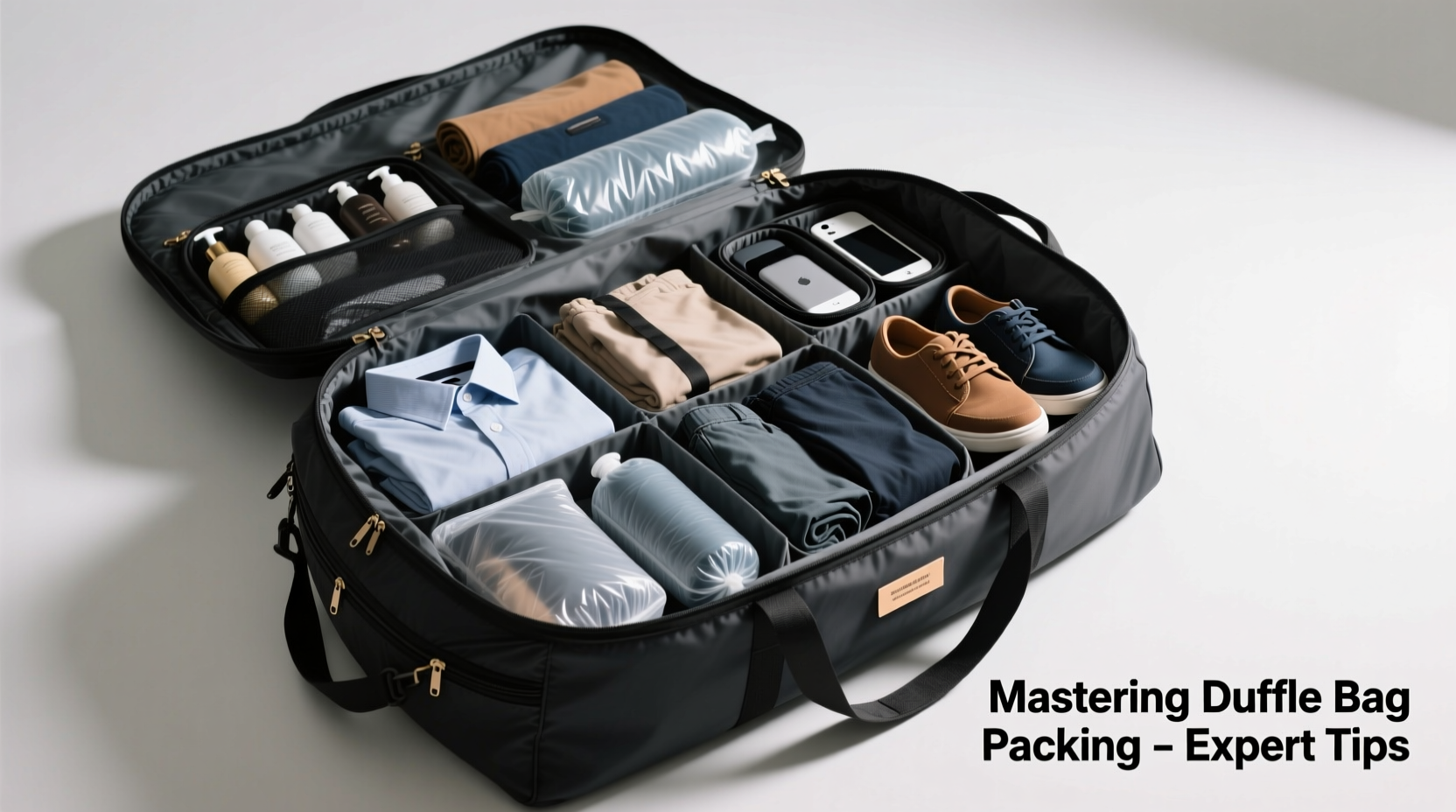
- Start with bulky items: Place shoes, toiletry kits, or folded jackets at the bottom near the ends. This stabilizes the bag and uses awkward spaces.
- Roll soft clothing: T-shirts, jeans, and casual wear roll tightly, saving space and reducing wrinkles. Group similar items together.
- Use packing cubes or compression sacks: These create structure and allow you to compartmentalize outfits or categories. A cube for underwear, one for shirts, another for accessories.
- Layer strategically: Place heavier rolled clothes over bulky base items. Keep frequently accessed items (like a sweater or charger) near the top.
- Fill empty spaces: Stuff socks inside shoes, tuck small pouches into gaps between layers, and use hat interiors to protect glasses or jewelry.
- Top off with essentials: Add a foldable tote, travel pillow, or rain jacket last—you may need them during transit.
Real Example: Two-Week Trip to Southeast Asia
Emma, a digital nomad, packs a 60L duffle for a two-week workation across Thailand and Vietnam. She starts by laying out only 10 mix-and-match clothing items, including quick-dry fabrics. Using three color-coded packing cubes, she separates tops, bottoms, and undergarments. Her toiletries go into a hanging organizer that clips inside the duffle’s lid. Shoes are placed in mesh bags and tucked into opposite corners. By rolling everything and compressing non-essentials, she frees up room for souvenirs on the return trip—all without checking a second bag.
Organization Hacks That Make a Difference
Organization isn’t just about neatness; it’s about functionality. A well-organized duffle saves time at security checks, hotel rooms, and layovers.
- Color-code your cubes: Assign red for workwear, blue for gym clothes, green for sleepwear. You’ll find what you need instantly.
- Use clear pouches for liquids: TSA-friendly containers stored in transparent ziplocks speed up airport screening.
- Keep electronics together: Use a dedicated tech sleeve or small pouch with cables, chargers, adapters, and power banks.
- Label everything: Small luggage tags on cubes or pouches help identify contents without unpacking.
| Do | Don't |
|---|---|
| Roll clothes instead of folding | Fold heavy denim repeatedly (causes creases) |
| Use packing cubes for separation | Overstuff the main compartment |
| Place liquids in sealed, upright containers | Store batteries loose in the bag |
| Balance weight evenly side-to-side | Put sharp or heavy objects near zippers |
| Utilize external pockets for quick access | Ignore manufacturer care labels on garments |
Maximize Space with Compression and Layering Techniques
Compression is your best ally when dealing with volume-heavy items like down jackets or sweaters. Vacuum-style compression sacks remove air and shrink bulk significantly. For less extreme needs, simple zip-top compression cubes apply pressure manually as you close them.
Another technique: the bundle wrap method. Lay a large garment flat, place smaller items in the center, then wrap the outer edges around them. This minimizes shifting and reduces wrinkles while naturally creating compact bundles.
Checklist: Pre-Packing Preparation
- ✔ Clean and dry your duffle thoroughly before use
- ✔ Inventory required items by category
- ✔ Verify airline size/weight limits for carry-on or checked bags
- ✔ Charge all devices and pack necessary cords
- ✔ Print or save digital copies of travel documents
- ✔ Weigh your packed bag before leaving home
Frequently Asked Questions
How do I prevent clothes from getting wrinkled in a duffle?
Roll soft fabrics instead of folding, and avoid over-packing. Use tissue paper between delicate layers if needed. Items prone to wrinkling, like dress shirts, should be packed last and worn first upon arrival.
Can I carry a large duffle as a personal item on a flight?
Most airlines allow personal items up to 18 x 14 x 8 inches. A packed large duffle often exceeds this. Check your carrier’s policy. If compressed and under the limit, some travelers succeed—but consider a smaller weekender for peace of mind.
What’s the best way to clean a packed duffle after a trip?
Empty completely and shake out debris. Wipe interior with a damp cloth and mild soap. Air dry fully in a ventilated area, away from direct sunlight. Never machine wash unless specified by the manufacturer.
Final Thoughts: Turn Chaos Into Order
A large duffle bag is only as effective as the strategy behind its contents. With thoughtful planning, smart layering, and consistent organizational habits, you transform what could be a chaotic jumble into a streamlined travel system. The goal isn’t just to fit more—it’s to access what you need, protect your belongings, and move through your journey with confidence.
Mastery comes not from owning the fanciest gear, but from refining your process over time. Try one new technique on your next trip—rolling clothes, using cubes, or balancing weight—and build from there. Soon, efficient packing will feel second nature.




 浙公网安备
33010002000092号
浙公网安备
33010002000092号 浙B2-20120091-4
Comments
No comments yet. Why don't you start the discussion?