
A well-crafted leather watch strap enhances both comfort and style, but even the finest craftsmanship can fall short if the fit isn’t right. Too tight, and your wrist bears the brunt of constant pressure; too loose, and the watch slides around unpredictably. Achieving the ideal fit is more than just aesthetics—it’s about ergonomics, durability, and personal satisfaction. This guide breaks down everything you need to know about leather watch strap sizing, from measuring your wrist accurately to adjusting for seasonal changes and body type.
Understanding Watch Strap Measurements
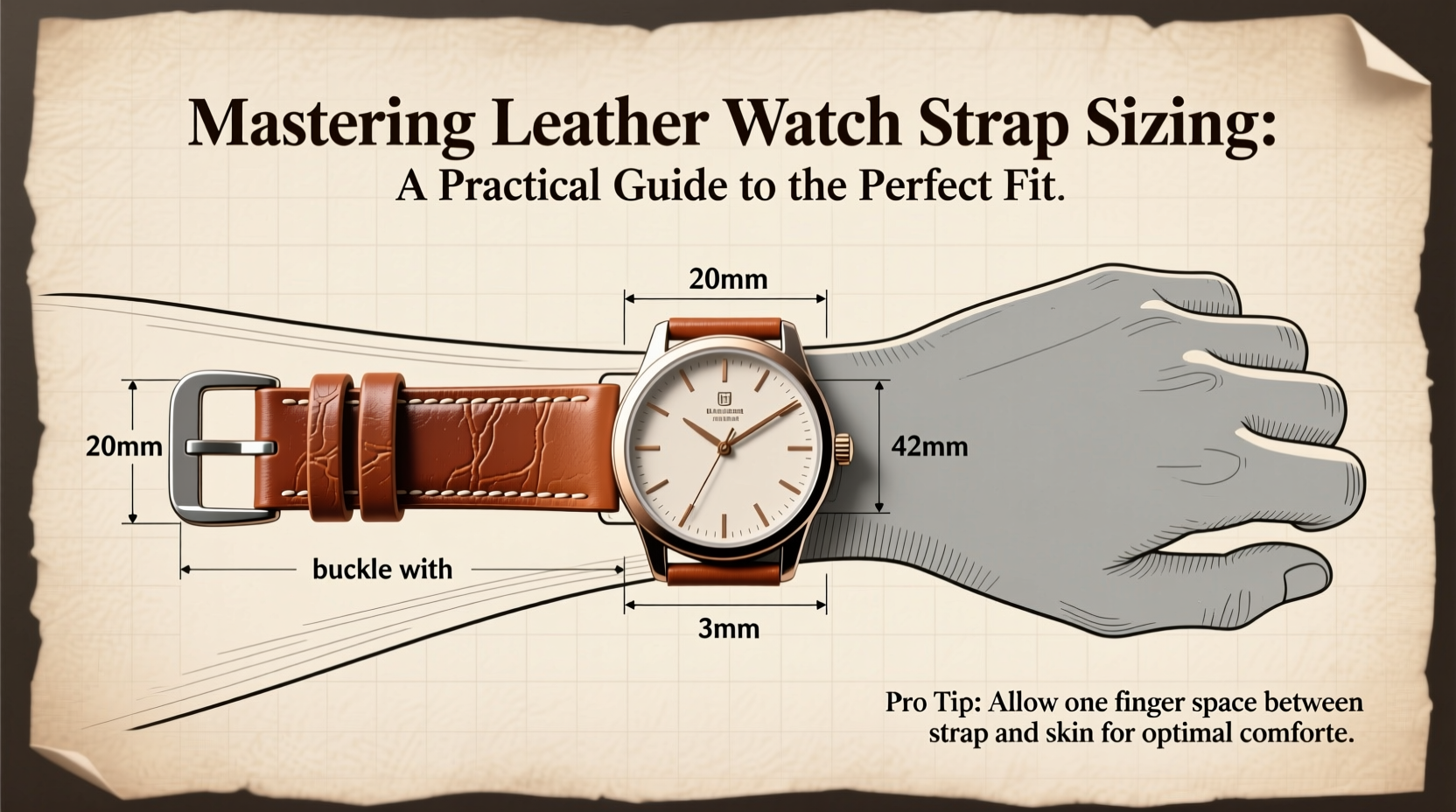
Leather watch straps are sized using two key dimensions: lug width and overall length. The lug width—the measurement between the lugs on your watch case—is the most critical number. It determines which strap width will physically attach to your timepiece. Common lug widths range from 16mm to 24mm in 1mm increments. If your watch has 20mm lugs, only a 20mm strap will fit properly.
The second factor is total strap length, typically categorized as short, regular, long, or extra-long. These categories correspond roughly to wrist sizes:
| Strap Length | Wrist Circumference (inches) | Wrist Circumference (cm) |
|---|---|---|
| Short | 5.5 – 6.3\" | 14 – 16 cm |
| Regular | 6.3 – 7.1\" | 16 – 18 cm |
| Long | 7.1 – 7.9\" | 18 – 20 cm |
| Extra-Long | 7.9\" + | 20 cm + |
Some manufacturers also list inner and outer hole positions. A well-designed strap should have enough adjustment holes—usually five or seven—to allow fine-tuning of the fit.
How to Measure Your Wrist Accurately
Measuring your wrist correctly ensures you select the right strap length. Use a soft fabric tape measure, wrapping it snugly—but not tightly—around the narrowest part of your wrist, just below the wrist bone. If you don’t have a tape measure, use a strip of paper or string, mark where it overlaps, then measure that length against a ruler.
For best results:
- Measure at the end of the day when your wrist may be slightly swollen.
- Take multiple measurements over different days to account for natural fluctuations.
- If you're between sizes, consider opting for a longer strap with more adjustment holes rather than a tighter fit.
Once you have your measurement, add approximately 1–1.5 inches (2.5–3.8 cm) to determine the ideal distance from the buckle to the middle hole. This provides balanced wear across all holes, extending the life of the leather near the hardware.
“Proper fit starts with precise measurement. A strap that fits well doesn’t just look better—it ages more gracefully.” — Daniel Reeves, Horology Craftsmanship Consultant
Step-by-Step Guide to Selecting and Testing Fit
Follow this sequence to ensure your leather strap fits perfectly upon arrival—or to assess one you already own:
- Confirm lug width compatibility by checking your watch specifications or measuring existing strap ends.
- Choose the correct length category based on your measured wrist size and preferred wearing position (e.g., higher up the forearm requires a longer strap).
- Check hole placement: When fastened in the middle hole, there should be at least one spare hole on either side for future adjustments.
- Test for snugness: The strap should stay securely in place without pinching or leaving deep marks on the skin.
- Assess movement: Your watch should rotate slightly but not slide excessively during normal activity.
- Evaluate break-in period: Leather softens over time. A strap that feels slightly stiff at first will conform to your wrist within a few days.
Pay attention to tapering design as well. Many high-end straps taper from the lug width down to a narrower buckle (e.g., 20mm to 16mm), improving drape and comfort. Ensure the taper matches your watch case proportions for visual harmony.
Common Sizing Mistakes and How to Avoid Them
Even experienced watch enthusiasts make avoidable errors when selecting leather straps. Here are frequent missteps and how to prevent them:
| Mistake | Why It Matters | Solution |
|---|---|---|
| Guessing lug width | Results in incompatible attachment or gaps | Use calipers or compare with known straps |
| Ignoring seasonal swelling | Straps become too tight in summer or humid climates | Select straps with ample adjustment range |
| Choosing overly short lengths | Limits adjustability and accelerates wear near hardware | Opt for longer straps with central middle hole usage |
| Overlooking clasp type | Folding clasps vs. tang buckles affect effective length | Account for additional metal components in total fit |
Mini Case Study: Finding the Right Fit for a Slim Wrist
Mark, a 28-year-old software developer, purchased a vintage-inspired dress watch with 18mm lugs. His wrist measures 6.1 inches (15.5 cm). He initially ordered a \"regular\" length strap, assuming it would suffice. However, once installed, he found the middle hole sat too far out, forcing him to use the last hole—leaving no room for shrinkage or tighter settings.
After returning the original, he opted for a short-length 18mm strap with a seven-hole configuration. Now, the middle hole aligns perfectly with his preferred fit, and he has three holes on each side for flexibility. The improved balance has enhanced both comfort and appearance, proving that standard size labels aren't always reliable.
Care and Adjustment Over Time
Leather is a dynamic material. With regular wear, it stretches slightly—especially near stress points like the spring bars and buckle end. To maintain optimal fit:
- Rotate between two straps to reduce continuous strain on one piece.
- Condition your strap every 6–8 weeks with a pH-balanced leather conditioner to preserve suppleness.
- Replace straps showing creasing at attachment points, as weakened fibers increase the risk of tearing.
Checklist: Ensuring Perfect Leather Strap Fit
- ✅ Confirm lug width matches your watch case
- ✅ Measure wrist circumference accurately
- ✅ Choose appropriate length category (short, regular, long)
- ✅ Verify presence of sufficient adjustment holes (5–7 recommended)
- ✅ Check that middle hole aligns with ideal fit position
- ✅ Test for minimal sliding and no skin indentation
- ✅ Assess visual proportion—strap shouldn’t overpower or disappear under watch
FAQ
Can I trim a leather watch strap if it’s too long?
Yes, but only the free end beyond the last hole. Use sharp scissors or a craft knife for a clean cut. Avoid altering the fixed end near the spring bar, as this compromises structural integrity.
Do leather straps stretch significantly over time?
They do stretch slightly—typically 1–3mm depending on thickness and tanning method. Full-grain leathers conform more gradually than corrected grain. Expect minor loosening after the first week of wear.
What should I do if my wrist size changes?
If weight gain, injury recovery, or climate affects your wrist size, switch to a strap with greater adjustability. Some brands offer custom-length options. Alternatively, use a micro-adjustment buckle or add a third-party extender for temporary relief.
Conclusion
Mastering leather watch strap sizing transforms a functional accessory into a seamless extension of your personal style. Precision in measurement, awareness of material behavior, and attention to detail in selection all contribute to a fit that feels effortless and looks intentional. Whether you’re upgrading a daily wearer or pairing a vintage timepiece with a hand-stitched band, taking the time to get the sizing right pays dividends in comfort, longevity, and confidence.




 浙公网安备
33010002000092号
浙公网安备
33010002000092号 浙B2-20120091-4
Comments
No comments yet. Why don't you start the discussion?