
Leg raises are a foundational core exercise that, when performed correctly, build serious abdominal strength, improve hip flexor control, and enhance overall stability. Despite their simplicity, many people struggle to perform them effectively—often due to poor form, lack of progression, or misunderstanding the mechanics involved. Whether you're just starting out or looking to refine your technique, mastering leg raises requires attention to detail, consistency, and intelligent progression.
The Core Benefits of Leg Raises
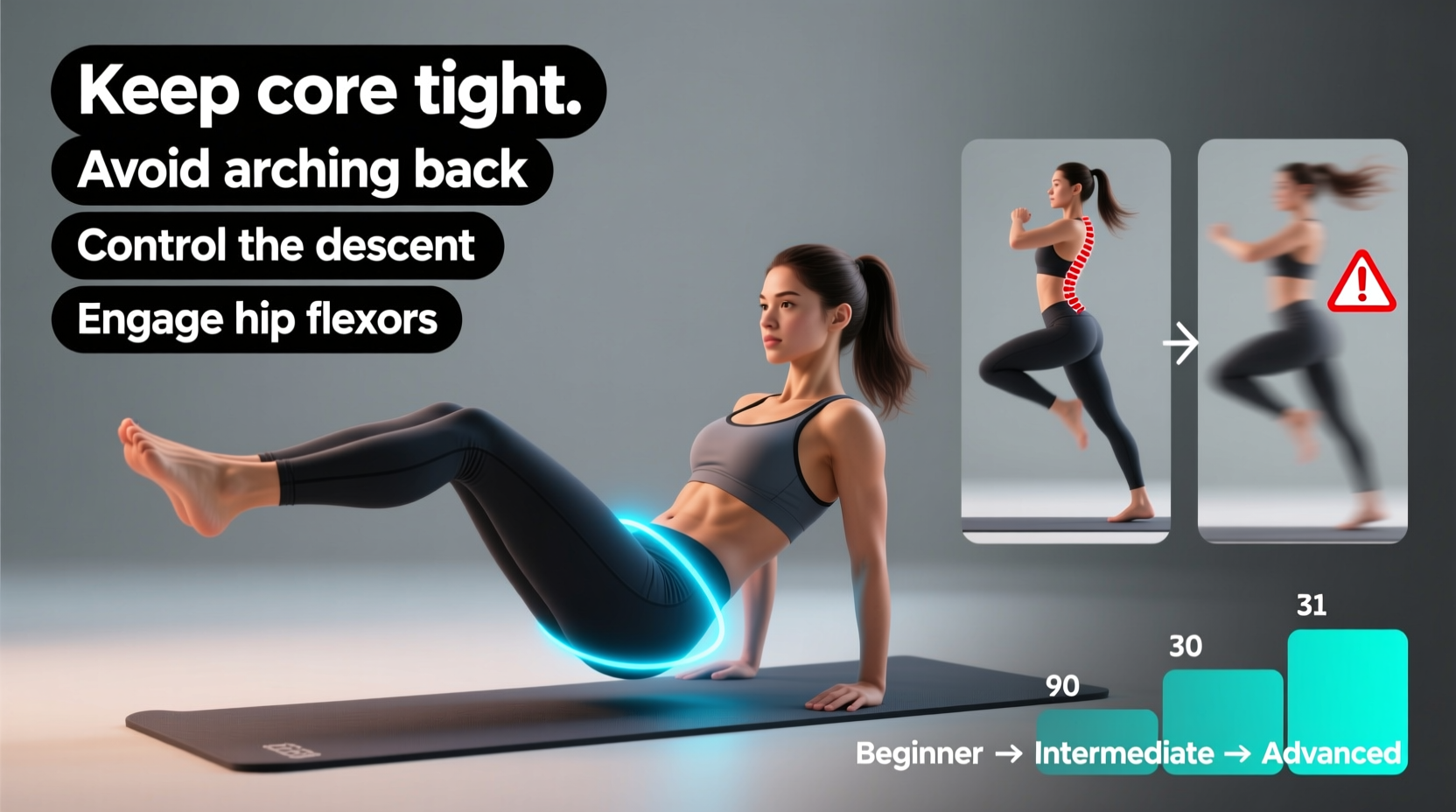
Unlike crunches or sit-ups, leg raises engage the lower abs more directly by resisting gravity through controlled hip flexion. They also activate the transverse abdominis, obliques, and hip flexors, making them a functional movement that supports posture, athletic performance, and injury prevention.
When executed properly, leg raises help develop:
- Lower abdominal definition
- Hip flexor endurance and control
- Pelvic stability
- Improved neuromuscular coordination in the anterior chain
“Most people underestimate how much tension should come from the abs rather than momentum. A slow, controlled leg raise is infinitely more effective than ten fast, sloppy reps.” — Dr. Lena Torres, Physical Therapist & Strength Coach
Essential Tips for Proper Form
Success with leg raises begins with precision. Even small adjustments can dramatically increase effectiveness and reduce strain on the lower back.
- Engage your core before moving. Draw your navel toward your spine and maintain this bracing throughout the set.
- Move slowly. Use a 3-second concentric (lifting) phase and a 3-second eccentric (lowering) phase to maximize time under tension.
- Keep legs straight but not locked. Slight micro-bend in the knees prevents hyperextension and keeps tension in the target muscles.
- Avoid swinging. Momentum reduces muscle activation and increases injury risk. If you need to swing, reduce range of motion or use assistance.
- Exhale on the lift, inhale on the descent. Proper breathing stabilizes the core and improves performance.
Common Mistakes and How to Fix Them
Even experienced trainees fall into these traps. Recognizing them is the first step to correction.
| Mistake | Why It’s Bad | Solution |
|---|---|---|
| Using momentum to lift legs | Reduces ab engagement, strains hip flexors and lower back | Slow down tempo; shorten range of motion until control improves |
| Lifting hips off the floor | Takes focus off abs, overworks hip flexors | Place hand under lower back as a cue to keep it flat |
| Holding breath | Increases intra-abdominal pressure, may cause dizziness | Practice rhythmic breathing with each rep |
| Performing partial reps without intent | Limits muscle growth and strength gains | Use full ROM only when form is solid; otherwise, progress gradually |
Progressive Techniques for Advanced Results
Once basic form is mastered, progression ensures continued adaptation. Here’s how to level up safely and effectively.
1. Increase Time Under Tension
Instead of chasing high reps, focus on slowing each rep. Try 8 reps with a 4-second lift and 4-second descent. This builds endurance and deep muscular fatigue without adding weight.
2. Add Isometric Holds
Pause at the top of the movement for 2–3 seconds. This intensifies contraction in the lower abs and improves mind-muscle connection.
3. Use Ankle Weights (Cautiously)
Only after perfecting bodyweight form, light ankle weights (2–5 lbs) can increase resistance. Avoid heavy loads—they shift stress to hip flexors and lumbar spine.
4. Transition to Hanging Leg Raises
Performed from a pull-up bar, hanging leg raises eliminate floor support, forcing greater core stabilization. Start with bent-knee raises (knee tucks), then progress to straight-leg versions.
5. Incorporate Decline Bench Variations
On a decline bench, your body is angled so the legs start below hip level, increasing difficulty. This allows a fuller range of motion and deeper stretch at the bottom.
Step-by-Step Progression Plan
Follow this 6-week timeline to build strength and confidence in leg raises:
- Week 1–2: Master lying leg raises on the floor. Aim for 3 sets of 10–12 reps with strict form. Focus on keeping the lower back down.
- Week 3: Introduce pause reps—hold at the top for 2 seconds. Reduce reps to 8 per set if needed.
- Week 4: Move to a flat bench for slightly increased range of motion. Maintain same rep scheme.
- Week 5: Begin practicing hanging knee tucks using a pull-up bar. Perform 3 sets of 6–8 controlled reps.
- Week 6: Attempt straight-leg hanging raises with partial range. Stop when form begins to break.
“A lot of people rush into hanging leg raises without building foundational strength. That’s a recipe for lower back pain. Build stability first, then add load and complexity.” — Marcus Reed, Certified Personal Trainer & Gym Owner
Mini Case Study: From Back Pain to Core Control
James, a 34-year-old office worker, had been doing leg raises for months with little progress—and constant lower back discomfort. He assumed he wasn’t strong enough. After a form assessment, his trainer noticed he was arching his back and using momentum to swing his legs up.
The fix? James started with pelvic tilts on the floor to learn posterior tilt, then progressed to short-range leg raises with a towel under his lower back. Over six weeks, he built control, eliminated pain, and eventually transitioned to hanging knee tucks. His core strength improved significantly, and he reported better posture and reduced back strain during daily activities.
Frequently Asked Questions
Are leg raises bad for your back?
No—if done correctly. The issue arises when the lower back lifts off the ground, transferring stress to the lumbar spine. Keep your core braced and your pelvis tilted slightly backward to protect your back.
How many leg raises should I do per day?
Quality matters more than quantity. Aim for 3 sets of 8–15 reps, 3–4 times per week. Daily high-volume leg raises can lead to overuse and imbalances if recovery is inadequate.
Can leg raises give me a six-pack?
Leg raises strengthen the lower abs, but visible abs require low body fat. Combine leg raises with a balanced diet, full-body strength training, and cardiovascular exercise for best results.
Final Checklist for Mastery
- ✅ Engage core before initiating movement
- ✅ Keep lower back in contact with surface
- ✅ Move slowly—no swinging
- ✅ Breathe consistently throughout the set
- ✅ Progress only when form is flawless
- ✅ Include variety: floor, bench, hanging, and isometric variations
Conclusion: Elevate Your Core Game
Leg raises are deceptively challenging—but that’s what makes them powerful. When approached with discipline and proper technique, they become one of the most effective tools for developing real core strength. Avoid the temptation to rush progression. Instead, focus on mastery: control, consistency, and clean execution.




 浙公网安备
33010002000092号
浙公网安备
33010002000092号 浙B2-20120091-4
Comments
No comments yet. Why don't you start the discussion?