
Saving posts on LinkedIn is more than just a bookmarking habit—it's a strategic move for professionals aiming to stay informed, inspired, and ahead in their industries. Whether it’s an insightful article, a job opportunity, or a thought-provoking update from a leader in your field, the ability to save and later retrieve content can significantly enhance your learning and networking efficiency. Yet many users overlook the full potential of LinkedIn’s saved posts feature, either misplacing saved items or failing to organize them effectively.
This guide walks you through every aspect of accessing and managing your saved posts on LinkedIn. From locating your saved content across devices to creating custom lists and recovering accidentally deleted items, you’ll gain practical knowledge that transforms passive saving into active career development.
How to Access Your Saved Posts on Any Device
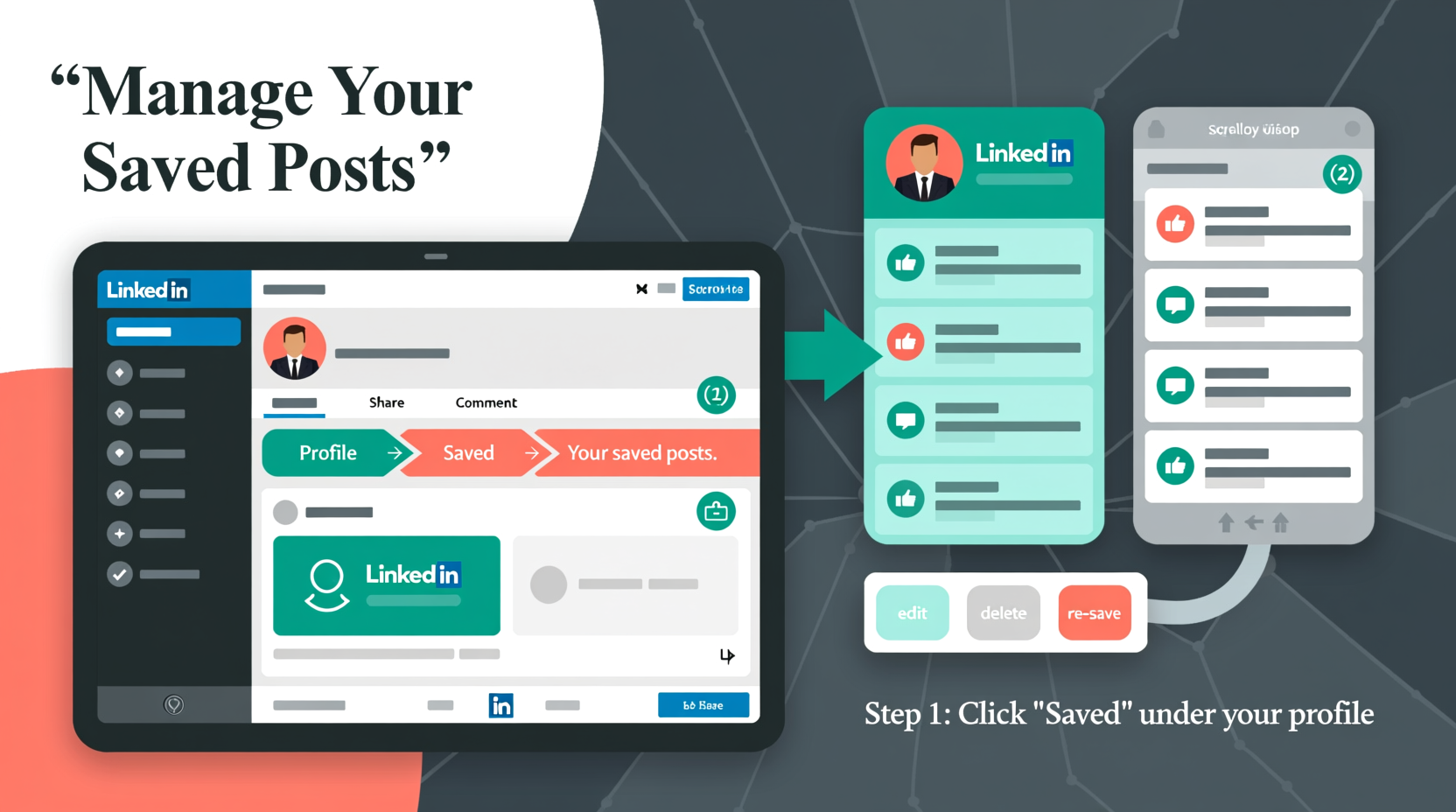
LinkedIn ensures cross-platform consistency, allowing you to save and retrieve posts whether you're using a desktop browser, mobile app, or tablet. The process varies slightly depending on the platform, but the functionality remains robust.
- On Desktop: Click the “Me” icon in the top navigation bar, then select “Saved items” from the dropdown menu. This opens a dashboard showing all your saved content categorized by type—posts, articles, jobs, companies, and hashtags.
- On Mobile App (iOS/Android): Tap your profile picture in the bottom right, then go to “Saved.” You’ll see tabs for different saved categories, making navigation intuitive even on smaller screens.
- Within a Post: When viewing any post, click the three-dot menu (•••) beneath it and select “Save.” If already saved, the option will read “Unsave,” allowing quick toggling.
Create and Use Custom Lists for Better Organization
One of LinkedIn’s most underused features is the ability to sort saved posts into custom folders, known as “lists.” Without these, all saved content piles into a single stream, making retrieval difficult over time.
To create a list:
- Go to your “Saved items” section.
- Click “Create new list” at the top.
- Name your list (e.g., “Marketing Trends 2024,” “Career Development Reads,” “Competitor Research”).
- Choose whether the list is public or private—most users prefer private for personal organization.
Once created, assign future saves directly to a list. For existing saved items, open each one and use the “Move to” option to reorganize them into relevant categories.
| List Name | Purpose | Recommended Frequency of Review |
|---|---|---|
| Industry Insights | Latest news and reports in your sector | Weekly |
| Job Search Resources | Tips, templates, and recruiter advice | Daily during active search |
| Inspiration & Motivation | Mindset, leadership stories, success journeys | Monthly |
| Competitor Activity | Updates from key industry players | Bi-weekly |
“Professionals who categorize their learning resources are 3x more likely to apply insights effectively.” — Dr. Lena Patel, Organizational Learning Researcher
Step-by-Step Guide to Managing Saved Content Efficiently
Over time, saved posts can become cluttered. A systematic approach prevents digital hoarding and keeps your feed actionable. Follow this timeline to maintain control:
- Day 1 – Audit Existing Saves: Open your main “Saved” folder. Skim through the last 50 entries. Unsave anything outdated, irrelevant, or redundant.
- Day 3 – Build Core Lists: Create 3–5 foundational lists based on your current goals (e.g., skill-building, job hunting, networking).
- Day 7 – Migrate Old Content: Move previously saved items into appropriate lists. Delete what no longer serves you.
- Ongoing – Weekly Maintenance: Every Monday, spend 10 minutes reviewing new saves, assigning them to lists, and removing expired content.
- Monthly – Extract Value: Revisit each list monthly. Turn insights into actions: share with your team, reference in interviews, or cite in content you publish.
Real Example: How a Marketing Manager Used Saved Posts to Land a Promotion
Sarah Thompson, a mid-level marketing manager at a tech startup, began systematically saving posts about data-driven campaign strategies, leadership communication, and customer retention models. Initially, she saved haphazardly, leading to a disorganized collection of over 200 items.
After implementing custom lists—“Performance Analytics,” “Team Leadership,” and “Client Retention Case Studies”—she reviewed her curated content every Friday. She started applying frameworks from saved articles to her weekly reports and cited them during strategy meetings.
Within four months, her presentation at a company-wide summit included several insights pulled directly from her organized saved posts. Her CEO noted her depth of knowledge, and she was promoted to Senior Marketing Lead shortly after. Sarah credits her structured use of saved content as a silent contributor to her visibility and credibility.
Avoid These Common Mistakes with Saved Posts
Even experienced LinkedIn users fall into traps that reduce the value of their saved content. Be mindful of these pitfalls:
- Saving without purpose: Clicking “Save” out of habit without intent to revisit leads to clutter.
- Neglecting list hygiene: Failing to rename, merge, or delete outdated lists makes navigation frustrating.
- Ignoring expiration dates: Job postings, event announcements, and time-sensitive offers should be reviewed and removed promptly.
- Using only default folders: Relying solely on LinkedIn’s general “Saved” tab limits organizational power.
“Saving is just the first step. The real ROI comes from revisiting, reflecting, and acting on what you save.” — Marcus Chen, Career Strategy Coach
FAQ
Can other people see my saved posts?
No. Your saved posts and lists are private by default unless you explicitly choose to make a list public. Even then, only the content you’ve chosen to include in that public list is visible.
What happens to saved posts if I unfollow someone or they delete their content?
If a user deletes a post you’ve saved, it may still appear in your saved list temporarily, but clicking on it will show a message that the content is no longer available. Similarly, unfollowing someone does not affect your saved items—they remain accessible as long as the original post exists.
Is there a limit to how many posts I can save?
LinkedIn does not enforce a hard limit on the number of saved items. However, performance may slow if you have thousands of unorganized saves. Regular cleanup and smart categorization are recommended for optimal experience.
Checklist: Optimize Your LinkedIn Saved Posts Workflow
- ✅ Access “Saved items” from your profile dropdown or mobile menu
- ✅ Create at least three custom lists tailored to your professional goals
- ✅ Move existing saved posts into appropriate lists
- ✅ Delete outdated or irrelevant content during weekly reviews
- ✅ Use the search function within saved items to locate specific topics
- ✅ Schedule monthly reflection sessions to extract actionable insights
- ✅ Share valuable saved content with your network (when appropriate)
Conclusion
Mastering LinkedIn’s saved posts isn’t about collecting content—it’s about curating knowledge that fuels your professional journey. With intentional saving, thoughtful organization, and regular review, you turn fleeting moments of inspiration into lasting career advantages. The tools are already built into your account; now it’s up to you to use them strategically.




 浙公网安备
33010002000092号
浙公网安备
33010002000092号 浙B2-20120091-4
Comments
No comments yet. Why don't you start the discussion?