
Building blocks have long been more than just toys—they are tools for cognitive development, spatial reasoning, and creative expression. When themed around beloved stories like Disney’s *The Lion King*, they become gateways to imaginative storytelling and hands-on learning. Combining narrative engagement with physical construction, these sets offer a powerful opportunity to nurture both creativity and engineering fundamentals in children. This guide walks through how parents, educators, and caregivers can use Lion King building blocks not just for fun, but as a structured method to develop essential childhood skills.
Why Themed Building Blocks Work for Learning
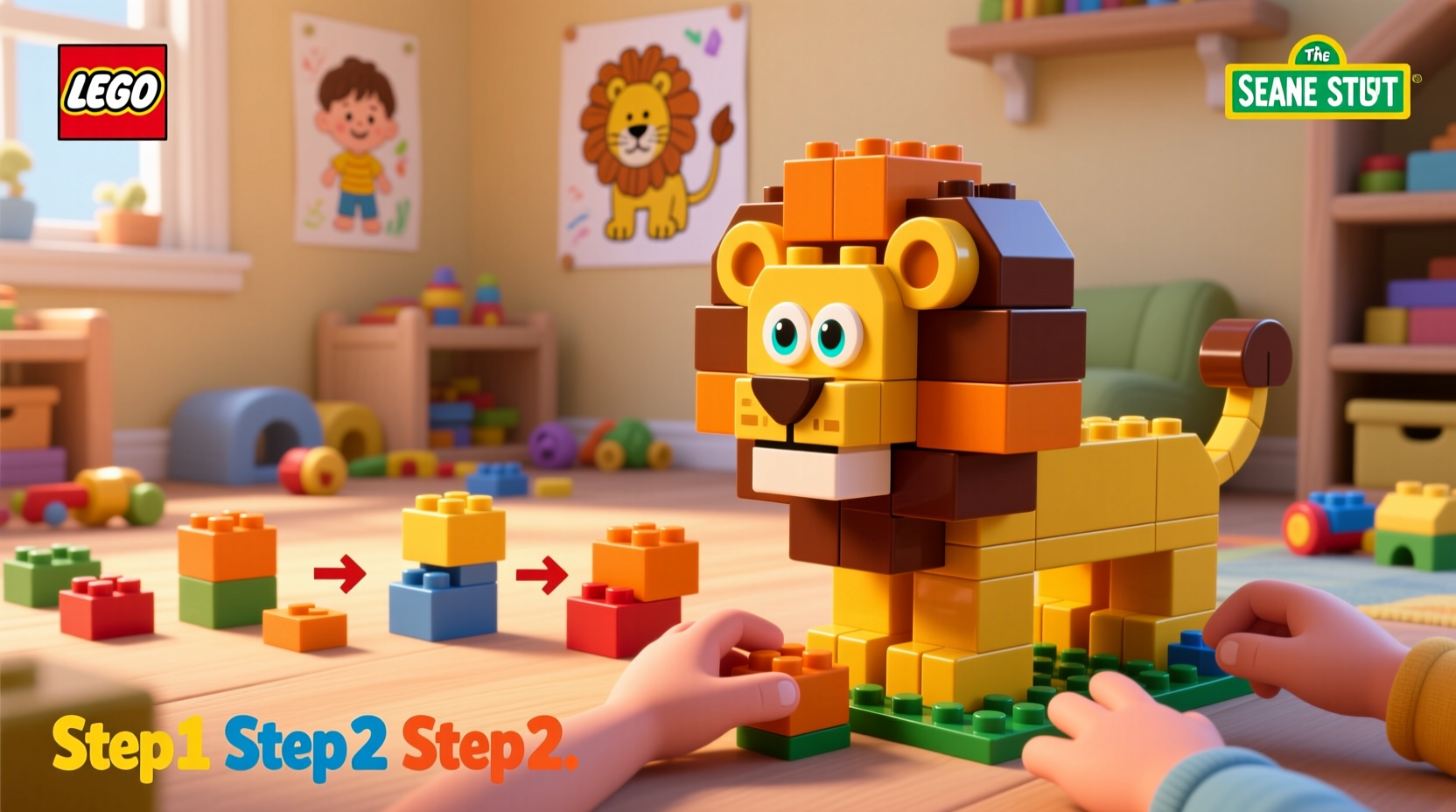
Themed construction kits, especially those based on familiar stories, tap into children’s emotional connection to characters and settings. A Pride Rock build isn’t just about stacking bricks—it becomes an invitation to reenact scenes, invent new adventures, and explore cause-and-effect relationships. According to Dr. Linda Miller, child development researcher at the National Early Education Institute:
“Children learn best when abstract concepts are anchored in meaningful contexts. A story-based building project turns geometry into adventure and balance into bravery.” — Dr. Linda Miller, Child Development Researcher
When kids construct Simba’s home or recreate the elephant graveyard, they’re not only improving fine motor control but also practicing narrative sequencing, empathy (by role-playing different characters), and collaborative decision-making if working in groups.
A Step-by-Step Guide to Teaching Through Construction
To maximize educational value, approach block play with intention. Follow this five-phase framework to guide children from basic assembly to independent creation.
- Phase 1: Guided Assembly (Ages 4–6)
Begin with the instruction manual. Help your child identify pieces by color and shape. Use simple language: “We need two tan bricks with four bumps.” This builds vocabulary and pattern recognition. - Phase 2: Story Integration
Once assembled, encourage storytelling. Ask open-ended questions: “What happens when Scar arrives?” or “How does Nala escape?” Let them move minifigures through the structure while narrating. - Phase 3: Structural Challenges
Introduce stability tests. For example: “Can you make Pride Rock hold three animals without falling?” This teaches weight distribution and problem-solving under constraints. - Phase 4: Creative Expansion
Remove the instructions. Challenge them to rebuild Pride Rock larger, add a cave, or design a new location—like a watering hole or Rafiki’s tree. This fosters innovation and spatial planning. - Phase 5: Collaborative Builds
Pair children together to co-design a scene—perhaps the battle at the gorge. Assign roles: one plans layout, another sources parts, a third directs the story. This nurtures teamwork and communication.
Key Skills Developed Through Lion King Block Play
Beyond entertainment, structured block play cultivates foundational abilities that support academic and social growth. The following table outlines specific competencies and how they emerge during themed construction.
| Skill Area | How It's Developed | Example Activity |
|---|---|---|
| Spatial Reasoning | Understanding 3D relationships between pieces and structures | Building a curved canyon wall using angled bricks |
| Creative Problem-Solving | Finding alternatives when a piece is missing or a design fails | Using blue tiles instead of clear ones for a water effect |
| Narrative Fluency | Sequencing events and expressing ideas verbally | Telling a story where Timon and Pumbaa save Mufasa |
| Emotional Intelligence | Role-playing conflict, loss, and leadership through characters | Discussing why Simba felt guilty and how he grew |
| Engineering Basics | Learning symmetry, balance, and structural integrity | Reinforcing weak towers with internal supports |
Real Example: The Classroom Pride Lands Project
In a mixed-age elementary classroom in Portland, Oregon, teacher Maria Tran introduced a three-week Lion King construction unit. Students were divided into teams representing different animal clans—lions, meerkats, mandrills, and hyenas. Each group had to design a habitat using building blocks that reflected their clan’s needs: shelter, safety, access to food.
The lion team built a multi-level den with lookout towers. The hyena group focused on hidden tunnels and traps, sparking a discussion on fairness and inclusion. At the end of the project, students presented their designs and acted out a unified \"Circle of Life\" ceremony. Teacher observations noted marked improvement in collaboration, persistence through setbacks, and expressive language.
“One student who rarely spoke during circle time became the lead architect,” said Tran. “He explained load-bearing walls using terms he picked up from YouTube videos. It was peer-driven learning at its best.”
Checklist: Maximizing Educational Value from Every Build
To ensure each play session contributes meaningfully to development, follow this practical checklist:
- ✅ Set a clear goal before starting (e.g., “Build a bridge for Simba to cross”)
- ✅ Encourage naming and describing every part (“This tower is Rafiki’s observatory”)
- ✅ Ask probing questions: “What would happen if it rained here?” or “How do the animals get inside?”
- ✅ Limit screen time during builds to keep focus on tactile engagement
- ✅ Rotate roles in group builds so each child experiences leadership and support roles
- ✅ Photograph finished creations and label them with the child’s written description
- ✅ Store builds for 1–2 days before disassembling to honor the effort and allow revisiting
Common Pitfalls and How to Avoid Them
Even well-intentioned play can miss learning opportunities if certain habits take over. Below are common issues and constructive solutions.
- Pitfall: Over-reliance on instructions
Solution: After first build, challenge them to reconstruct from memory or modify one section. - Pitfall: Hoarding pieces or refusing to share
Solution: Introduce a “community bin” where all players draw from shared resources, promoting negotiation. - Pitfall: Rushing to finish without reflection
Solution: End each session with a “build review”—ask what worked, what didn’t, and what they’d change.
FAQ: Parents’ Top Questions About Educational Block Play
At what age can kids start benefiting from themed building sets?
Children as young as 4 can begin with large-piece sets under supervision. By age 5–6, most can follow visual instructions and engage in narrative play. The key is matching complexity to developmental stage—start simple and scale up.
How do I balance free play with structured learning goals?
Use a 70/30 rule: 70% unstructured creative time, 30% guided challenges. For example, after free building, introduce a mini-task: “Can you add a secret door to your fortress?” This keeps ownership with the child while gently stretching skills.
Are generic blocks as effective as branded sets like Lion King?
Generic blocks are excellent for open-ended design, but themed sets provide narrative scaffolding that helps younger children organize their ideas. Use both: themed kits for guided projects, plain blocks for invention-only sessions.
Conclusion: Building More Than Bricks
Teaching children through Lion King building blocks is about far more than assembling plastic pieces. It’s about constructing confidence, creativity, and critical thinking—one brick at a time. When a child proudly declares, “I built Pride Rock myself,” they’re not just talking about architecture—they’re expressing autonomy, resilience, and imagination. These moments lay the foundation for lifelong learning.
Start today: pull out the blocks, invite a story, and let curiosity lead. Whether at home or in the classroom, every build is a chance to shape not just a kingdom, but a thinker, a storyteller, and a problem-solver.




 浙公网安备
33010002000092号
浙公网安备
33010002000092号 浙B2-20120091-4
Comments
No comments yet. Why don't you start the discussion?