
In low-light environments—whether diving beneath the waves, navigating a dark trail, or simply checking the time in bed—luminous watch markings are more than a convenience. They’re a critical functional element of modern timepieces. Yet, despite their ubiquity, many wearers don’t fully understand how these glowing elements work, how long they last, or what distinguishes one type from another. This guide demystifies the technology behind watch luminescence, explains how to interpret different glow behaviors, and offers practical advice for maximizing visibility and longevity.
The Science Behind Watch Luminescence
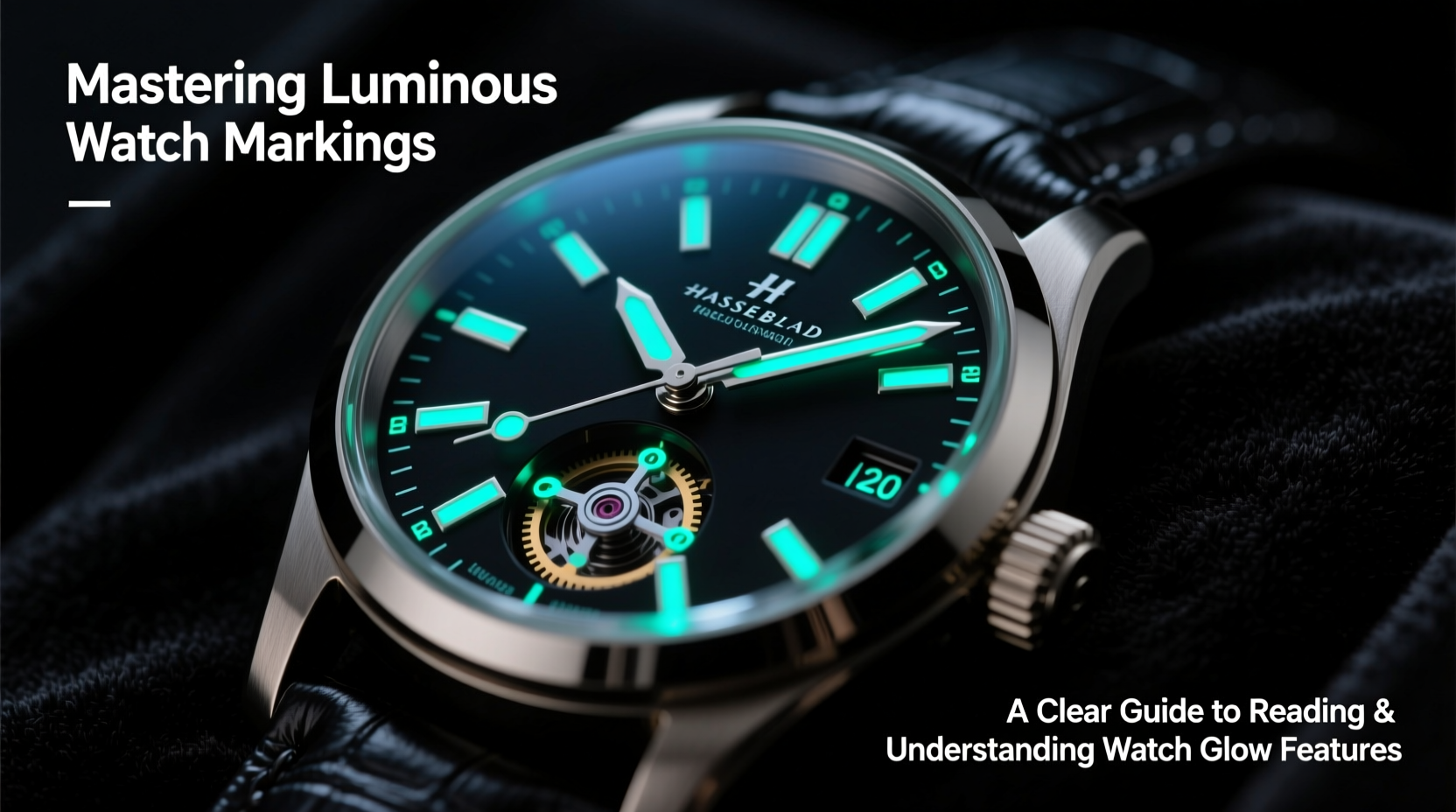
Luminous markings on watches rely on photoluminescent or radioluminescent materials that absorb light and re-emit it over time. The most common types today are photoluminescent compounds like Super-LumiNova and LumiBrite, which require exposure to a light source to \"charge\" before glowing in the dark. Older watches may use tritium-based systems, which emit a constant glow without needing external light due to the radioactive decay of hydrogen-3 isotopes.
Photoluminescent materials work through a process called phosphorescence. When exposed to ultraviolet or visible light, electrons in the material become excited and jump to higher energy states. As they return to their ground state, they release energy in the form of visible light—typically green, blue-green, or white. The duration and intensity of the glow depend on the compound’s formulation, thickness, and prior light exposure.
“Modern lume isn’t just about visibility—it’s engineered for consistency, safety, and longevity. The best formulations can remain legible for hours after a short charge.” — Dr. Alan Zhou, Materials Scientist at Swiss Time Research Group
Types of Luminous Materials: A Comparative Overview
Not all watch lume is created equal. Different materials offer varying performance characteristics, safety profiles, and visual appeal. Understanding the distinctions helps you make informed decisions when purchasing or using a timepiece.
| Material | Light Source Needed? | Glow Duration | Color Options | Safety Notes |
|---|---|---|---|---|
| Super-LumiNova | Yes (charges via light) | 4–8 hours (brightest first 30 mins) | Green, Blue, White, Aqua, Orange | Non-radioactive, non-toxic |
| LumiBrite (Seiko) | Yes | Up to 10 hours | Blue-white, Green | Also non-radioactive; faster charging |
| Tritium (H3 Gas Tubes) | No | 12+ years (constant output) | Green, Orange, Blue | Low-level radiation; sealed tubes safe for life |
| Radium (Vintage) | No | Decades (but degrades over time) | Yellow-green | Radioactive; hazardous if damaged |
While Super-LumiNova dominates the modern market due to its safety and versatility, tritium gas tubes are favored in tactical, military, and professional dive watches for their consistent, maintenance-free glow. Radium, though historically significant, is no longer used due to health risks.
How to Read and Interpret Lume Performance
A watch’s ability to display time in the dark depends not only on the material but also on application technique, surface area, and ambient conditions. Here’s how to assess and use luminous markings effectively:
- Initial Brightness vs. Longevity: Most photoluminescent dials shine intensely right after charging but dim significantly within 30–60 minutes. Tritium maintains steady output.
- Color Visibility: Green is the most visible color to the human eye in low light. Blue and white may look stylish but offer lower contrast in total darkness.
- Application Thickness: Thicker layers of lume last longer and glow brighter. High-end models often apply lume in multiple coats.
- Environmental Factors: Cold temperatures can reduce glow intensity temporarily. Moisture damage may degrade lume over time, especially on vintage pieces.
When evaluating a watch in the dark, focus first on the hands and hour markers—they should be clearly distinguishable. If only the second hand glows, readability drops dramatically. Optimal lume layouts ensure symmetry and consistent brightness across all key time-telling elements.
Step-by-Step Guide to Maximizing Lume Effectiveness
To get the most out of your watch’s luminous features, follow this practical routine:
- Charge Before Use: Expose the watch to bright light for 2–5 minutes. Sunlight or LED flashlights work best.
- Avoid Overcharging Concerns: Unlike batteries, lume cannot be overcharged. Frequent exposure enhances performance.
- Check Legibility in Stages: Test visibility immediately, after 10 minutes, and again at 60 minutes to understand fade rate.
- Clean the Crystal Regularly: Dust or smudges on the sapphire or mineral glass reduce light transmission and perceived brightness.
- Store with Light Access: Keep the watch face-up near indirect daylight if stored long-term to maintain lume readiness.
Real Example: Night Dive Scenario
Consider a diver descending to 30 meters at night. Their dive begins under limited natural light, and once submerged, visibility drops sharply. A watch with high-grade Super-LumiNova on broad hands and large numerals allows quick time checks between decompression stops. In contrast, a watch with thin, degraded lume forces the diver to use a flashlight—increasing risk and disrupting focus. In such scenarios, superior lume isn’t just convenient; it’s a safety feature.
Maintenance and Longevity Tips
Luminous materials degrade slowly over time. While tritium has a half-life of about 12.3 years (meaning brightness halves over that period), photoluminescent paints can lose potency due to moisture ingress, UV degradation, or physical wear. To preserve performance:
- Service water-resistant watches every 3–5 years to prevent internal fogging or corrosion affecting lume adhesion.
- Avoid prolonged exposure to extreme humidity unless the watch is rated for it.
- Never attempt to repair or repaint lume yourself—this requires specialized tools and materials.
Frequently Asked Questions
Why does my watch glow brightly at first but fade quickly?
This is normal for photoluminescent materials like Super-LumiNova. They release stored energy rapidly after charging. The brightest phase lasts 10–30 minutes, followed by a gradual decline. Tritium-based watches do not exhibit this behavior.
Is tritium dangerous to wear?
No. Tritium gas is sealed within tiny borosilicate glass tubes. The radiation emitted is extremely low-energy beta particles that cannot penetrate skin or even the watch casing. These tubes are considered safe for lifelong wear.
Can I improve old or weak lume on a vintage watch?
Re-luming should only be done by a professional watchmaker. Attempting DIY fixes can damage the dial or compromise authenticity. Some collectors prefer original, aged lume for historical value, even if dim.
Final Checklist: Evaluating a Watch’s Lume Quality
- ✔ Uniform Application:
- Markers and hands glow evenly, without patchiness.
- ✔ Adequate Coverage:
- Thick, well-filled lume plots—not just fine lines.
- ✔ Fast Charging:
- Brightens quickly under indoor lighting.
- ✔ Good Color Choice:
- Green or yellow-green offers best visibility.
- ✔ No Gaps in Critical Areas:
- All hour markers, minute track, and both sides of hands are treated.
Conclusion
Understanding luminous watch markings transforms a seemingly minor feature into a powerful tool for usability and safety. Whether you're an outdoor enthusiast, a professional diver, or someone who values clarity in the dark, knowing how lume works—and how to maintain it—enhances your relationship with your timepiece. From selecting the right material to interpreting glow patterns, every detail contributes to reliability when it matters most.




 浙公网安备
33010002000092号
浙公网安备
33010002000092号 浙B2-20120091-4
Comments
No comments yet. Why don't you start the discussion?