
Malaysian curry puffs are more than just a snack—they’re a cultural staple, found in hawker stalls, bakeries, and homes across the country. With their golden, flaky crusts and spiced potato-and-meat fillings, they offer a satisfying balance of texture and flavor. Yet achieving that ideal puff—crisp on the outside, tender inside, with a well-seasoned center—is no small feat. Many home cooks struggle with soggy bottoms, tough dough, or bland fillings. This guide breaks down every element of the perfect curry puff, from crafting a laminated pastry to building depth in the filling, so you can replicate Malaysia’s beloved street snack with confidence.
The Anatomy of a Great Curry Puff
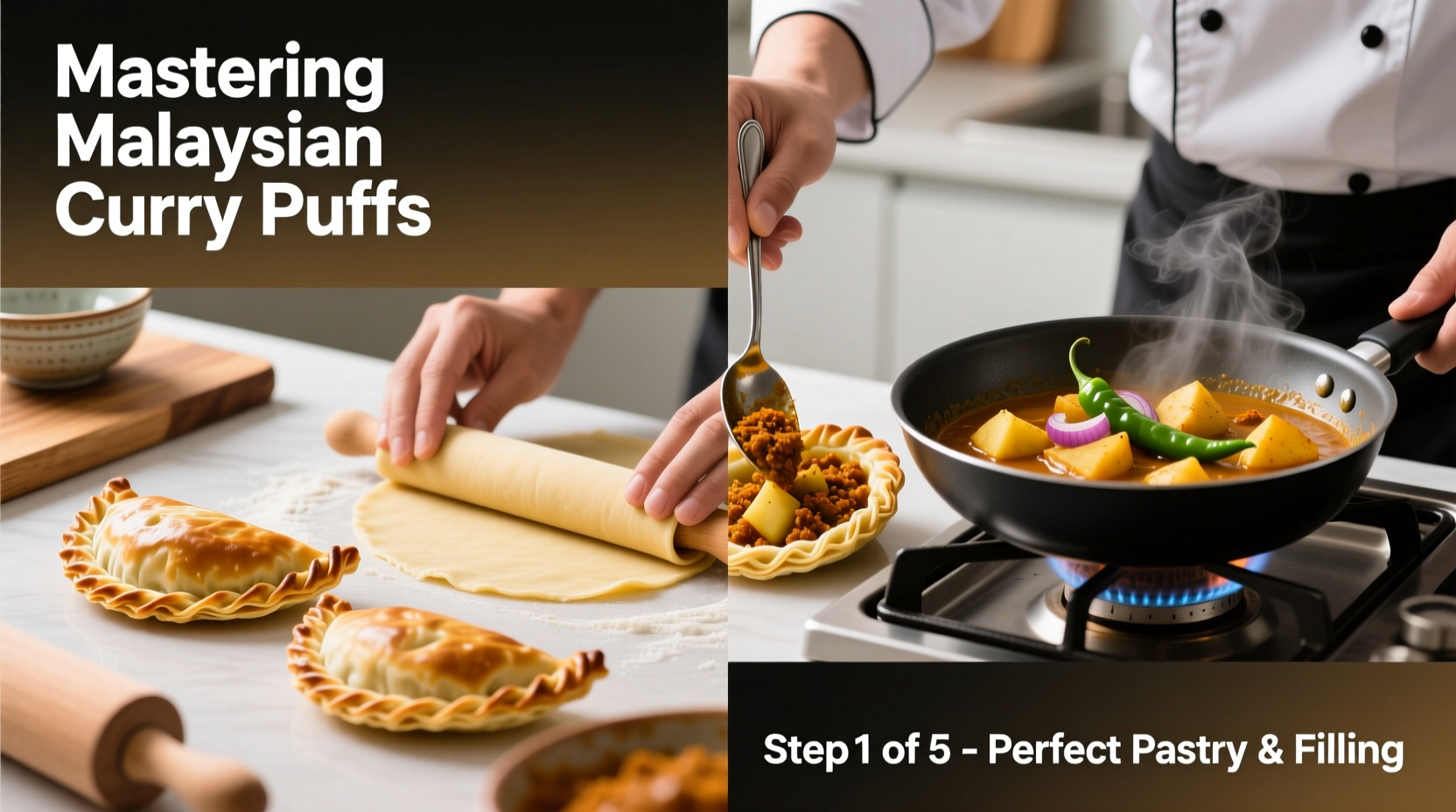
A superior curry puff hinges on three components: the pastry, the filling, and the seal. The pastry must be light and crisp, with visible layers that shatter slightly when bitten. The filling should be moist but not wet, richly spiced yet balanced, and packed with texture. Finally, the crimped edge must hold firm during frying without cracking or leaking.
Traditional Malaysian versions often use a shortcrust-laminated hybrid dough. It’s rolled and folded like puff pastry but enriched with fat and sometimes egg, giving it tenderness and browning capability. The filling typically features curried potatoes, minced chicken or beef, onions, and hard-boiled eggs, all simmered in a spice paste built from shallots, garlic, turmeric, and chili.
Step-by-Step Guide to Flaky Pastry
The key to flaky layers lies in controlling temperature and handling the dough gently. Overworking warms the butter; under-chilling causes smearing. Follow this method precisely:
- Prepare the dough: Mix 250g all-purpose flour, 1/2 tsp salt, 100g cold unsalted butter (cubed), and 1 large egg. Add 2–3 tbsp ice water until a shaggy dough forms. Do not overmix.
- Rest the dough: Flatten into a rectangle, wrap in plastic, and chill for 30 minutes.
- Roll and fold (lamination): Roll out to 1/4-inch thickness, then perform a single fold (like a letter). Rotate 90 degrees, roll again, and repeat twice more. Chill 20 minutes between folds.
- Final rest: After the third fold, refrigerate for at least 1 hour before cutting and shaping.
This four-fold process creates distinct layers that expand in hot oil, producing that signature lift and crunch. Skipping rests leads to greasy, dense results.
Building a Flavorful Filling
The filling is where regional variations shine. Some add raisins for sweetness; others include sardines or anchovies for umami. But the foundation remains consistent: aromatics sautéed in oil, spices bloomed, then bulked with potatoes and protein.
Begin by blending 3 shallots, 2 cloves garlic, 1-inch ginger, and 1 red chili into a paste. Sauté in 2 tbsp oil until fragrant. Add 1 tsp each ground turmeric, coriander, and cumin, plus 1/2 tsp garam masala. Toast for 30 seconds. Stir in 250g diced potatoes and 150g cooked, shredded chicken or beef. Add 1/2 cup water and simmer until potatoes are tender and liquid is absorbed—about 15 minutes. Fold in a chopped hard-boiled egg just before cooling.
| Ingredient | Purpose | Common Mistake |
|---|---|---|
| Turmeric | Color and earthy warmth | Using too much—bitterness ensues |
| Shallots | Sweet aromatic base | Undercooking—leads to raw bite |
| Potatoes | Bulk and texture | Overcooking—turns mushy and leaks moisture |
| Hard-boiled egg | Richness and contrast | Adding too early—breaks down in heat |
“Curry puffs live or die by their filling consistency. If it’s too wet, the pastry collapses. Aim for thick, almost paste-like—not soupy.” — Chef Aminah Rahman, Kuala Lumpur Street Food Historian
Assembling and Frying to Perfection
Once both components are ready, assembly begins. Roll the rested dough to 1/8-inch thickness and cut into 5-inch circles using a bowl or cutter. Place 1.5 tablespoons of cooled filling in the center. Moisten the edges with water, fold the circle in half, and crimp with a fork or finger press. For authenticity, try the “twist seal” used in Penang: pinch and twist the edge continuously along the arc.
Fry in vegetable oil heated to 350°F (175°C). Too cool, and the puffs absorb oil; too hot, and they brown before cooking through. Fry 2–3 at a time for 4–5 minutes, turning once, until deep golden. Drain on wire racks—never paper towels, which trap steam and soften the crust.
Mini Case Study: From Kitchen Fail to Family Favorite
Siti, a home cook in Petaling Jaya, tried making curry puffs for her children’s school fair. Her first batch was disastrous: greasy, flat, and bursting at the seams. She reviewed her process and realized she’d skipped chilling the dough and used warm filling, which melted the butter layers instantly. On the second attempt, she chilled the dough thoroughly, cooled the filling completely, and sealed carefully. The result? Crisp, golden puffs with defined layers that stayed intact. Her stand sold out in under an hour. “I learned that patience matters more than speed,” she says. “Now my kids ask for them every weekend.”
Checklist: Perfect Curry Puff Workflow
- ✔ Prepare spice paste and filling a day ahead to develop flavor
- ✔ Cool filling completely before assembling
- ✔ Keep dough cold throughout lamination
- ✔ Use sharp cutter for clean edges
- ✔ Seal tightly and crimp securely
- ✔ Fry at consistent 350°F
- ✔ Drain on wire rack to preserve crispness
Frequently Asked Questions
Can I bake curry puffs instead of frying?
Yes. Preheat oven to 375°F (190°C). Brush puffs with egg wash and bake 25–30 minutes until golden. Baked versions are less flaky but healthier and easier to manage in bulk.
Why did my pastry crack when I sealed it?
Likely causes: dough too cold (warm slightly before rolling), rolled too thin, or insufficient resting time. Let chilled dough sit at room temperature for 5–10 minutes before shaping.
Can I use store-bought puff pastry?
You can, but traditional Malaysian-style puffs rely on a denser, more pliable dough. Store-bought pastry tends to puff too much and may not hold the filling well. For best results, make the dough from scratch.
Conclusion: Mastery Through Practice
Perfecting Malaysian curry puffs isn’t about shortcuts—it’s about attention to detail, respect for ingredients, and repetition. Each batch teaches something new: how the dough responds to humidity, how spices bloom at different stages, how sealing technique affects appearance and integrity. Whether you serve them at family gatherings or pack them in lunchboxes, homemade curry puffs carry a sense of pride and tradition.




 浙公网安备
33010002000092号
浙公网安备
33010002000092号 浙B2-20120091-4
Comments
No comments yet. Why don't you start the discussion?