
Dressing well isn’t about chasing trends or spending extravagantly. It’s about understanding your body, knowing what works, and cultivating a personal aesthetic that feels authentic. A man who dresses with intention radiates confidence—not because his clothes are expensive, but because they fit well, suit the moment, and reflect self-awareness. True style is quiet mastery, not loud statements. This guide breaks down the principles, habits, and decisions that allow any man to dress confidently and effortlessly, day after day.
The Foundation: Fit Over Everything
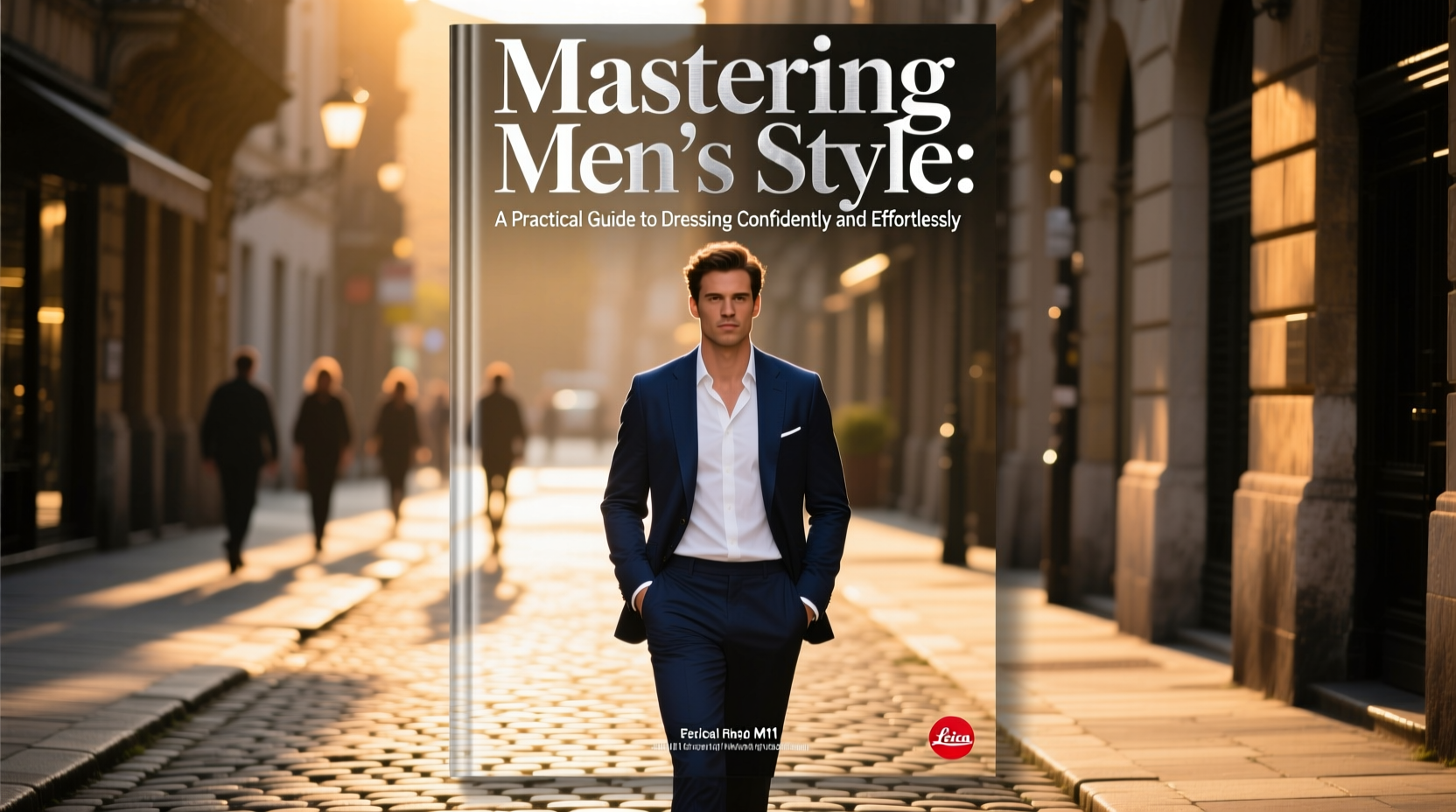
No amount of designer labels can compensate for poor fit. A $200 jacket that hangs loosely on the shoulders will always look worse than a $80 one tailored to your frame. The cornerstone of great style is proportion—how clothing interacts with your body.
Shirts should skim the torso without pulling across the chest or billowing at the sides. Jacket sleeves should end where the wrist meets the hand, allowing just half an inch of shirt cuff to show. Trousers should break lightly at the shoe or sit cleanly above it for a modern look. Avoid extremes: too tight appears costumey; too loose reads sloppy.
Key Fit Guidelines by Garment
| Garment | Ideal Fit | Common Mistake |
|---|---|---|
| Dress Shirt | Snug collar (one finger fits), tapered waist, sleeve ends at wrist bone | Baggy underarms, collar gaping when buttoned |
| Suit Jacket | Shoulders align with yours, no wrinkles when buttoned, sleeve shows 1/2” cuff | Rounded shoulder seams, back pulling when arms move |
| Trousers | Natural crease, minimal break over shoe, waist sits at hips | Bunching at ankles, excessive pooling |
| Knitwear | Close but not restrictive, hem hits at hip or top of belt | Too long or boxy, hiding proportions |
Build a Capsule Wardrobe That Works
A functional wardrobe reduces decision fatigue and ensures you’re always prepared. Instead of accumulating random pieces, focus on versatile essentials that layer and mix seamlessly. The goal is cohesion, not quantity.
Start with neutral foundations: navy, charcoal, olive, cream, and black. These colors form the backbone of any polished look. Add subtle texture—tweed, herringbone, corduroy—to create depth without relying on bold patterns.
“Dressing well begins with subtraction. Remove what doesn’t serve you, then refine what remains.” — Thomas Ford, Menswear Stylist & Author
Essential Pieces Every Man Should Own
- One well-fitted navy blazer
- Two pairs of tailored trousers (charcoal and beige)
- Three crisp dress shirts (white, light blue, pale pink)
- One dark denim pair (non-distressed)
- Two quality sweaters (crewneck in merino wool, V-neck in cashmere)
- One overcoat (camel or black, depending on climate)
- Two pairs of shoes (oxford brogues, suede chukkas)
- One weekender bag (leather, structured)
The Psychology of Confidence in Dress
Clothing affects how others perceive you—and how you feel about yourself. Studies in embodied cognition show that wearing formal attire enhances abstract thinking and increases feelings of power. Conversely, slouching in sweatpants can subtly reinforce lethargy.
Confidence in style comes from consistency, not perfection. Wear your clothes with ownership. Stand straight. Move naturally. The most stylish man in the room isn’t always the best-dressed—he’s the one who seems completely comfortable in what he’s wearing.
Real Example: From Self-Doubt to Style Clarity
James, a 34-year-old project manager, used to dread client meetings. He wore ill-fitting off-the-rack suits and felt invisible in boardrooms. After investing in a properly fitted navy suit and learning basic coordination (matching belt to shoes, using pocket squares for flair), his posture changed. Clients began addressing him first. Colleagues asked for fashion advice. The clothes didn’t transform him—but the confidence they inspired did.
A Step-by-Step Guide to Your Daily Dressing Routine
Effortless style isn’t spontaneous. It’s the result of systems that simplify choices. Follow this daily process to eliminate stress and elevate consistency.
- Check the weather and agenda. Will you be indoors all day? Walking between meetings? This determines layering needs.
- Select your anchor piece. Usually footwear or outerwear—this sets the tone. Loafers suggest smart-casual; boots lean rugged.
- Choose a color base. Stick to neutrals unless you’re intentionally making a statement.
- Layer with purpose. Add a sweater, vest, or jacket to create dimension and adaptability.
- Finalize with details. Belt, watch, socks. Ensure continuity: leather tones match, metals coordinate.
- Review in full-length mirror. Walk around. Sit down. Check for pull, sag, or imbalance.
Common Pitfalls and How to Avoid Them
Even stylish men make mistakes. Awareness is the first step toward refinement.
- Over-accessorizing: One watch, one ring, one chain max. More distracts rather than impresses.
- Mismatched formality: Don’t pair a tuxedo shirt with jeans. Match the level of polish across all items.
- Neglecting grooming: A perfect outfit is undermined by unkempt hair or dirty shoes.
- Ignoring seasonal shifts: Linen in winter or heavy wool in summer disrupts visual harmony.
Do’s and Don’ts at a Glance
| Scenario | Do | Don't |
|---|---|---|
| Business Meeting | Wear a tailored suit, closed-toe oxfords, subtle tie | Roll up sleeves on a suit jacket, wear sneakers |
| Casual Weekend | Dark denim, clean sneakers, fitted henley | Worn-out t-shirts, flip-flops, sagging pants |
| Wedding Guest | Blazer with chinos, dress shirt, leather loafers | Black tie if not required, overly bright patterns |
Frequently Asked Questions
How do I find my personal style?
Start by observing what makes you feel confident. Collect images of outfits you admire. Identify recurring elements—color, silhouette, fabric. Then test them in low-stakes settings. Personal style emerges through iteration, not revelation.
Is it worth investing in bespoke tailoring?
For key pieces like suits and overcoats, yes. Off-the-rack garments are cut for averages, not individuals. Bespoke or made-to-measure ensures precision fit, which elevates both appearance and longevity. For casual wear, high-quality ready-to-wear with minor alterations often suffices.
Can short men still look stylish?
Absolutely. Height has little to do with style. Focus on proportion: shorter jacket lengths, higher trouser rises, and monochromatic looks elongate the frame. Well-fitted clothing always commands attention, regardless of stature.
Conclusion: Style as a Practice, Not a Performance
Mastering men’s style isn’t about becoming someone else. It’s about refining who you already are—through care, consistency, and clarity. Effortless dressing isn’t achieved overnight, but through small, repeatable choices: getting the fit right, curating a focused wardrobe, and wearing your clothes with quiet assurance.
You don’t need a closet full of designer labels. You need a few well-chosen pieces, worn with confidence. Start today. Edit one drawer. Replace one ill-fitting shirt. Pay attention to how things feel when you move. These small acts compound into a presence that speaks before you do.




 浙公网安备
33010002000092号
浙公网安备
33010002000092号 浙B2-20120091-4
Comments
No comments yet. Why don't you start the discussion?