
In the vast, blocky terrain of Minecraft, efficient movement is essential. Whether you're crossing a wide river, escaping a horde of zombies at dawn, or setting up an automated farm, boats offer one of the fastest and most accessible methods of transportation—especially over water. While often overlooked in favor of horses or minecarts, boats are lightweight, easy to craft, and surprisingly versatile when used strategically. This guide breaks down everything you need to know about crafting, using, and optimizing boats across all versions of Minecraft.
Crafting Your First Boat: Materials and Mechanics
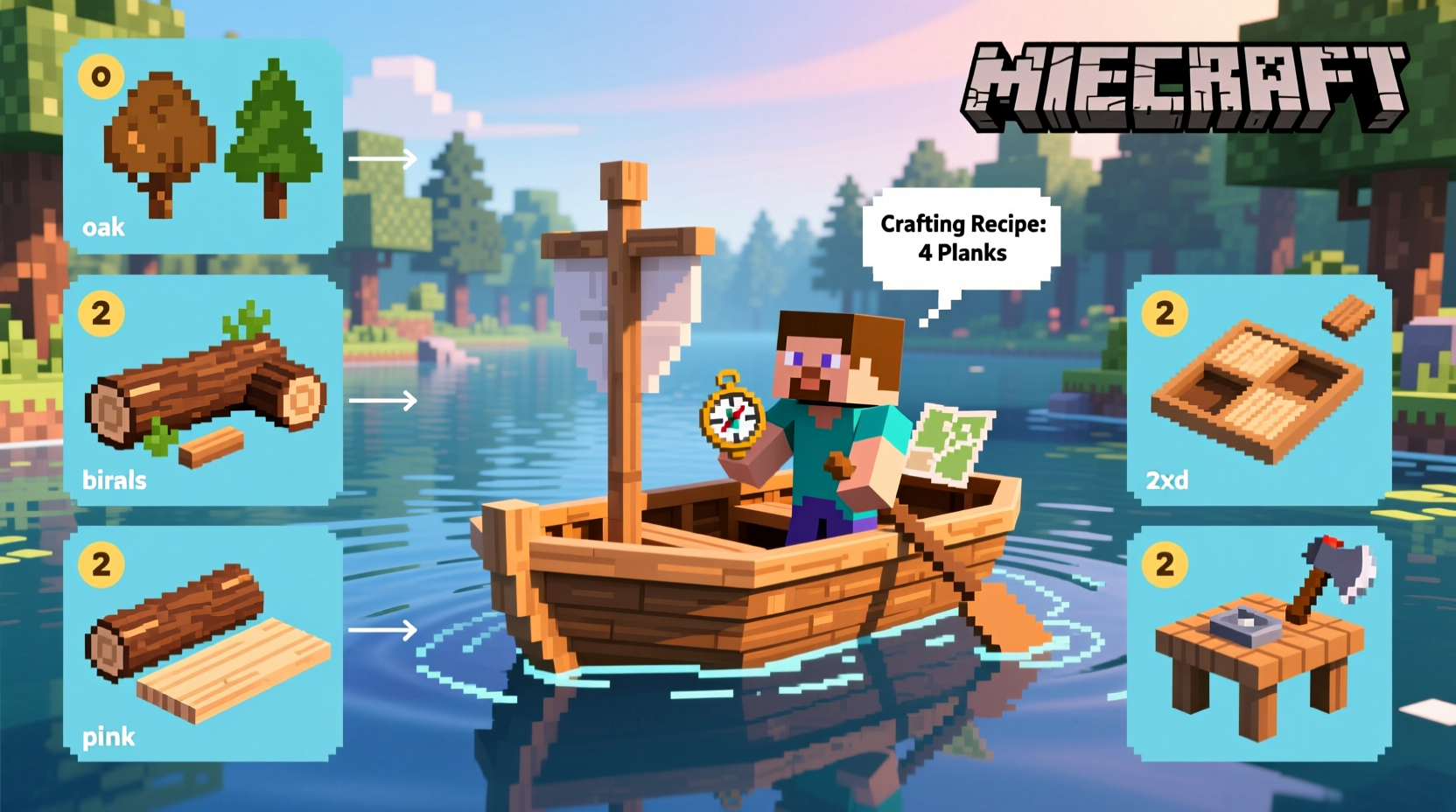
A boat requires only five wooden planks and access to a crafting table. Open the 3x3 grid and place one plank in each corner of the top row, one in the center, and leave the middle and bottom rows as shown:
| Top Row | Middle Row | Bottom Row |
|---|---|---|
| Plank | Plank | Plank | Empty | Plank | Empty | Empty | Empty | Empty |
The result is one boat. Any type of wood works—oak, spruce, birch, jungle, acacia, dark oak, or mangrove—though the boat’s appearance will reflect the wood used. No additional tools are required, making it one of the earliest viable transport options after gathering trees and crafting a workbench.
Navigating Waterways: Movement and Control
Once crafted, right-click on any body of water (minimum depth of one block) to enter the boat. Movement is straightforward: use standard forward/backward keys to propel the boat, and left/right to steer. However, mastering directional control takes practice, especially in tight spaces or strong currents.
Boats move significantly faster than walking—up to 7.5 blocks per second on flat water—making them ideal for coastal exploration or river-based travel. Unlike land vehicles, they don’t require fuel or rails. But they do have limitations: boats cannot climb slopes, traverse ice without external help, and can be destroyed by collisions or mobs.
When riding in a boat, you can still attack mobs, eat food, or throw items. Two players can ride together if one dismounts and re-enters properly. However, boats are fragile—just three hits from a zombie or skeleton will destroy them, stranding riders.
Optimizing Speed and Efficiency
To maximize speed, travel in straight lines and avoid zigzagging. On open water, sprinting (holding forward) gives a slight boost. When possible, align travel with ocean currents or downhill streams. In fact, flowing water increases boat velocity, particularly when descending elevation changes.
An advanced trick involves pairing boats with ice paths. While boats themselves don’t glide on ice, placing them in flowing water atop packed ice or blue ice creates rapid transit systems. These setups, combined with soul sand bubbles in basalt deltas or magma blocks, can form high-speed water elevators or cross-map highways.
“Boats are underrated for early-game mobility. A well-placed river route can save hundreds of walking hours.” — Daniel Park, Minecraft Speedrunner & Content Creator
Advanced Uses: Beyond Simple Transport
Skilled players leverage boats for more than just point-to-point travel. Creative applications include:
- Farming Platforms: Use boats as mobile bases for kelp, bamboo, or sugarcane farms over water.
- Escape Mechanisms: Place a boat near your base entrance to flee quickly during sieges.
- XP Grinding: Combine boats with mob spawners and water channels to create safe passive XP collection systems.
- PvP Tactics: In multiplayer servers, boats allow quick flanking maneuvers or retreats across lakes.
- Exploration Boost: Navigate swamps, frozen oceans, or mangrove biomes where footing is unstable or dangerous.
One popular technique is the “boat elevator,” which uses bubble columns from soul sand and magma blocks to lift boats vertically through water tubes. Though finicky, these can reach great heights when built correctly.
Common Boat-Building Mistakes
| Mistake | Why It’s Bad | Solution |
|---|---|---|
| Launching into shallow water | Boat gets stuck or breaks instantly | Ensure at least one full block of water depth |
| Riding through ice without flow | No natural movement; manual pushing needed | Add water source blocks or use leads |
| Leaving boats unattended in open areas | Easily knocked into void or destroyed by mobs | Store in chests or behind fences |
| Using boats on lava | Boats burn instantly upon contact | Never use boats on lava—use Nether portals instead |
Step-by-Step: Building a Reliable River Transit System
For players establishing a network between distant bases, here’s how to build an efficient river-based transport line:
- Scout a Natural Waterway: Find a river or ocean path connecting two key locations. Use maps or flight in Creative mode to plan routes.
- Clear Obstacles: Remove sandbars, overhanging blocks, and hostile mobs. Light the banks to prevent mob spawns.
- Build Docks: Create simple wooden piers with signs (to prevent water overflow) and chest storage for extra boats.
- Install Checkpoints: Every 200–300 blocks, add a small island with a campfire and boat stash in case of destruction.
- Optimize Flow: Dig channels to redirect water and eliminate dead ends. Use gates or trapdoors to control entry points.
- Mark the Route: Place torches, banners, or name-tagged boats to indicate direction and ownership.
Mini Case Study: The Coastal Survival Network
Jenna, a seasoned survival player on a public server, established a thriving coastal village network along a 1,200-block stretch of shoreline. With no horses available early on, she relied entirely on boats. She built elevated docks at each settlement, connected by cleared river mouths and marked buoys. By storing ten boats across five hubs, she ensured redundancy. During a major raid, she evacuated her entire team via synchronized boat convoy—something opponents couldn’t match due to lack of water prep. Her foresight turned a basic mechanic into a strategic advantage.
Frequently Asked Questions
Can you repair a damaged boat?
Yes, but not directly in survival without cheats. Damaged boats disappear upon breaking. To repair, combine two damaged boats in a crafting grid—this merges their durability. Alternatively, use the command /repair @s in creative or admin-enabled worlds.
Do boats work in the Nether or End?
Boats can be placed in the Nether, but extreme fire hazards and lava lakes make them impractical. In the End, limited water sources restrict usability. However, some players use boats with ender pearls for momentum tricks in parkour challenges.
How many types of boats are there?
As of 1.19, there are six distinct boat types based on wood: oak, spruce, birch, jungle, acacia, dark oak, and mangrove. Each has identical stats but different visuals. Stripped logs produce slightly different textures, useful for aesthetic builds.
Expert Checklist: Boat Mastery Essentials
- Carry at least 2 spare boats in your inventory during long trips.
- Use signs under boat launch points to stop water spillage.
- Name valuable boats to deter theft on multiplayer servers.
- Pair boats with armor stands for mobile fishing rigs.
- Store boats in chests to prevent despawning or explosion damage.
- Test routes in Creative first before committing resources.
- Combine boats with ice and water streams for fast inland transit.
Conclusion: Master the Waters, Master the Game
Boats may seem like a simple, early-game tool, but their potential extends far beyond casual river rides. From enabling rapid expansion to serving as components in redstone contraptions, mastering boats adds a layer of efficiency that separates novice players from true Minecraft strategists. Whether you're streamlining resource runs, designing elegant water highways, or outmaneuvering enemies, the humble boat deserves a permanent spot in your toolkit.




 浙公网安备
33010002000092号
浙公网安备
33010002000092号 浙B2-20120091-4
Comments
No comments yet. Why don't you start the discussion?