
Learning music is not reserved for prodigies or those with early training. It’s a skill that can be developed systematically, regardless of age or background. The key lies in approaching it with intention, consistency, and the right strategy. Many beginners struggle not because they lack talent, but because they lack structure. This guide breaks down the journey into actionable steps, offering clarity on how to progress from curiosity to competence—and eventually, confidence.
Start with the Right Mindset
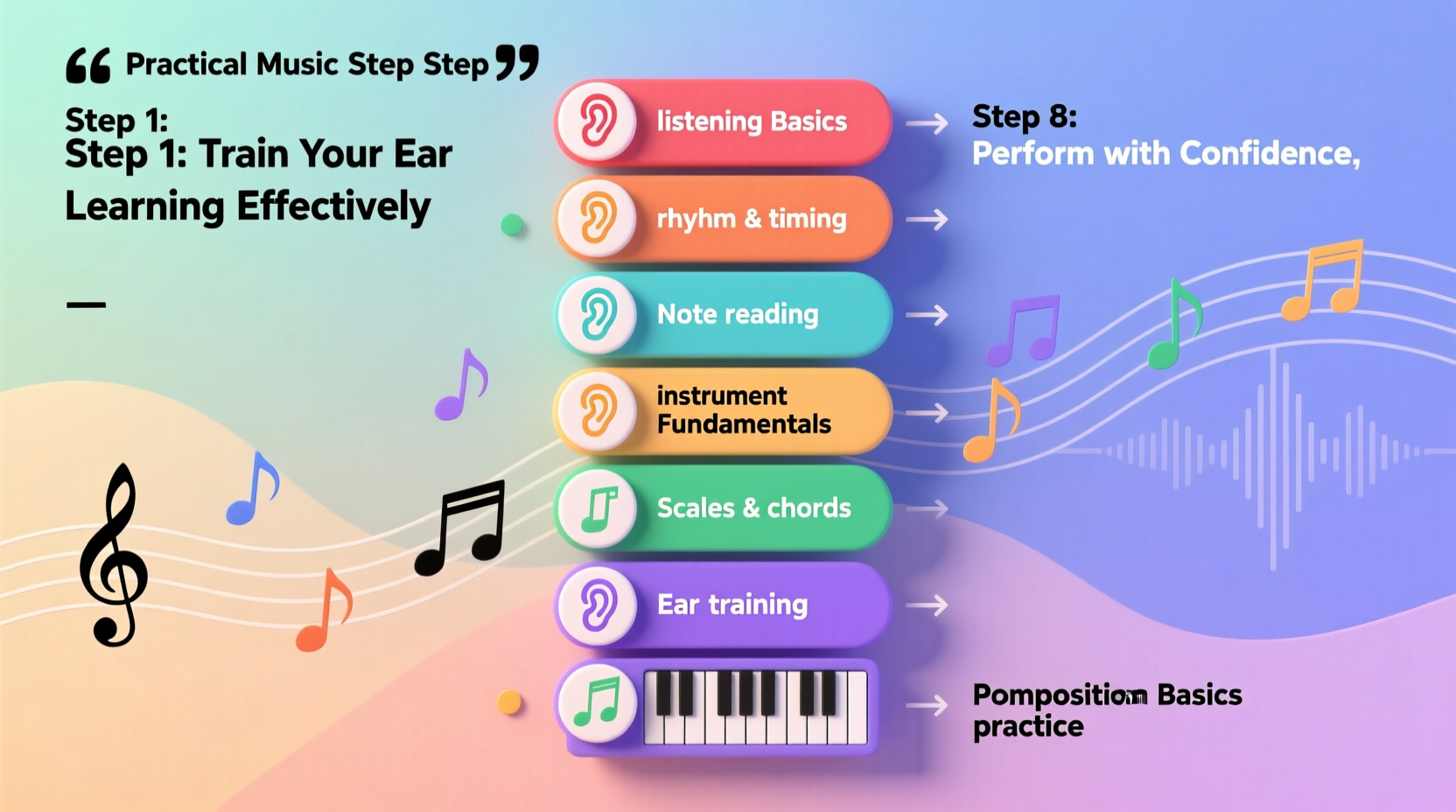
Before touching an instrument or opening a theory book, cultivate a mindset that supports long-term growth. Music is not about instant mastery; it's about incremental improvement. Impatience leads to frustration, and frustration often ends practice routines prematurely.
Adopt a growth mindset: believe that ability improves with effort. Every musician, from Beethoven to Billie Eilish, began where you are now—facing unfamiliar chords, awkward fingerings, or confusing rhythms. What separates them is not innate genius, but persistence and deliberate practice.
Build a Structured Learning Path
Random playing leads to random results. To master music, follow a clear progression. Here’s a realistic timeline over six months for a beginner:
- Weeks 1–4: Learn basic music notation, rhythm patterns, and hand positioning on your chosen instrument. Focus on simple melodies and steady tempo.
- Weeks 5–8: Introduce major scales and primary chords (I, IV, V). Practice chord transitions and play short songs using three-chord progressions.
- Weeks 9–12: Begin ear training exercises—identify intervals, match pitches, and transcribe simple melodies by ear.
- Months 4–6: Combine skills—play full songs with both hands, improvise simple solos, and explore basic songwriting.
This phased approach prevents overwhelm and ensures each skill builds on the last. Skipping fundamentals creates gaps that hinder later development.
Essential Skills and How to Develop Them
Music mastery rests on four core competencies: technique, theory, ear training, and expression. Each plays a distinct role.
| Skill | Why It Matters | How to Practice |
|---|---|---|
| Technique | Enables clean, controlled playing | Use slow, metronome-guided drills; focus on posture and efficiency |
| Music Theory | Provides understanding of harmony, structure, and composition | Study scales, chord construction, and progressions; apply to real songs |
| Ear Training | Allows you to play by ear and improvise confidently | Practice interval recognition, melody playback, and chord identification |
| Expression | Turns notes into emotion and communication | Experiment with dynamics, phrasing, and articulation in familiar pieces |
Balance these areas weekly. Spend 30% of practice time on technique, 25% on theory, 25% on ear work, and 20% on creative application like improvisation or performance.
Real Progress: A Case Study
Lena, a 28-year-old graphic designer with no prior musical experience, decided to learn piano. Instead of jumping into complex pieces, she followed a structured plan. She started with five-minute daily rhythm clapping exercises, then moved to keyboard basics using online tutorials.
By week six, she was playing “Ode to Joy” with both hands. At three months, she could identify common chord progressions by ear. Six months in, she composed her first original piece—a simple but expressive melody in C major.
Her success wasn’t due to exceptional talent. It came from consistency, targeted practice, and refusing to skip foundational work. She practiced 25 minutes a day, six days a week, tracking progress in a journal. When motivation dipped, she reviewed old recordings and saw tangible improvement.
“Musical ability isn’t fixed. With deliberate practice, most people can achieve far more than they think.” — Dr. Anita Patel, Cognitive Psychologist & Music Learning Researcher
Common Pitfalls and How to Avoid Them
- Practicing too fast: Speed without accuracy reinforces mistakes. Always start slowly.
- Neglecting listening: Playing without attentive listening leads to robotic performance. Record yourself regularly.
- Focusing only on songs: Learning songs is fun, but without theory and technique, progress stalls.
- Skipping rest: Mental fatigue reduces retention. Take short breaks every 20–25 minutes.
Your 7-Day Practice Checklist
Use this checklist to ensure balanced, effective practice sessions:
- ✅ Warm up with finger exercises or vocalizations (5 min)
- ✅ Review yesterday’s material before moving forward
- ✅ Work on one technical challenge (e.g., scale, arpeggio, strumming pattern)
- ✅ Apply theory: analyze the chords in a song you’re learning
- ✅ Train your ear: identify three intervals or replay a 4-note melody
- ✅ Play through a complete piece with attention to dynamics
- ✅ End with free play—improvise or compose for 5 minutes
Repeat this cycle throughout the week, adjusting difficulty as needed. Track what you practice and how it felt—this reflection sharpens self-awareness and accelerates growth.
FAQ
How much should I practice each day?
Beginners benefit most from 20–30 minutes of focused daily practice. Quality matters more than quantity. Short, consistent sessions build stronger neural pathways than infrequent marathons.
Do I need to learn to read music?
Reading music is helpful but not mandatory. Many successful musicians rely on ear and chord charts. However, reading expands your access to repertoire and deepens theoretical understanding. Aim to learn the basics even if you don’t become fluent.
Can I learn music as an adult?
Absolutely. Adults often learn more efficiently than children due to better focus, discipline, and cognitive awareness. While physical dexterity may take longer to develop, adults excel in interpretation, problem-solving, and musical intent.
Take Action Today
The path to mastering music begins with a single note. You don’t need perfect conditions, expensive gear, or natural flair. You need a plan, patience, and the willingness to show up—even when progress feels invisible.
Choose one small action: open a notebook for practice logs, download a metronome app, or play your first scale. Build from there. Over weeks and months, these actions compound into real skill. Music isn’t about being the best—it’s about expressing something true. And that starts with beginning.




 浙公网安备
33010002000092号
浙公网安备
33010002000092号 浙B2-20120091-4
Comments
No comments yet. Why don't you start the discussion?