
Necklace layering has evolved from a bohemian trend into a refined art form of personal expression. At the heart of many layered looks lies the triangle pendant—a symbol of balance, strength, and modern elegance. Its geometric shape draws attention while remaining versatile enough to complement both minimalist and bold styles. When done well, layering necklaces with a triangle pendant can elevate any outfit, turning a simple ensemble into a curated statement. But achieving harmony among multiple chains requires more than just stacking what you like. It demands an understanding of proportion, texture, length, and focal points.
The Triangle Pendant: More Than Just a Trend
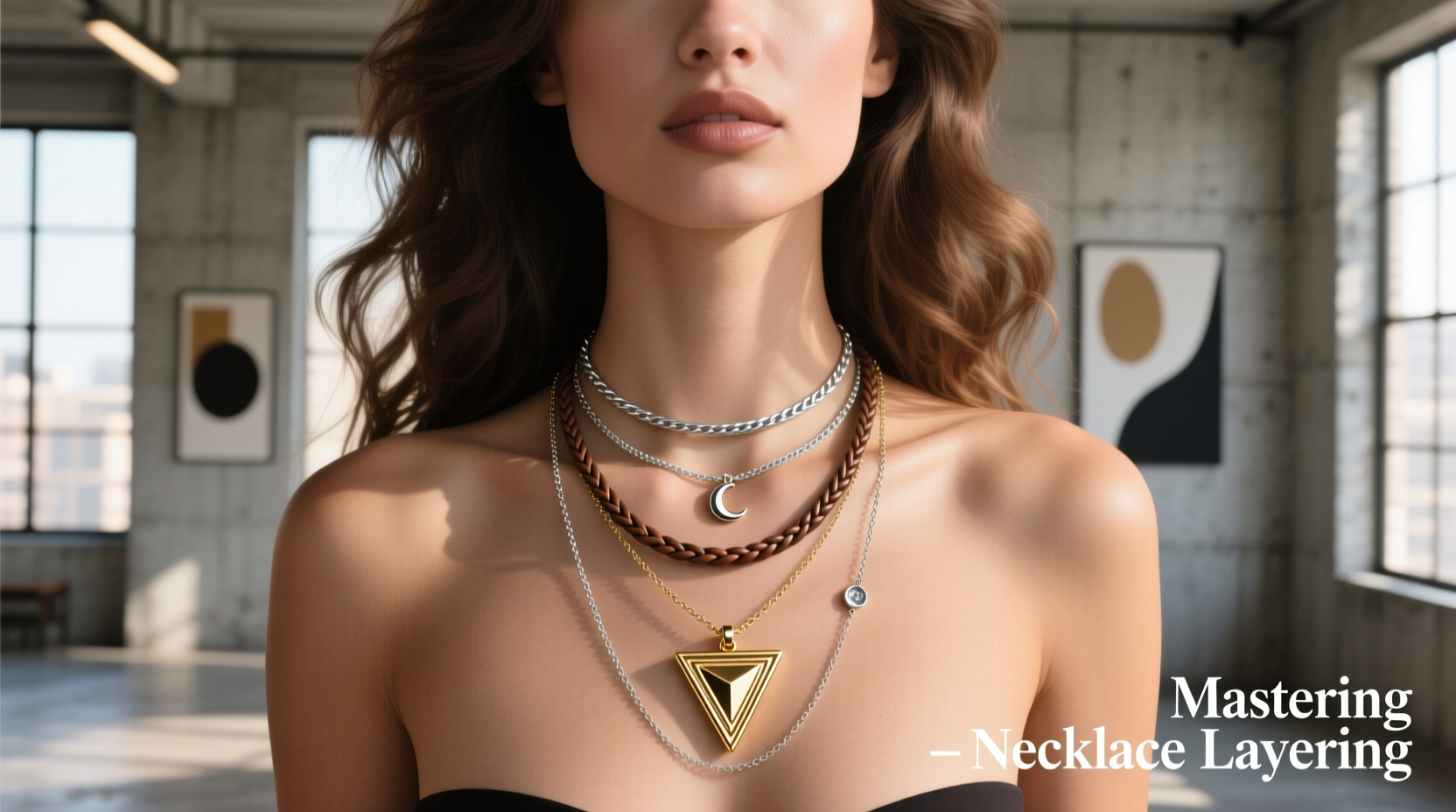
The triangle pendant’s appeal goes beyond aesthetics. Rooted in symbolism—representing mind, body, and spirit, or past, present, and future—it carries depth that resonates across cultures. In fashion, its clean lines offer a contemporary edge, making it ideal for layering. Unlike round or oval pendants, which distribute visual weight evenly, the triangle creates directional movement, drawing the eye downward and elongating the neckline.
Because of this dynamic shape, the triangle pendant often works best as a centerpiece in a layered arrangement. Whether crafted in delicate gold vermeil or bold blackened silver, it commands attention without overwhelming other pieces—provided the supporting chains are chosen with intention.
“Geometry in jewelry isn’t just design—it’s psychology. The triangle suggests stability and focus, making it a powerful anchor in layered styling.” — Lila Monroe, Jewelry Stylist & Founder of Form & Chain
Building a Balanced Layered Look
Successful necklace layering hinges on balance. Too many similar lengths create clutter; too much contrast can feel chaotic. The key is to build around your triangle pendant using a hierarchy of chain types, lengths, and textures.
Start by identifying the role of each piece:
- Focal Point: Your triangle pendant—usually the largest or most detailed piece.
- Supporting Chains: Simpler necklaces that frame or lead toward the focal point.
- Accent Layers: Thin or textured chains that add depth without competing.
Aim for three to five layers maximum. This keeps the look intentional rather than excessive. Begin with the longest chain at the back and work forward, ensuring each pendant or charm rests at a distinct level.
Step-by-Step Guide to Layering with a Triangle Pendant
- Choose your triangle pendant necklace as the foundation. Note its length (e.g., 18 inches).
- Select two additional chains—one shorter (16\") and one longer (20\" or 22\").
- Vary the chain styles: Pair a delicate cable chain with a box chain or snake chain for contrast.
- Add subtle details: Include a small charm or beaded accent on one supporting chain.
- Adjust clasp positions if needed—some necklaces allow for sliding knots or adjustable links to fine-tune drop height.
- Test movement: Walk around or lean forward slightly to ensure pendants don’t tangle or overlap awkwardly.
Do’s and Don’ts of Pendant Layering
| Do’s | Don’ts |
|---|---|
| Use varying chain thicknesses to create dimension | Wear multiple large pendants that compete for attention |
| Stick to a cohesive metal tone (e.g., all gold or all silver) | Mix warm and cool metals without intentional design |
| Let your triangle pendant rest at collarbone level for prominence | Layer too many short necklaces that bunch near the throat |
| Incorporate a choker for modern contrast | Forget about neckline compatibility—avoid high turtlenecks with long layers |
| Secure clasps properly to prevent tangling | Leave chains loose overnight; store them twisted together |
Real-Life Example: From Office to Evening
Sophia, a graphic designer in Portland, wanted a signature accessory that transitioned seamlessly from her day job to evening events. She owns a matte-finish sterling silver triangle pendant on a 17-inch rolo chain. During work hours, she wears it alone with crisp white shirts—clean and professional. For after-hours, she adds two layers: a 14-inch dainty paperclip chain and a 22-inch wheat chain with a tiny moon charm.
The result? A dynamic yet harmonious stack where the triangle remains central, flanked by subtle contrasts in texture and length. “I get compliments all the time,” she says. “People think I’m wearing a custom set, but it’s just thoughtful pairing.”
This approach exemplifies how minimal investment can yield maximum impact—especially when guided by intentionality rather than impulse.
Material and Texture Pairing Strategies
Texture plays a silent but powerful role in layering success. A polished triangle pendant pairs beautifully with brushed or hammered chains, creating visual interest through contrast. Consider these combinations:
- Smooth pendant + rope chain: Adds vintage flair and catches light dynamically.
- Geometric triangle + delicate figaro: Balances modernity with classic detailing.
- Matted finish + ball chain: Enhances industrial-chic aesthetics.
Avoid pairing multiple highly reflective surfaces unless intentionally going for glamour (e.g., cocktail attire). Matte and shiny elements, when mixed thoughtfully, prevent visual fatigue and maintain sophistication.
Jewelry Care Checklist for Layered Necklaces
To preserve both beauty and function, follow this maintenance routine:
- Remove necklaces before swimming, showering, or applying perfume.
- Store each chain separately in a soft pouch or compartmentalized box.
- Clean gently with a microfiber cloth after wear.
- Inspect clasps monthly for wear or weakening.
- Use a mild jewelry cleaner only when necessary—avoid soaking if stones or wood accents are present.
Frequently Asked Questions
Can I mix gold and silver when layering with a triangle pendant?
Yes—but do so intentionally. Modern styling embraces mixed metals, especially when unified by a shared theme (e.g., nature-inspired motifs or consistent matte finishes). Limit mixing to two tones max and anchor the look with your triangle pendant as the unifying element.
How do I keep my layered necklaces from tangling?
Tangling is common with multiple chains. Prevent it by fastening each necklace before placing it in storage. Alternatively, use individual zip-lock bags or invest in a standing jewelry tree with hooks. Wearing fewer layers during active days also reduces friction.
Is there a rule for how many layers work with a triangle pendant?
While no hard rules exist, three to four layers typically provide the best balance. One should feature the triangle pendant, one or two act as structural supports, and optionally, a fourth adds subtle texture. Over-layering risks obscuring the pendant’s impact.
Final Thoughts: Make It Yours
Mastering necklace layering isn’t about following rigid formulas—it’s about developing a personal language of style. The triangle pendant offers a strong starting point: symbolic, sleek, and inherently directional. When framed with complementary chains, it becomes more than jewelry; it becomes narrative.
Experiment with lengths, test new combinations, and observe how different arrangements affect your posture and presence. The right layered look doesn’t just adorn you—it aligns with who you are.




 浙公网安备
33010002000092号
浙公网安备
33010002000092号 浙B2-20120091-4
Comments
No comments yet. Why don't you start the discussion?