
Necklace sets—elegant, coordinated, and often designed to be worn together—offer a powerful way to elevate any outfit. But their impact depends heavily on how well they complement the neckline of your clothing. A mismatched combination can overwhelm a look or get lost against the fabric. Understanding how different necklines interact with various necklace styles is essential for creating balanced, intentional ensembles. Whether you're dressing for a formal event or refining your everyday style, mastering this art ensures your jewelry enhances rather than distracts.
The Anatomy of Neckline and Necklace Harmony
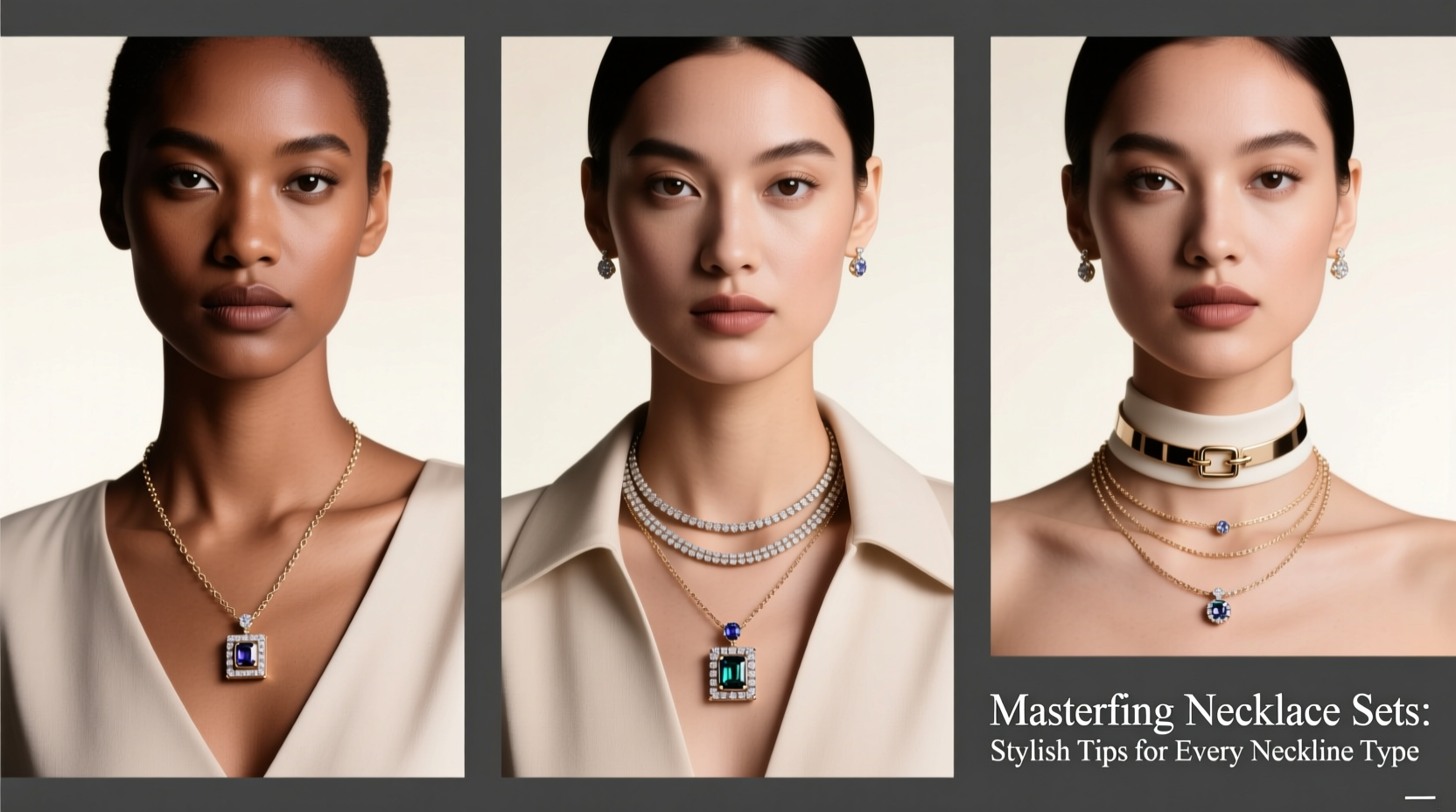
The relationship between a neckline and a necklace is governed by visual balance. The shape of your collarbone, the depth of the cut, and the space available all influence where a necklace will sit and how it draws attention. The goal is to create synergy: the necklace should follow the lines of the neckline, either echoing its shape or providing a graceful contrast.
For instance, a high turtleneck leaves little room for a traditional pendant, making chokers or long, delicate chains more effective. Conversely, a plunging V-neck creates a natural pathway for a pendant to follow, drawing the eye downward in a flattering way. When wearing a necklace set—often including a pendant, chain, and matching earrings—consider how each piece interacts with the garment’s silhouette.
“Jewelry should feel like a continuation of the outfit, not an afterthought. The right necklace set doesn’t just accessorize—it completes.” — Lila Monroe, Fashion Stylist & Jewelry Curator
Matching Necklace Sets to Common Neckline Types
Every neckline presents a unique canvas. Below is a breakdown of the most common types and the necklace sets that work best with each.
| Neckline Type | Recommended Necklace Style | Why It Works |
|---|---|---|
| V-Neck | V-shaped pendant or graduated layered set | The necklace follows the angle of the neckline, elongating the torso and adding symmetry. |
| Scoop Neck | Short or medium-length pendant, lariat, or multi-strand choker | Complements the curve without competing; fills the open space gracefully. |
| Turtleneck or High Neck | Long pendant, Y-necklace, or statement earrings (necklace optional) | Avoids clutter near the chin; a long chain adds length and draws focus downward. |
| Square Neck | Collar-style necklace or geometric pendant | Mirrors the angular line, enhancing structure and balance. |
| Off-the-Shoulder or Bardot | Choker or short princess-length set with dangling accents | Highlights bare shoulders and décolletage while framing the face. |
| Boat Neck | Pendant at clavicle level or bold collar necklace | Stays below the high horizontal line, avoiding visual conflict. |
| Halter Neck | Minimalist choker or no necklace (emphasize earrings) | Prevents overcrowding at the back and neck; keeps focus clean. |
Choosing the Right Necklace Set Composition
Necklace sets vary in complexity. Some include multiple chains of varying lengths, while others feature a single focal piece with coordinating earrings. The key is selecting a set that supports—not overpowers—the neckline.
- Delicate sets with fine chains work best with intricate or high necklines where subtlety is key.
- Bold, multi-tiered sets shine with open necklines like scoop or off-the-shoulder, where there’s room to showcase detail.
- Choker sets are ideal for square, boat, or halter necks, as they sit snugly at the base of the throat without interfering with fabric lines.
- Convertible sets offer versatility—wear the pendant alone with a turtleneck, then add layers for a V-neck evening dress.
Material and metal tone also play a role. Gold warms up earth-toned outfits and complements warmer skin tones, while silver or platinum adds crispness to cool palettes and looks striking against black or white.
Mini Case Study: Evening Elegance Redefined
Sophia attended a gala wearing a deep emerald green gown with a dramatic off-the-shoulder neckline. Initially, she considered a long pendant, but it slipped down and disappeared into the folds of the fabric. Instead, she switched to a vintage-inspired necklace set featuring a velvet choker with a central pearl drop and matching drop earrings. The choker hugged her collarbone, the pearl drew attention to her face, and the earrings completed the look without overwhelming the exposed shoulders. The result was cohesive, regal, and photo-ready.
Step-by-Step Guide to Pairing Necklace Sets Perfectly
Follow this five-step process to confidently match any necklace set to your outfit’s neckline:
- Identify the neckline shape—Is it V, scoop, square, high, or strapless? Knowing this narrows your options.
- Assess the available space—How much skin is exposed? Deep cuts allow longer pieces; covered necks call for shorter or absent necklaces.
- Select the necklace length—Use this guideline:
- Choker: 14–16 inches (ideal for high or square necks)
- Princess: 17–19 inches (versatile for scoops and boat necks)
- Matinee: 20–24 inches (great for V-necks and layering)
- Opera/Y-Necklace: 28+ inches (best over turtlenecks or long dresses)
- Consider pendant alignment—For V-necks, choose pendants that point downward. For boat necks, opt for horizontal or wide designs.
- Balance with earrings—If the necklace set includes statement earrings, keep the neckline clear. If earrings are minimal, the necklace can be bolder.
Common Mistakes to Avoid
Even seasoned fashion lovers make missteps when pairing necklace sets. Watch out for these pitfalls:
- Clashing lines—A chunky horizontal necklace under a V-neck breaks the flow.
- Overlayering on high necks—Stacking multiple chains on a turtleneck creates visual clutter.
- Ignoring proportions—A tiny pendant on a broad scoop neck gets lost; a massive choker on a petite frame overwhelms.
- Duplicating metals—Mixing gold and silver without intention can look haphazard unless done deliberately.
“Proportion is everything. A necklace should enhance your features, not compete with your clothes.” — Rafael Torres, Luxury Jewelry Designer
FAQ
Can I wear a necklace set with a collared shirt?
Yes, but choose wisely. A thin pendant that slips neatly under the collar works best. Alternatively, wear the necklace over the collar for a modern twist—especially effective with buttoned-up blouses and choker sets.
What if my necklace set has multiple pieces?
Wear only the components that suit the neckline. Detach longer chains if they interfere with a high cut. Many modern sets are designed for modular use—mix and match based on your outfit.
Are there rules for casual vs. formal pairings?
Formal events favor cohesive, elegant sets with symmetry and refined materials. Casual looks allow for playful layering—try mixing a simple pendant from a set with other everyday chains for a personalized touch.
Final Checklist: Your Necklace Set Pairing Guide
- ✅ Identified the neckline type of your outfit
- ✅ Chosen a necklace length that aligns with the neckline’s shape
- ✅ Ensured the pendant or focal point sits harmoniously within the open space
- ✅ Balanced the necklace with earrings and other accessories
- ✅ Tested the look in natural light and movement
- ✅ Adjusted or simplified if the overall effect feels too heavy
Conclusion: Elevate Your Style with Intention
Mastering necklace sets isn’t about following rigid rules—it’s about understanding how design elements interact to create harmony. With the right approach, a necklace set becomes more than decoration; it becomes a deliberate expression of style. By respecting the architecture of each neckline and choosing pieces that enhance rather than clash, you project confidence and sophistication. Start experimenting with one outfit, observe what works, and gradually refine your personal formula. The perfect pairing is not just seen—it’s felt.




 浙公网安备
33010002000092号
浙公网安备
33010002000092号 浙B2-20120091-4
Comments
No comments yet. Why don't you start the discussion?