
Shopping for dresses online offers convenience, variety, and access to global fashion—but one persistent challenge remains: getting the size right. Without the ability to try on garments in person, many shoppers face disappointment from ill-fitting dresses, leading to returns, delays, and frustration. The solution lies not in avoiding online shopping, but in mastering the process of accurate sizing. With the right tools, techniques, and attention to detail, you can confidently select your ideal dress size from any brand, anywhere in the world.
Why Online Dress Sizing Is So Tricky
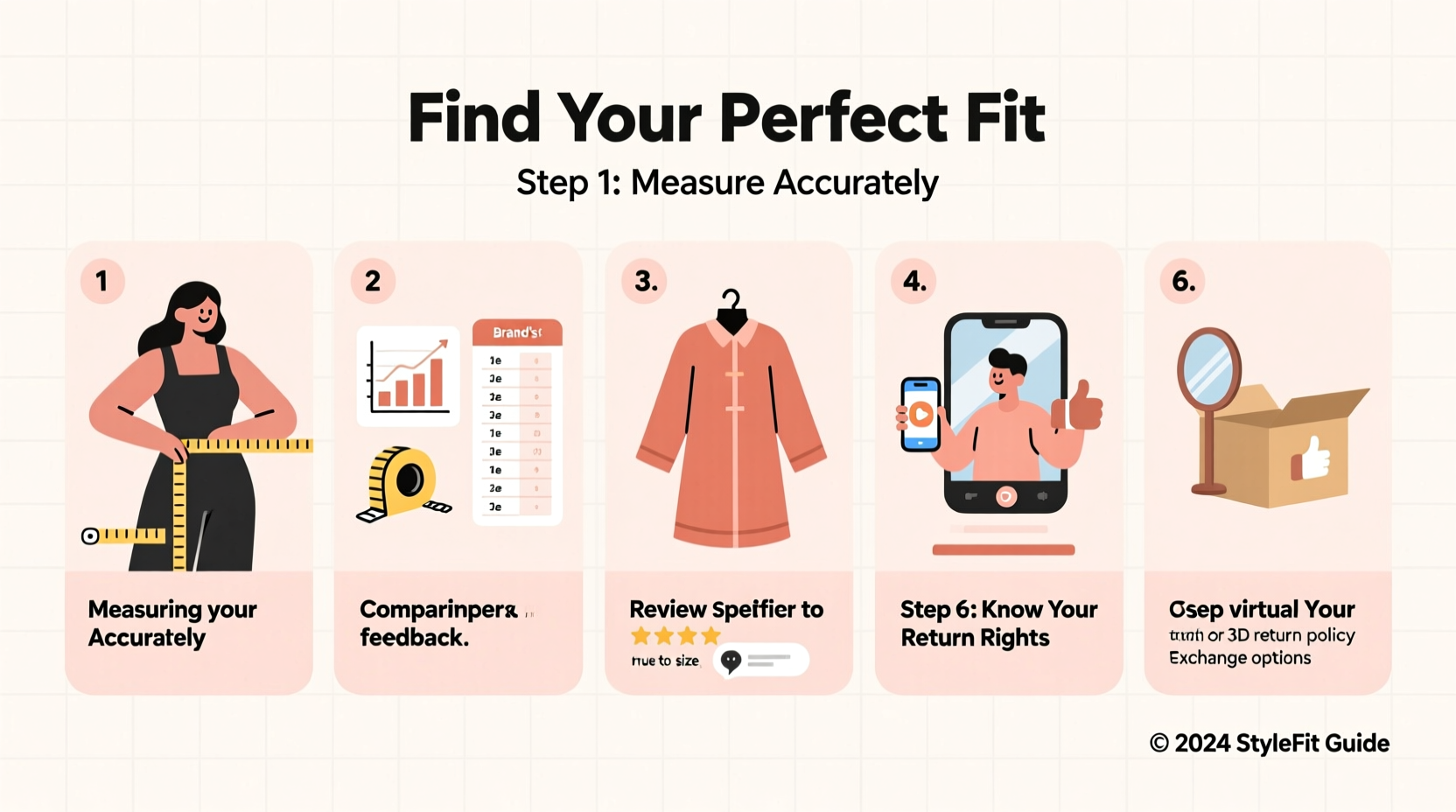
Sizing inconsistencies are the biggest hurdle in online apparel shopping. Unlike standardized measurements like inches or centimeters, clothing sizes vary dramatically between brands, countries, and even styles within the same label. A size 8 in the U.S. may equate to a size 10 in Europe or a size 6 in Australia. Furthermore, body shapes differ—hourglass, pear, apple, athletic—so a dress cut for one silhouette may not flatter another, even if the numerical size matches.
Manufacturers often use vanity sizing, where smaller numbers are assigned to larger garments to appeal emotionally to buyers. This practice distorts expectations and adds confusion. Additionally, fabric stretch, seam allowances, and design elements such as darts or waistbands influence how a dress fits, making it impossible to rely solely on labeled sizes.
“Most returns in e-commerce fashion happen due to poor fit—not style or quality issues. Accurate self-measurement is the single most effective way to reduce return rates.” — Dr. Lena Patel, Retail Analytics Consultant at StyleMetrics Group
The Step-by-Step Process to Perfect Dress Sizing
Finding your correct dress size online requires more than guessing based on past purchases. Follow this systematic approach to ensure accuracy and consistency across all brands.
- Gather Your Tools: Use a soft fabric tape measure, a full-length mirror, and wear form-fitting undergarments similar to what you’d wear with a dress.
- Measure Key Body Areas: Focus on three primary points: bust, waist, and hips.
- Compare to Brand Charts: Never assume standardization. Always consult the specific size chart provided by the retailer.
- Consider Fit Type: Determine whether the dress runs small, true-to-size, or large based on customer reviews.
- Factor in Fabric Stretch: Knits and spandex blends allow more flexibility than rigid materials like satin or structured cotton.
How to Take Accurate Body Measurements
Stand straight, breathe normally, and keep the tape snug but not tight. Record each measurement in both inches and centimeters for international shopping.
- Bust: Measure around the fullest part of your chest, keeping the tape parallel to the floor.
- Natural Waist: Find the narrowest part of your torso, usually just above the navel. This is not where your pants sit.
- Hips: Measure around the fullest part of your hips and buttocks, typically 7–9 inches below your waist.
- Inseam (for long dresses): If length matters, measure from your crotch down to the desired hemline.
Understanding International Size Charts
Global shopping expands options but introduces complexity. Below is a general conversion reference, though always defer to the brand’s official chart.
| U.S. Size | Bust (in) | Waist (in) | Hips (in) | UK Size | EU Size | AU Size |
|---|---|---|---|---|---|---|
| 4 | 32–33 | 24–25 | 34–35 | 8 | 36 | 8 |
| 6 | 33–34 | 25–26 | 35–36 | 10 | 38 | 10 |
| 8 | 34–35 | 26–27 | 36–37 | 12 | 40 | 12 |
| 10 | 35–36 | 27–28 | 37–38 | 14 | 42 | 14 |
| 12 | 36–37 | 28–29 | 38–39 | 16 | 44 | 16 |
Note that petite, plus, and maternity lines follow different proportions. Always verify if the size chart applies to the exact product category.
Real Example: How Sarah Avoided a Costly Return
Sarah wanted to buy a wrap dress from a UK-based boutique. Her usual U.S. size is 8, so she nearly selected EU 40 automatically. Instead, she measured herself: 35” bust, 27” waist, 38” hips. She then checked the brand’s detailed size chart, which listed EU 40 as fitting up to a 27.5” waist. Her waist was slightly over, and the hips were near the upper limit. Reading customer reviews, she noticed several women mentioned the fabric had minimal stretch and ran slightly small.
She opted for EU 42 instead. When the dress arrived, it fit perfectly—snug enough to hold its shape without pulling at the seams. By relying on data rather than assumptions, Sarah saved time, shipping fees, and the hassle of returning an ill-fitting garment.
Checklist: Before You Click 'Buy Now'
Use this practical checklist to minimize sizing errors before finalizing any online dress purchase:
- ☑ I have taken my current bust, waist, and hip measurements.
- ☑ I’ve located the brand’s official size chart for this specific dress.
- ☑ I’ve compared my measurements to the chart—not assumed my usual size.
- ☑ I’ve read at least five customer reviews mentioning fit or sizing accuracy.
- ☑ I’ve considered the fabric: Does it stretch? Is it structured?
- ☑ I know the return policy: Can I return it easily if it doesn’t fit?
- ☑ I’ve accounted for the intended fit: slim, relaxed, or flowy?
Frequently Asked Questions
What should I do if I fall between two sizes?
When your measurements span two sizes, choose based on fit preference and fabric. For stretchy materials, go with the smaller size. For non-stretch fabrics or if you prefer comfort, size up. Also consider where you carry weight—if your hips are larger relative to your waist, size up for ease of movement.
Do all brands provide accurate size charts?
Not always. Reputable brands invest in consistent grading and fit testing, but smaller or fast-fashion labels may lack precision. Look for brands that include detailed flat measurements (e.g., “bust width when laid flat”) rather than just body size ranges. These are more reliable indicators of actual garment dimensions.
Can I trust customer reviews about sizing?
Yes—especially when multiple reviewers mention the same issue. Phrases like “runs small,” “true to size,” or “goes up to XXL” add valuable context. Filter reviews by your own size to see feedback relevant to your choice.
Final Tips for Long-Term Success
Perfecting online dress sizing isn’t a one-time fix—it’s a skill developed through consistent practice. Keep a record of brands that consistently fit you well, and note their sizing patterns. Some brands may label a size 8 but cut it like a generous 6; others offer inclusive grading across diverse body types.
Also, pay attention to garment construction. Dresses with adjustable features—such as tie waists, elastic backs, or corset lacing—are more forgiving and adaptable to subtle variations in your shape.
“The future of online fashion is personalization. Shoppers who take control of their measurements today will be ahead of the curve when AI-driven fit prediction becomes mainstream.” — Marcus Lin, E-Commerce Innovation Lead at FitLogic Labs
Take Control of Your Fit Today
You don’t need a fitting room to find a dress that fits flawlessly. With precise measurements, careful research, and a methodical approach, you can shop online with confidence and enjoy beautiful clothes tailored to your unique shape. Start applying these steps with your next order. Measure once, compare twice, and wear with pride.




 浙公网安备
33010002000092号
浙公网安备
33010002000092号 浙B2-20120091-4
Comments
No comments yet. Why don't you start the discussion?