
Outdoor music brings people together—whether it’s a backyard barbecue, a community festival, or a wedding under the stars. But too often, the experience is ruined by sound that’s either too loud, drowning conversation, or too soft, fading into the breeze. The key to memorable outdoor audio isn’t just high-quality equipment—it’s mastering volume control in relation to your environment. This guide walks you through the science, psychology, and practical techniques of setting the ideal sound level for any open-air setting.
Understanding Sound Behavior Outdoors
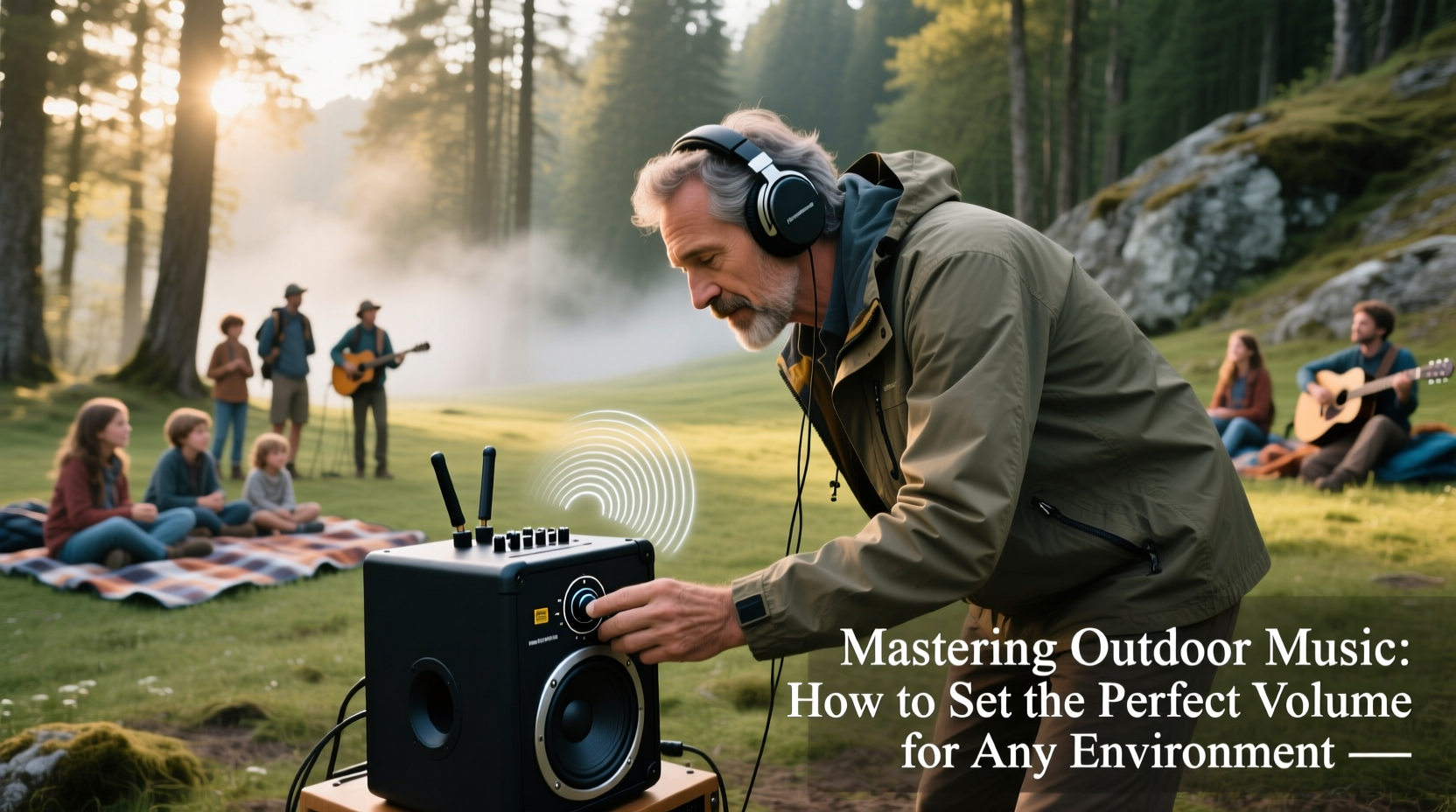
Unlike indoor spaces, where walls and ceilings reflect and contain sound, outdoor environments allow audio to disperse rapidly. Wind, temperature gradients, terrain, and ambient noise all influence how sound travels. High frequencies dissipate faster than low ones, which is why distant outdoor music often sounds “muddy” or lacks clarity.
The inverse square law applies strongly outdoors: sound intensity decreases by 6 dB every time the distance from the source doubles. That means if your speakers produce 90 dB at 10 feet, listeners at 40 feet will hear only about 78 dB—barely above normal conversation levels.
Additionally, environmental factors like humidity can slightly enhance sound propagation (moist air transmits sound better), while wind can carry sound away from intended areas or create uneven coverage. Understanding these dynamics helps in planning both speaker placement and output levels.
Volume Guidelines by Environment Type
There is no universal “perfect” decibel level for outdoor music. What works for a midday garden party could overwhelm a twilight memorial gathering. Below is a comparative reference table outlining recommended volume ranges based on event type and audience expectations.
| Environment | Recommended Volume (dB) | Audience Expectation | Notes |
|---|---|---|---|
| Backyard Gathering (small) | 65–75 dB | Background ambiance | Should allow easy conversation without raising voices. |
| Garden Party / Wedding | 70–80 dB | Mixed use: talking & dancing | Adjust dynamically—lower during dinner, higher for dancing. |
| Community Festival | 80–88 dB | Active engagement | Monitor local noise ordinances; use directional speakers. |
| Public Park Event | 75–85 dB | Balanced presence | Limit bass-heavy music to avoid long-distance disturbance. |
| Concert (amplified) | 90–100+ dB | Immersive experience | Requires permits, sound checks, and crowd safety measures. |
For context, 70 dB is equivalent to a vacuum cleaner at a distance of 10 feet, while 85 dB is the threshold at which prolonged exposure may risk hearing damage. Always prioritize listener comfort and legal compliance over sheer loudness.
Step-by-Step Guide to Setting Outdoor Volume
Follow this five-step process before and during your event to dial in the right sound level:
- Assess the space and surroundings. Walk the perimeter. Note nearby homes, natural barriers (trees, hills), and potential noise reflectors (buildings, water). This determines how far sound will travel and where to place speakers.
- Choose appropriate speaker placement. Elevate speakers slightly and angle them toward the audience. Avoid pointing directly at walls or dense foliage. Use multiple lower-powered speakers instead of one powerful unit to achieve even coverage.
- Conduct a sound check with real-world conditions. Test at the same time of day as the event. Background noise varies—birds in the morning, traffic in the evening. Play typical music and walk through guest areas to gauge audibility.
- Set initial volume at 60–70% capacity. Start conservatively. It’s easier to increase volume than to reduce complaints after the fact. Use a smartphone decibel meter app (like NIOSH SLM) to measure actual output at various points.
- Monitor and adjust dynamically. As daylight fades and crowds shift, reevaluate sound levels. Lower volume during speeches or dinner, then raise it gradually for dancing.
“Great outdoor sound isn’t about power—it’s about precision. A well-placed 100-watt system can outperform a poorly aimed 500-watt rig.” — Carlos Mendez, Live Sound Engineer with 20+ years of outdoor event experience
Real-World Example: The Lakeside Wedding That Got It Right
A couple planned their wedding reception on a grassy knoll near a quiet lakeside neighborhood. They wanted music but were concerned about disturbing nearby cottages. Their sound technician used two compact, weather-resistant speakers mounted on stands, positioned at the front edges of the seating area and angled inward.
During dinner, music played at 68 dB—soft jazz barely louder than the clinking of glasses. After sunset, when guests moved to the dance area, the volume was raised to 78 dB, focusing energy on the center of the lawn. Neighbors later complimented the hosts on how “present yet respectful” the music felt.
The key? Strategic speaker placement, dynamic adjustment, and constant awareness of the acoustic footprint. No noise complaints were filed, and the event was remembered for its ambiance—not its volume.
Common Mistakes and How to Avoid Them
- Over-amplifying to compensate for poor speaker placement. Turning up the volume doesn’t fix coverage gaps. Instead, reposition speakers or add delay units.
- Ignoring bass buildup. Low frequencies travel farther and penetrate structures more easily. Excessive bass can disturb neighbors even when mid/high volumes seem reasonable.
- Failing to account for time of day. Sound carries farther at night due to cooler air and less ambient noise. Reduce volume by 5–10 dB after sunset.
- Using indoor-rated equipment. Outdoor conditions demand weather-resistant gear. Humidity and temperature swings can damage standard speakers, leading to distorted output and unreliable volume control.
Checklist: Pre-Event Sound Preparation
Use this checklist to ensure optimal outdoor volume setup:
- ✅ Survey the site for natural sound barriers and reflective surfaces
- ✅ Confirm local noise ordinances and time restrictions
- ✅ Choose weather-appropriate, directional speakers
- ✅ Plan speaker layout for even coverage, not maximum reach
- ✅ Conduct a sound check during similar ambient conditions
- ✅ Measure volume at guest ear level (not at the speaker)
- ✅ Assign someone to monitor and adjust volume throughout the event
- ✅ Have a quick mute button accessible for announcements
FAQ
How do I know if my outdoor music is too loud?
If guests have to shout to be heard at arm’s length, the volume is likely above 80 dB and too high for social interaction. Additionally, if sound is clearly audible beyond a 100-foot radius in a residential area, consider lowering it.
Can I use a sound meter app accurately?
Yes, modern smartphone apps like NIOSH SLM or SoundMeter are surprisingly accurate for relative measurements. While not lab-grade, they’re excellent for comparing levels across locations and ensuring consistency.
What’s the best way to handle music transitions during an event?
Use a preset volume schedule. For example: 70 dB for cocktail hour, 75 dB for dinner, 82 dB for dancing. Communicate changes to your DJ or playlist operator in advance to maintain smooth flow.
Final Notes: Harmony Over Hertz
Setting the perfect outdoor volume isn’t about technical specs alone—it’s about empathy. The goal is to enhance the atmosphere, not dominate it. Whether it’s the gentle strum of an acoustic guitar or the pulse of a dance beat, music should serve the moment, not overpower it.
By understanding your environment, respecting your audience, and applying thoughtful sound practices, you create experiences that resonate long after the last note fades.




 浙公网安备
33010002000092号
浙公网安备
33010002000092号 浙B2-20120091-4
Comments
No comments yet. Why don't you start the discussion?