
In an age where we spend hours scrolling through messages, emails, and social media, the way text appears on our phones matters more than ever. Most people accept their device’s default font without question, but small adjustments can significantly improve readability, accessibility, and even emotional tone. Customizing your phone’s font isn’t just about aesthetics—it’s about creating a digital experience that feels uniquely yours while supporting eye comfort and usability.
Whether you’re struggling with tiny text or simply want a fresh visual vibe, modern smartphones offer surprisingly deep font customization options. From system-wide settings to third-party tools, this guide walks through practical steps to take control of your device’s typography—on both iOS and Android.
Why Font Choice Matters on Mobile Devices
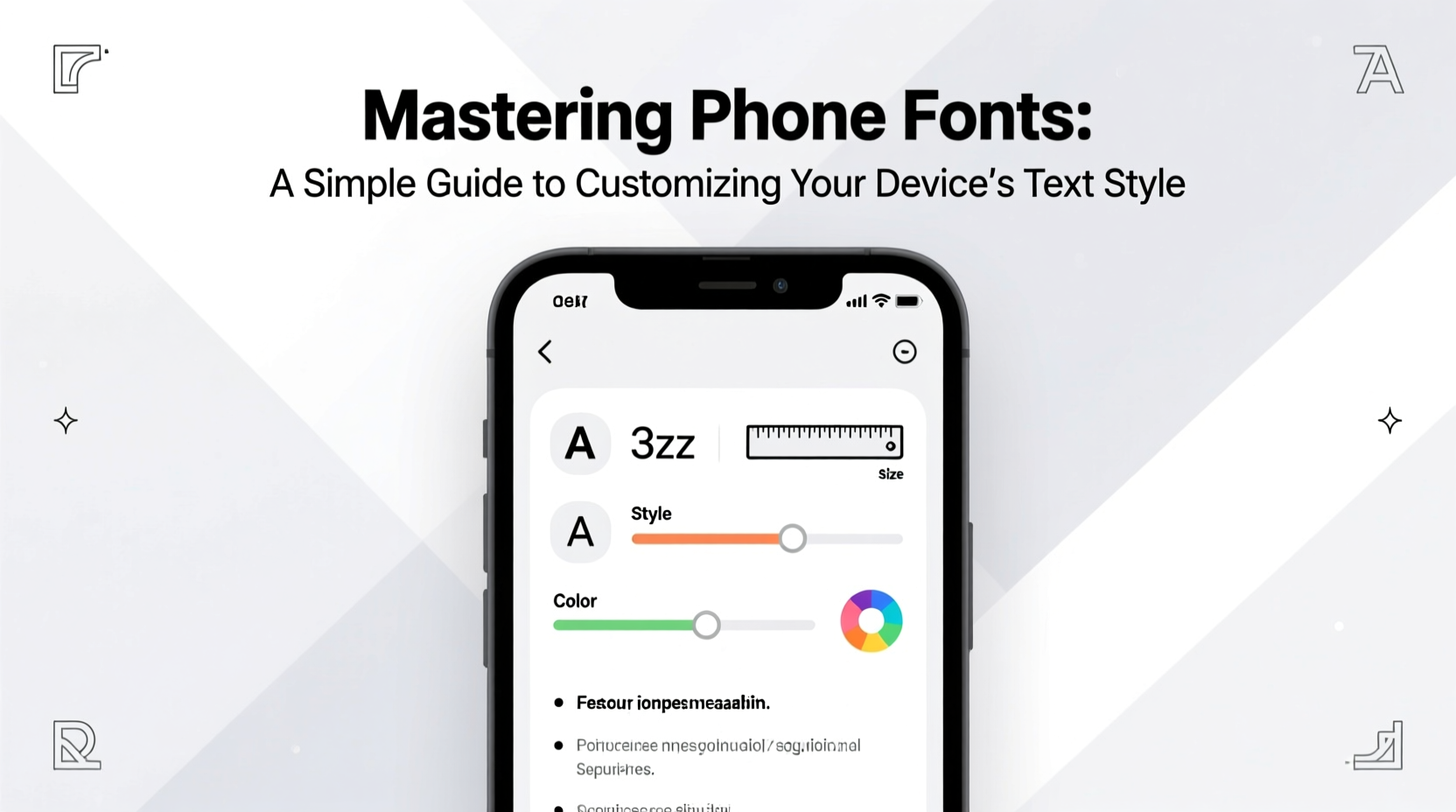
Font selection influences more than just appearance. It affects legibility, reading speed, and user comfort—especially over long periods. A poorly designed or overly stylized font can cause eye strain, while a clean, well-proportioned typeface enhances comprehension and reduces fatigue.
Accessibility is another key factor. For users with dyslexia, vision impairments, or aging eyes, certain fonts are easier to process. OpenDyslexic, for example, uses weighted bottoms to prevent letter confusion. Larger spacing and higher contrast also help reduce cognitive load.
“Typography is not just decoration—it’s functional design. The right font improves comprehension by up to 35% in mobile reading tasks.” — Dr. Lena Torres, Human-Computer Interaction Researcher, MIT Media Lab
Beyond utility, font style contributes to personal expression. Just as clothing reflects personality, so too can your phone’s text. A minimalist might prefer sleek sans-serifs like SF Pro or Roboto, while creatives may enjoy playful or bold alternatives.
Customizing Fonts on Android: Full Control at Your Fingertips
Android leads in font flexibility. Unlike iOS, it allows full system-wide font changes without jailbreaking, thanks to manufacturer skins and built-in customization features.
Step-by-Step: Changing Fonts on Android
- Navigate to Settings > Display > Font Size and Style (path may vary slightly by brand).
- Select “Font Style” or “Fonts.”
- Browse preloaded options such as Default, Serif, Monospace, or brand-specific styles (e.g., Samsung One, Pixel Sans).
- Preview each font by viewing sample text.
- Tap to apply your choice—changes take effect immediately.
Some manufacturers, including Samsung and Xiaomi, offer downloadable fonts from their theme stores. These include cursive, condensed, and artistic variants. Simply download and activate them like wallpapers.
Customizing Fonts on iPhone: Limited but Effective Options
iOS restricts full system font replacement for consistency and security reasons. However, Apple provides meaningful workarounds through accessibility and third-party apps.
Using Accessibility Features to Enhance Readability
- Larger Text: Go to Settings > Display & Brightness > Text Size. Drag the slider to increase font size system-wide.
- Bold Text: Enable Settings > Accessibility > Display & Text Size > Bold Text to make all interface fonts heavier and more prominent.
- Darker Colors: Under Accessibility, toggle “Increase Contrast” and “Reduce Transparency” to improve text visibility against backgrounds.
- Preferred Font: In Settings > Accessibility > Display & Text Size > Preferred Font, select styles like Andale Mono, Courier, or Arial. This applies only to compatible apps that support Dynamic Type.
To use completely different fonts (like handwriting or retro styles), install third-party keyboards such as FancyKey or Grammarly Keyboard. While they don’t change system UI fonts, they allow expressive typing in messages, notes, and social media.
Do’s and Don’ts of Phone Font Customization
| Do’s | Don’ts |
|---|---|
| Choose legible sans-serif fonts for daily use | Use overly decorative fonts for body text |
| Adjust font size based on lighting conditions | Set extremely small text to fit more content |
| Test new fonts with long articles or books | Ignore how fonts render in low light or dark mode |
| Enable dynamic type for accessibility scaling | Install untrusted font apps that require excessive permissions |
| Match font weight to your environment (lighter indoors, bolder outdoors) | Forget to revert changes if headaches or eye strain occur |
Real-World Example: How Sarah Improved Her Reading Experience
Sarah, a freelance writer, spent six hours daily reading and editing on her phone. She often experienced headaches and had trouble distinguishing similar letters like “I,” “l,” and “1” in thin fonts. After researching, she switched her Samsung Galaxy S23’s default font to Google Sans Medium and increased the size slightly. She also enabled bold text on her iPhone for email previews.
Within days, her eye strain decreased significantly. “I didn’t realize how much mental effort I was wasting just decoding text,” she said. “Now, my phone feels easier to read—like it’s working with me, not against me.”
Expert Tips for Choosing the Right Font
- For readability: Stick to clean, open-type sans-serif fonts like Roboto, SF Pro, or Inter.
- For accessibility: Use high-contrast, medium-weight fonts with generous letter spacing.
- For personality: Apply fun fonts selectively via keyboard apps or note-taking tools.
- For night reading: Avoid ultra-thin fonts; opt for slightly heavier weights that remain visible in dim light.
Checklist: Customize Your Phone Fonts Like a Pro
- Assess your current font: Is it easy to read for extended periods?
- Adjust font size and weight in display settings.
- Explore native font options in your phone’s theme or display menu.
- Download trusted font apps if your device supports them.
- Test new fonts across multiple apps (messaging, browser, eBook reader).
- Enable accessibility features like bold text or preferred font if needed.
- Revert changes if discomfort arises—comfort should always come first.
Frequently Asked Questions
Can changing my phone’s font drain the battery?
No, font changes themselves do not impact battery life. However, some third-party themes or font apps that run in the background might use minimal resources. Stick to lightweight, reputable apps to avoid issues.
Are custom fonts safe to install?
Generally, yes—but only download fonts from official app stores or trusted developers. Avoid APKs from unknown sources, as they could contain malware. Always review app permissions before installation.
Why doesn’t my iPhone let me change the system font?
Apple restricts system font changes to maintain UI consistency and performance. However, you can customize text appearance using Accessibility settings and use alternative fonts within specific apps or keyboards.
Take Control of Your Digital Experience
Your phone’s font is one of the most overlooked yet impactful aspects of your daily tech interaction. With just a few taps, you can transform your screen from a source of strain into a comfortable, personalized space. Whether you prioritize clarity, accessibility, or self-expression, the tools are already in your pocket.
Start small: adjust the size, try a bolder weight, or experiment with a new style for a day. Notice how it feels. Typography isn’t just about letters—it’s about how those letters make you feel when you read them. Once you master your phone’s fonts, you’ll wonder why you waited so long to personalize something you look at hundreds of times a day.




 浙公网安备
33010002000092号
浙公网安备
33010002000092号 浙B2-20120091-4
Comments
No comments yet. Why don't you start the discussion?