
\"Piano Man\" by Billy Joel is more than a song—it's a storytelling experience, rich in melody and emotion. While the piano carries the original, the harmonica can capture its soulful essence with surprising depth. Whether you're new to the instrument or refining your technique, this guide breaks down how to play \"Piano Man\" on harmonica in accessible, actionable steps. You’ll learn note sequences, breath control, bending techniques, and expressive phrasing that bring authenticity to your performance.
Understanding the Harmonica’s Role in “Piano Man”
The harmonica isn’t featured in the original studio recording of \"Piano Man,\" but it’s widely used in live covers and street performances due to its portability and emotional resonance. The melody fits beautifully on a standard 10-hole diatonic harmonica in the key of C, especially when mimicking the verse’s rising and falling phrases. Since the song is in the key of B major, using a C harmonica allows for expressive cross-harp playing and subtle bends to match the melancholic tone.
Unlike the piano’s full chords and complex arpeggios, the harmonica excels at carrying the vocal melody line with intimacy. This makes it ideal for solo performances where simplicity enhances the narrative.
Essential Harmonica Techniques for This Song
To play \"Piano Man\" effectively, you don’t need advanced skills—but mastering a few core techniques will elevate your performance from basic to expressive.
- Single-note playing: Use lip blocking or tongue blocking to isolate individual holes. This prevents accidental warbling and ensures clarity.
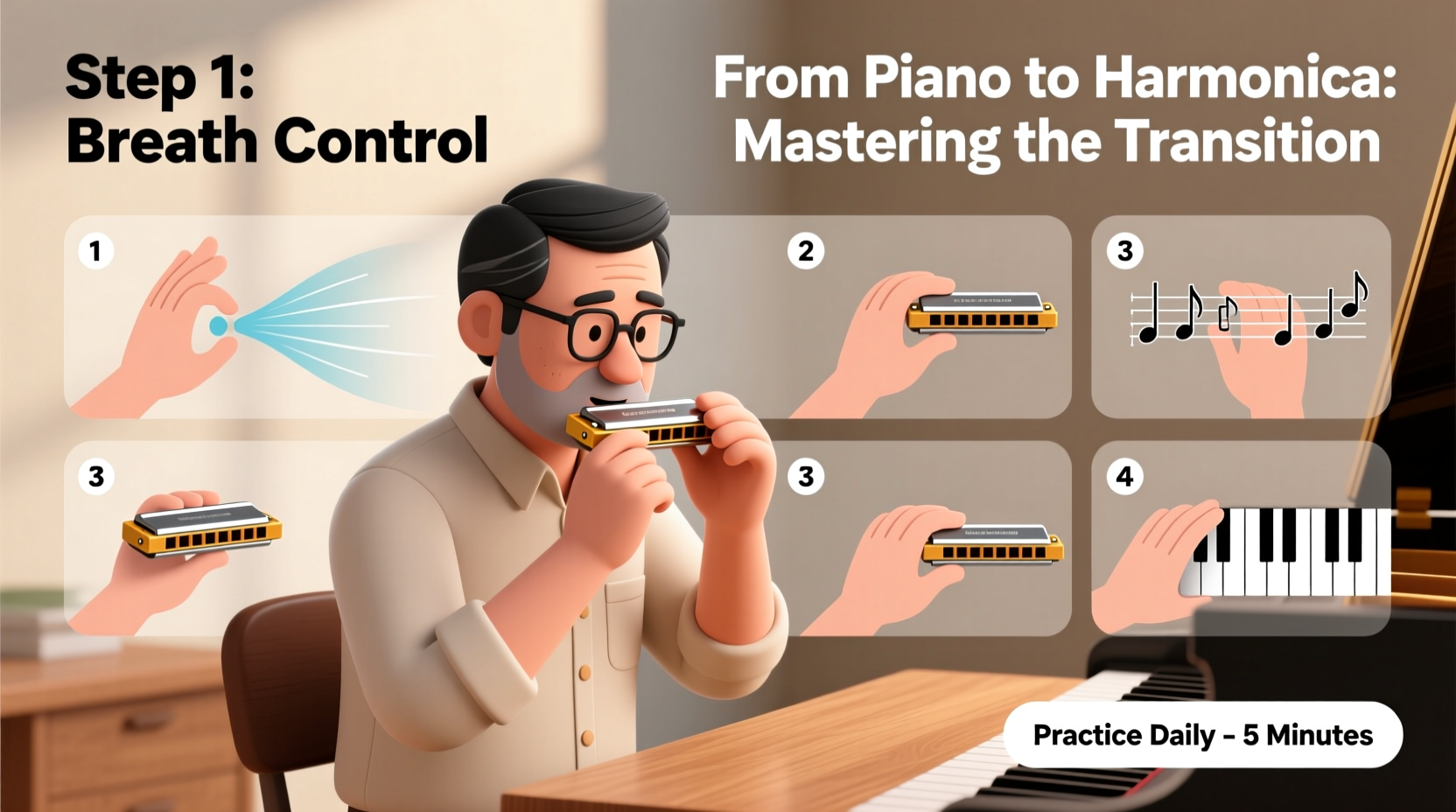
- Controlled breathing: Smooth transitions between blow and draw notes require steady airflow. Inhale gently; avoid sharp intakes that disrupt tone.
- Subtle bends: Hole 3 draw (D note) can be bent slightly downward to mimic the bluesy inflection in the melody’s descent.
- Vibrato: Apply hand vibrato (cupping and opening hands around the harmonica) during sustained notes like the long E in “sing us a song…” for added warmth.
“Harmonica isn’t about complexity—it’s about intention. One well-placed note with feeling beats ten flashy runs.” — Lena Reyes, Blues Harmonica Instructor, Chicago School of Music
Step-by-Step Breakdown of the Melody
The main melody of \"Piano Man\" follows a repeating four-line phrase structure. Below is a simplified transcription using hole numbers on a C-tuned harmonica. Assume all notes are played as single notes unless otherwise indicated.
- Intro / First Phrase – “It’s nine o’clock on a Saturday…”
Blow 4 – Draw 4 – Blow 5 – Draw 6 – Blow 5 – Draw 4 – Blow 4
This ascending-descending pattern mirrors the lyrical rise and fall. Focus on even timing—each note gets one beat. - Second Phrase – “Now a saxophone soloist…”
Draw 6 – Blow 5 – Draw 4 – Blow 4 – Draw 5 – Blow 5 – Draw 6
Slight pause after “soloist,” then resume. Emphasize the draw 6 at the end to lead into the next line. - Chorus – “Sing us a song, you’re the piano man…”
Blow 4 – Draw 4 – Blow 5 – Draw 6 – Blow 5 – Draw 4 – Blow 4 – Rest
Hold the final blow 4 for two beats. Add gentle hand vibrato here. - Bridge – “And the piano, it sounds like a carnival…”
Draw 7 – Blow 6 – Draw 6 – Blow 5 – Draw 5 – Blow 5 – Draw 4
This section dips lower. Use hole 7 draw carefully—it requires controlled breath support.
Practice Checklist for Mastery
Follow this structured approach over 2–4 weeks to build confidence and fluency.
- ☐ Tune your harmonica alongside a digital tuner app to ensure accurate pitch production.
- ☐ Play each phrase slowly (60 BPM) using a metronome until muscle memory forms.
- ☐ Isolate difficult transitions (e.g., draw 6 to blow 5) and loop them for 5 minutes daily.
- ☐ Add dynamics: play verses softly, chorus with slightly stronger breath for emphasis.
- ☐ Practice with the backing track at half-speed, gradually increasing tempo.
- ☐ Perform the full melody without stopping, focusing on smooth breathing.
- ☐ Integrate expression: add vibrato on long notes and slight delays for dramatic effect.
Adapting for Different Skill Levels
No matter your current ability, you can engage with \"Piano Man\" meaningfully. Here’s how to tailor the learning process.
| Skill Level | Approach | Focus Areas |
|---|---|---|
| Beginner | Play only the chorus melody using numbered holes. Skip bends initially. | Single-note clarity, consistent airflow, memorizing sequence |
| Intermediate | Add vibrato and slight bends. Play full verse and chorus smoothly. | Phrasing, breath control, timing with lyrics |
| Advanced | Incorporate tongue slaps, dynamic swells, and improvised fills between lines. | Emotional expression, stylistic interpretation, stage presence |
Real Example: How Maya Learned “Piano Man” in Three Weeks
Maya, a self-taught harmonica player from Portland, had never played beyond simple folk tunes. Inspired by a street performer covering \"Piano Man,\" she decided to learn it herself. She started with just the chorus, practicing five minutes a day with a metronome. By week two, she could play the entire melody at reduced speed. In week three, she added hand vibrato and performed it at an open mic night. Her version wasn’t technically perfect, but the audience responded to the sincerity in her delivery. “I didn’t play every note right,” she said later, “but I felt the story—and that’s what mattered.”
Frequently Asked Questions
Can I play “Piano Man” on any harmonica?
Yes, but a standard 10-hole diatonic harmonica in the key of C is recommended for ease of playing the melody. If you use a different key, you’ll need to transpose the hole numbers accordingly, which increases difficulty for beginners.
Do I need to bend notes to play this song?
Not strictly. The melody can be played accurately using standard notes. However, adding a slight bend on draw 3 or draw 4 enhances the bluesy character and brings it closer to the emotional tone of the original.
How long does it take to learn this song?
With consistent 10–15 minute daily practice, most beginners can play the melody clearly within 2–3 weeks. Intermediate players may master it in under a week, including expression techniques.
Final Tips for Expressive Performance
Technical accuracy matters, but \"Piano Man\" thrives on storytelling. Sync your playing with the lyrics mentally—even if you’re not singing. Pause slightly after key lines. Let the silence breathe. Match your dynamics to the mood: softer during introspective verses, stronger in the chorus. These nuances transform a mechanical rendition into a moving performance.
Also, maintain your harmonica. Rinse it with lukewarm water monthly (remove cover plates if possible), dry thoroughly, and store it in a case. A clean instrument responds better and lasts longer.
Conclusion: Bring the Story to Life
\"Piano Man\" on harmonica isn’t about replicating a piano part—it’s about honoring a narrative with your own voice. Through deliberate practice, attention to phrasing, and emotional awareness, you can deliver a version that resonates deeply with listeners. Whether you’re busking on a sidewalk or playing for friends, this song offers a chance to connect. Pick up your harmonica today, start with the first phrase, and let the story unfold—one breath at a time.




 浙公网安备
33010002000092号
浙公网安备
33010002000092号 浙B2-20120091-4
Comments
No comments yet. Why don't you start the discussion?