
Pinterest isn’t just a digital mood board—it’s a powerful visual search engine driving millions of monthly users toward discovery, inspiration, and purchase decisions. For creators, entrepreneurs, and marketers, an optimized Pinterest presence can generate consistent traffic long after a pin is published. But simply pinning content isn't enough. To truly harness Pinterest’s potential, you need to strategically rearrange and reorganize your pins to align with audience behavior, seasonal trends, and algorithmic preferences.
Unlike social platforms where content fades quickly, Pinterest thrives on evergreen value. A well-placed pin from two years ago can suddenly surge in visibility if it's properly categorized, tagged, and displayed in the right context. This guide walks through the exact steps to audit, restructure, and maximize the impact of your existing pins—transforming clutter into conversion.
Why Rearranging Your Pins Matters
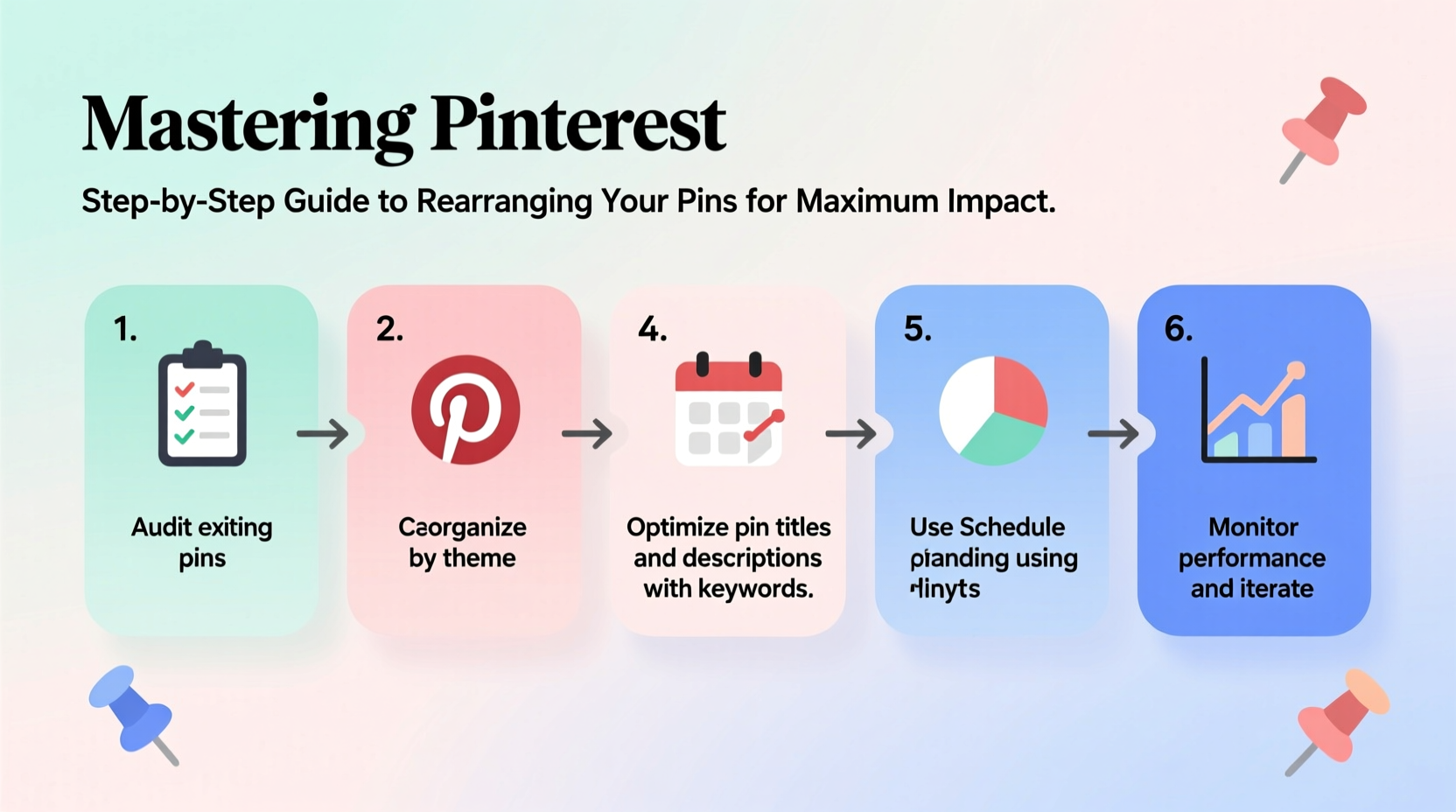
Pinterest’s algorithm prioritizes relevance, freshness, and user engagement. Boards that are outdated, disorganized, or filled with low-performing pins send negative signals to the system. When boards appear stagnant, Pinterest reduces their visibility across feeds and search results.
Rearranging your pins isn’t about aesthetics alone—it’s about information architecture. A logical, updated structure helps both users and algorithms understand what your profile offers. It increases dwell time, encourages exploration, and boosts click-through rates to your website or product pages.
“Pinterest rewards consistency and clarity. Profiles that regularly update their content hierarchy see up to 3x more impressions over six months.” — Dana Wong, Social Media Strategist at PinAnalytics Inc.
Step-by-Step Guide to Restructuring Your Pinterest Profile
Follow this five-phase process to systematically revamp your pin organization for sustained growth.
- Audit Your Existing Content
Create a spreadsheet listing all boards, top-performing pins (based on saves and clicks), and underperformers. Note categories, keywords used, and pin age. - Define Clear Board Themes
Each board should represent a distinct topic or customer journey stage (e.g., “Easy Weeknight Dinners,” “Home Office Setup Ideas”). Avoid broad titles like “Inspo” or “Stuff I Like.” - Reorder Boards by Priority
Drag high-value boards (those linked to products, lead magnets, or popular blog posts) to the top of your profile. Pinterest displays the first nine boards prominently. - Refresh Old Pins with Updated Descriptions
Edit descriptions on older but still relevant pins. Add current keywords, hashtags, and links. Repin them to active boards to signal freshness. - Create Seasonal & Trend-Based Sub-Boards
Break large boards into time-sensitive clusters (e.g., “Fall Outfit Ideas 2024”) to capture trending searches without cluttering evergreen collections.
Do’s and Don’ts of Pin Organization
| Do | Don’t |
|---|---|
| Use keyword-rich board names (e.g., “Small Bathroom Remodel Ideas”) | Name boards vaguely (“Random Stuff,” “Ideas”) |
| Pin consistently to 3–5 core boards weekly | Go months without updating any board |
| Add detailed descriptions with natural keywords and a clear CTA | Write one-sentence descriptions like “Love this!” |
| Group similar pins together within themed boards | Mix DIY crafts with finance tips on the same board |
| Use custom board covers for visual cohesion | Rely on default auto-generated thumbnails |
Real Example: How One Blogger Doubled Her Traffic in 90 Days
Sarah Kim, a sustainable living blogger, had been using Pinterest for over two years with minimal results. Her profile included 47 boards, many with overlapping themes—“Zero Waste Tips,” “Eco-Friendly Products,” and “Green Living” all contained similar content. Most pins were over a year old and buried deep in her profile.
She applied the following changes:
- Merged redundant boards into three main categories: “Plastic-Free Swaps,” “DIY Natural Cleaners,” and “Sustainable Home Hacks.”
- Updated descriptions on 60 top-performing pins with targeted keywords and added UTM tags to track traffic.
- Moved her “Beginner’s Zero Waste Kit” board (linked to a free downloadable guide) to the top position.
- Began repinning refreshed content twice a week using Tailwind for scheduling.
Within three months, her profile saw a 112% increase in monthly viewers, and her opt-in rate for the freebie rose by 68%. The key wasn’t creating new content—it was repositioning what already worked.
Essential Checklist for Pin Optimization
Use this checklist every quarter to maintain peak performance:
- ✅ Audit all boards for relevance and performance
- ✅ Merge or archive inactive or overlapping boards
- ✅ Update board covers for visual consistency
- ✅ Rewrite descriptions on at least 20 older pins per month
- ✅ Reorder boards so top conversion drivers appear first
- ✅ Add fresh pins to dormant high-potential boards
- ✅ Verify all links in pin descriptions are functional
- ✅ Monitor analytics for shifts in reach and engagement
Frequently Asked Questions
How often should I rearrange my Pinterest boards?
Major reorganizations should happen quarterly. However, minor adjustments—like repinning content or updating descriptions—should be done weekly. Seasonal shifts (back-to-school, holidays, spring cleaning) are ideal triggers for structural updates.
Can rearranging pins hurt my reach?
No—rearranging boards or editing pin details does not penalize your account. In fact, activity signals engagement to the algorithm. Just avoid mass-deleting pins, as this removes historical data and momentum.
Should I delete old pins or refresh them?
In most cases, refresh instead of delete. Edit descriptions, add new links, and repin to active boards. Evergreen content often regains traction when given a second chance with better optimization.
Conclusion: Turn Clutter Into Conversion
Pinterest success doesn’t come from posting more—it comes from organizing smarter. By taking control of your pin structure, you’re not just tidying up; you’re engineering a discovery pathway for new audiences. Each board becomes a curated entry point. Every pin gains renewed purpose.
The most impactful profiles aren’t those with the most pins—they’re the ones where every element has intention. Start small: pick one underperforming board, refine its focus, update five pins, and observe the difference in engagement. Then scale that effort across your profile.




 浙公网安备
33010002000092号
浙公网安备
33010002000092号 浙B2-20120091-4
Comments
No comments yet. Why don't you start the discussion?