
Sanda watches have earned a reputation for combining rugged durability with reliable timekeeping—qualities that make them favorites among outdoor enthusiasts, military personnel, and everyday wearers alike. While Sanda is known for building resilient quartz and mechanical timepieces, even the most robust watch requires proper care to maintain accurate performance over time. Environmental exposure, mechanical wear, and inconsistent usage patterns can all contribute to timing drift. Understanding how to preserve and optimize your Sanda watch’s precision ensures it remains a dependable companion for years.
Understanding What Affects Watch Accuracy
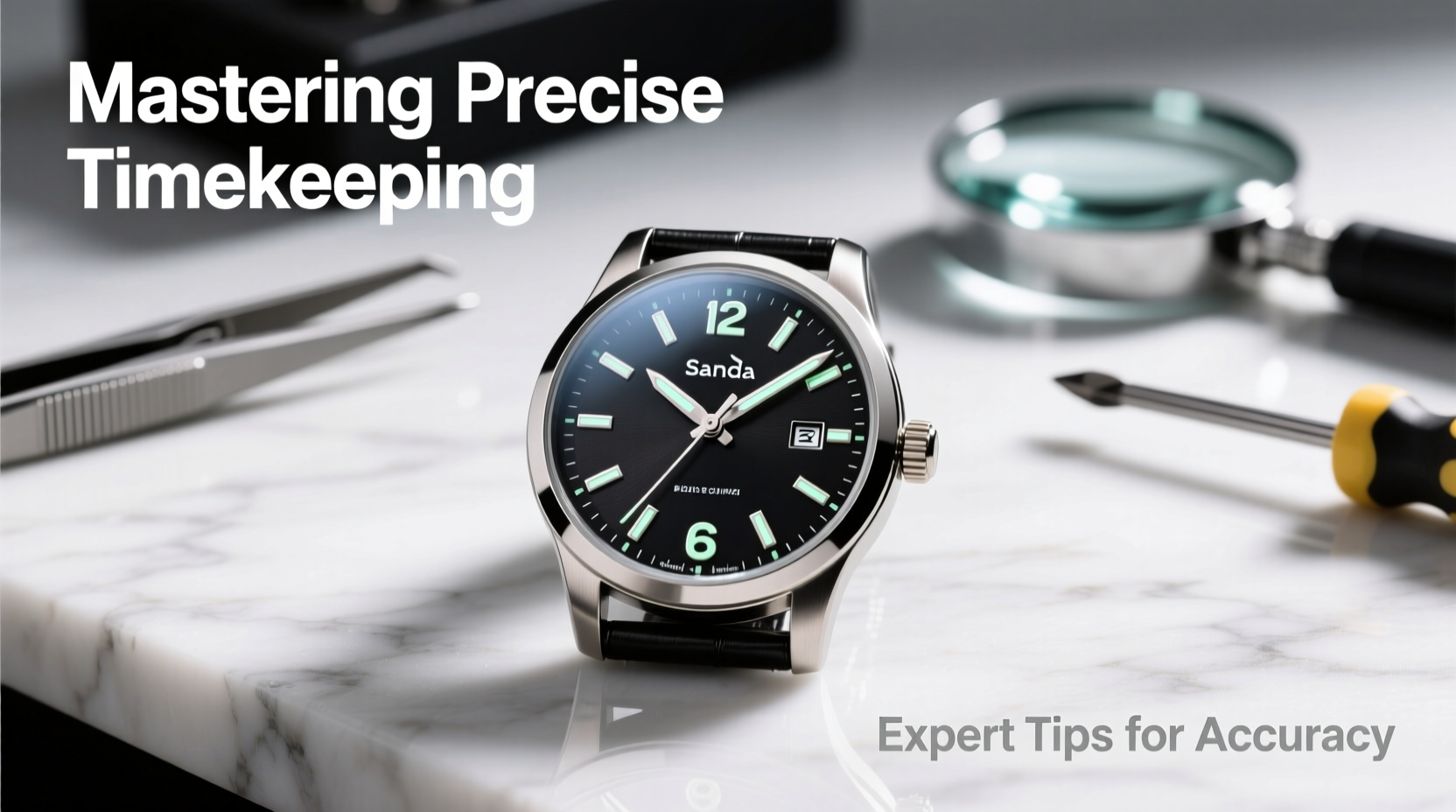
Before diving into maintenance practices, it's essential to understand the factors that influence a watch’s ability to keep accurate time. Sanda watches, particularly their analog quartz and automatic models, are sensitive to several environmental and mechanical variables:
- Temperature extremes: Prolonged exposure to high heat or freezing conditions can alter the oscillation rate of the quartz crystal or affect lubricants in mechanical movements.
- Magnetic fields: Common sources like smartphones, laptops, and speakers can magnetize components, causing erratic timekeeping.
- Shock and vibration: Drops or constant jostling may misalign internal parts, especially in automatic movements.
- Battery degradation: In quartz models, a weakening battery leads to reduced voltage, which can cause the second hand to stutter or lose time.
- Positional variance: Automatic watches run slightly differently depending on how they’re stored overnight (e.g., dial-up vs. crown-down).
Essential Maintenance Practices for Long-Term Accuracy
Consistent care not only preserves your watch’s appearance but also its functional integrity. Here’s a step-by-step approach to routine maintenance that supports precision timekeeping:
- Clean the case and band regularly: Use a soft cloth dampened with mild soapy water to wipe down stainless steel or resin components. Dry thoroughly to prevent moisture buildup.
- Check water resistance seals annually: Gaskets degrade over time. Even if you don’t submerge your watch, humidity and sweat can compromise seals. Have pressure testing done every 1–2 years.
- Replace batteries proactively: Don’t wait for total failure. Replace quartz watch batteries every 2–3 years to avoid leakage, which can damage the movement.
- Store properly when not in use: Keep your watch in a cool, dry place away from direct sunlight. For automatic models, consider a watch winder to maintain consistent power reserve.
| Maintenance Task | Frequency | Notes |
|---|---|---|
| Case & Band Cleaning | Every 2–4 weeks | Avoid submerging non-water-resistant models |
| Battery Replacement (Quartz) | Every 2–3 years | Use manufacturer-approved batteries |
| Water Resistance Test | Annually | Especially important for dive-style Sandas |
| Full Movement Service (Automatic) | Every 5–7 years | Includes cleaning, re-lubrication, and calibration |
| Dial & Crystal Inspection | Biannually | Look for fogging, cracks, or condensation |
Calibration Techniques for Optimal Performance
Even well-maintained watches can drift slightly over time. Calibration helps bring them back within acceptable tolerances. While professional calibration is recommended for automatic models, quartz watches allow for some user-level adjustments.
For quartz Sanda watches, observe the time deviation over a week using an atomic clock or GPS time source. If the watch gains or loses more than ±15 seconds per month, it may need servicing. Some high-end quartz models feature signal reception (like radio-controlled time sync), but standard Sandas rely on factory-set oscillators.
Automatic Sanda watches should be calibrated by a certified technician. The process involves adjusting the regulating lever on the balance wheel to fine-tune the beat rate. Attempting this without proper tools risks permanent damage.
“Timekeeping accuracy isn’t just about mechanics—it’s about consistency. A watch worn daily and serviced regularly will outperform a neglected one, even if both are identical models.” — Daniel Ruiz, Horology Technician & Watch Restoration Specialist
Real-World Example: Maintaining Accuracy in Harsh Conditions
Consider the case of Marcus T., a field researcher in northern Canada who relies on his Sanda SAR2000 for navigation and logging data in sub-zero temperatures. Over six months, he noticed his watch was gaining nearly two minutes. After inspection, a technician found that repeated thermal cycling had affected the quartz oscillator’s stability, and the battery was nearing depletion.
Following replacement of the battery and recalibration of the circuit, the watch returned to within ±10 seconds per year. Marcus now stores his watch at room temperature when not in use and performs monthly time checks against his smartphone’s GPS clock. This proactive routine has kept his Sanda accurate through multiple winter expeditions.
Step-by-Step Guide: Monthly Accuracy Check Routine
To ensure your Sanda maintains peak performance, follow this simple monthly ritual:
- Synchronize: Set your Sanda watch to match an atomic time source (e.g., time.gov or a GPS-enabled device) at exactly 12:00 PM.
- Wear normally: Continue using the watch as usual for seven full days without manual adjustments.
- Record deviation: After seven days, compare the time again. Note any gain or loss in seconds.
- Calculate monthly drift: Multiply the 7-day deviation by ~4.3 to estimate monthly variance.
- Evaluate:
- Quartz: More than ±15 seconds/month warrants service.
- Automatic: More than ±30 seconds/day indicates potential issue.
- Document: Keep a log to track long-term trends and identify sudden changes.
Frequently Asked Questions
How accurate should my Sanda quartz watch be?
Most Sanda quartz watches are rated to ±15 seconds per month under normal conditions. High-accuracy models may perform within ±5 seconds per month. Factors like battery age and temperature can affect this range.
Can I demagnetize my Sanda watch at home?
While consumer-grade demagnetizers exist, improper use can damage the movement. It’s safer to have demagnetization performed by a professional technician during routine servicing.
Do I need to wind my automatic Sanda every day?
If worn daily for 8–10 hours, most automatic Sanda watches will maintain sufficient power reserve. For occasional wear, manually winding 20–30 turns of the crown can restart the movement and stabilize timekeeping.
Final Checklist for Precision Timekeeping
- ✅ Perform monthly time accuracy checks
- ✅ Clean case and strap every few weeks
- ✅ Replace battery every 2–3 years (quartz)
- ✅ Test water resistance annually
- ✅ Store in a stable environment away from magnets
- ✅ Service automatic movements every 5–7 years
- ✅ Keep a log of time deviations and service dates
Conclusion: Make Precision a Habit
Mastering precise timekeeping on your Sanda watch isn’t about perfection—it’s about consistency. Small, regular actions compound into long-term reliability. Whether you're tracking workouts, navigating remote terrain, or simply valuing punctuality, your Sanda is capable of exceptional accuracy when cared for correctly. By integrating these expert-backed habits into your routine, you’re not just maintaining a watch; you’re preserving a tool designed for dependability.




 浙公网安备
33010002000092号
浙公网安备
33010002000092号 浙B2-20120091-4
Comments
No comments yet. Why don't you start the discussion?