
In today’s fast-paced digital workplace, the way you open an email can shape perceptions before your message is even read. A poorly addressed email—too casual, too stiff, or outright incorrect—can undermine credibility, delay responses, or damage relationships. Yet, many professionals still struggle with choosing the right salutation across different contexts. Whether you’re writing to a senior executive, a new client, or a colleague from another culture, precision in tone and formality matters. This guide breaks down how to address professional emails with confidence in any situation.
Understanding the Importance of Email Addressing
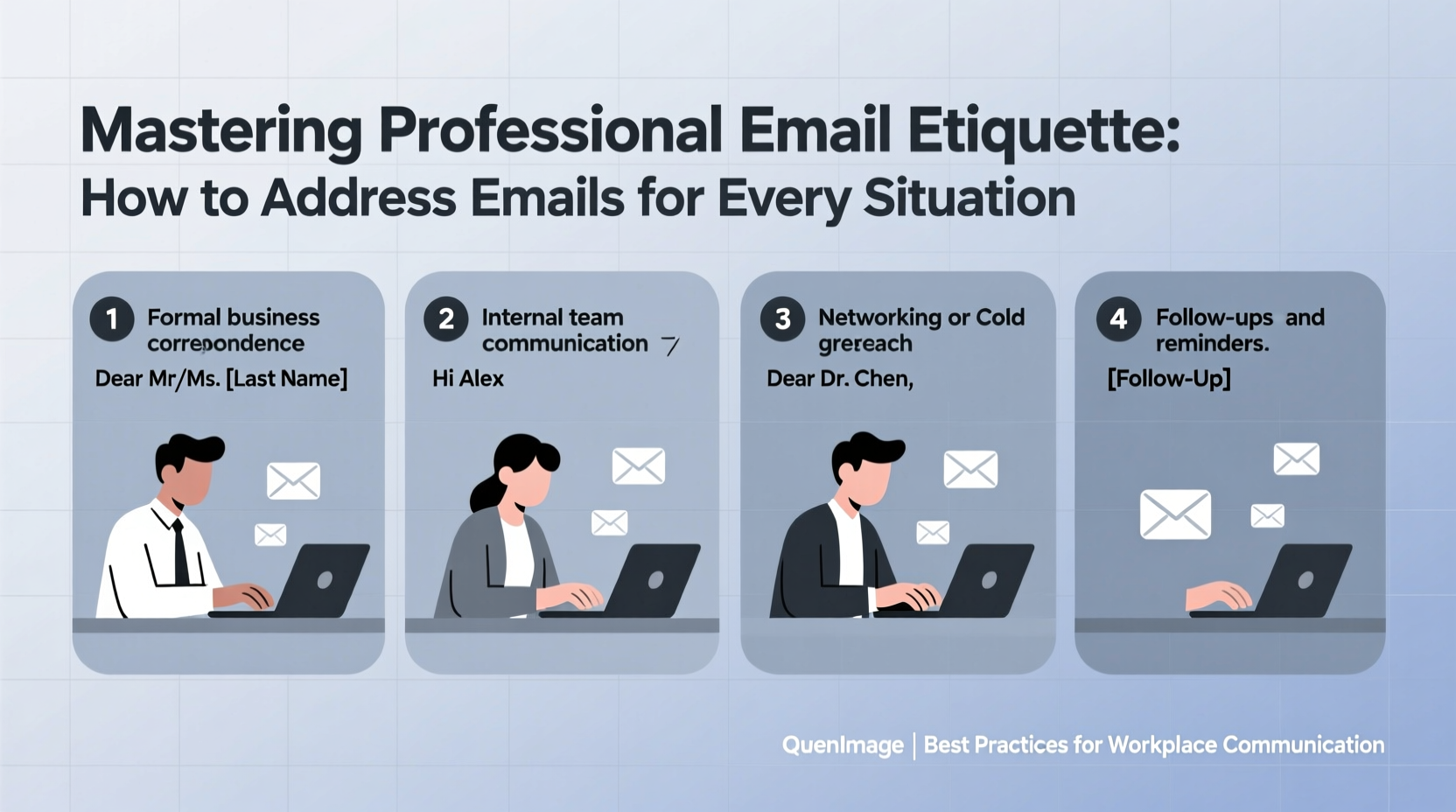
The greeting of an email sets the tone for the entire message. It signals respect, awareness, and professionalism. A well-chosen salutation shows that you’ve taken the time to consider your recipient’s position, relationship to you, and cultural expectations. On the other hand, “Hey,” when it should be “Dear Dr. Thompson,” or “To Whom It May Concern” in a follow-up with someone you’ve met twice, can create friction or disengagement.
Emails are often archived, forwarded, or referenced in decision-making. That first line becomes part of a permanent record. In global business environments, where miscommunication can arise from linguistic and cultural differences, getting the address right helps prevent misunderstandings before they start.
“First impressions in written communication are formed within seconds. The opening line determines whether your email is received as respectful, urgent, or dismissive.” — Laura Simmons, Corporate Communication Strategist
How to Choose the Right Salutation: A Decision Framework
Selecting the appropriate greeting depends on three key factors: familiarity, hierarchy, and context. Use this step-by-step approach to determine the best fit:
- Assess your relationship: Have you met? Are you collaborating regularly? Is this a cold outreach?
- Evaluate the recipient’s role: Are they senior-level, external, or part of a formal industry (e.g., law, finance)?
- Consider company culture: Startups may favor informality; traditional firms expect structure.
- Check prior correspondence: Mimic the tone and style used by the recipient if they’ve replied before.
Common Email Greetings and When to Use Them
| Greeting | Appropriate For | Avoid In |
|---|---|---|
| Dear [Full Name] | Formal introductions, external contacts, senior executives, job applications | Casual teams, ongoing conversations where informality has been established |
| Dear [First Name] | Known contacts, mid-level professionals, follow-ups after initial formal contact | First-time emails to high-ranking officials or conservative industries |
| Hello [First Name] | Colleagues, collaborative projects, tech/startup environments | Legal, academic, or government communications requiring strict decorum |
| Hi [Name] | Internal team members, quick updates, informal workflows | New contacts, clients, or situations requiring authority and polish |
| Good morning / Good afternoon | Time-sensitive messages, brief check-ins, when name is unknown but tone should remain warm | Longer emails needing personalization or formal proposals |
| To Whom It May Concern | Applications, official inquiries where recipient is truly unknown | Any case where a name can be reasonably found (use LinkedIn, website, directory) |
When You Don’t Know the Recipient’s Name
While “To Whom It May Concern” is technically correct, it feels impersonal and outdated. Try these alternatives:
- Dear Hiring Team – for job applications
- Dear Customer Support Manager – when writing about an issue
- Dear [Department] Team – e.g., “Dear Accounting Team”
Always research the recipient’s name through company websites, LinkedIn, or mutual connections. A personalized greeting increases response rates significantly.
Real-World Scenarios: What Works and What Doesn’t
Case Study: The Overly Casual Outreach
Sophie, a junior marketing associate, emailed a potential client at a financial advisory firm. Her message began: “Hey John!” followed by a pitch. The client did not respond. After two follow-ups went unanswered, Sophie consulted her manager, who suggested the tone was inappropriate given the industry’s formality. She resent the email starting with “Dear Mr. Reynolds,” outlining the same offer with slightly revised language. Within hours, she received a reply: “Thank you for your detailed proposal. I appreciate your reaching out professionally.”
This example illustrates how a simple change in salutation can influence receptivity—especially in fields where decorum is expected.
Internal Team Dynamics
In agile teams, over-formality can slow communication. If your manager signs off with “Best, Mark,” replying with “Hi Mark” is perfectly acceptable. However, avoid “Hey” in cross-departmental emails unless you know the culture aligns. Consistency builds trust.
Special Situations: Navigating Titles, Gender, and Culture
Modern workplaces require sensitivity to identity and inclusivity. Here’s how to handle nuanced cases:
- Titles matter: Use “Dr.,” “Professor,” or “Rev.” if known. These reflect earned status.
- Gender-neutral options: If unsure of gender identity, use full names (“Dear Taylor Morgan”) or first names only after checking how the person presents themselves publicly.
- Cultural variations: In Japan or Germany, titles and surnames are standard. In Sweden or Australia, first names dominate early in interactions. When emailing internationally, research local norms or mirror the recipient’s style.
Email Etiquette Checklist
Before sending any professional email, run through this checklist:
- ✅ Verified the recipient’s correct name and spelling
- ✅ Researched title (Dr., Prof., etc.) if applicable
- ✅ Matched salutation formality to relationship and industry
- ✅ Avoided overly casual greetings like “Hey” or “Yo” in new or formal exchanges
- ✅ Used inclusive language when gender is unknown
- ✅ Reviewed previous replies to maintain consistent tone
- ✅ Double-checked for typos in names and titles
Frequently Asked Questions
Is “Dear All” acceptable for group emails?
Yes, “Dear All” works well for team-wide announcements or meetings. Alternatives include “Hello Team,” “Hi Everyone,” or “Good morning colleagues,” depending on culture. Avoid “Hey all” in formal settings.
Should I use “Mrs.,” “Miss,” or “Ms.”?
Use “Ms.” unless the recipient specifies otherwise. It's gender-neutral and doesn’t assume marital status. If in doubt, skip the title and use the full name: “Dear Jamie Carter.”
Can I start an email without a greeting?
Only in rare cases—such as a quick internal reply with a single question already in thread. Otherwise, omitting a salutation appears abrupt. Even “Hi Alex” softens the tone and maintains professionalism.
Final Thoughts: Elevate Your Professional Presence
Mastery of email etiquette isn’t about rigid rules—it’s about showing respect through attention to detail. The way you address someone reflects your emotional intelligence, cultural awareness, and commitment to effective communication. Whether you're building a client relationship, applying for a job, or coordinating with teammates, your opening line shapes the conversation before it begins.
Take a moment before hitting send. Ask: Does this greeting match the context? Is it respectful without being stiff? Could it be more inclusive or precise? Small adjustments compound into a stronger professional reputation over time.




 浙公网安备
33010002000092号
浙公网安备
33010002000092号 浙B2-20120091-4
Comments
No comments yet. Why don't you start the discussion?