
Tracking progress isn’t just about crossing off tasks—it’s about creating clarity, building momentum, and turning intentions into results. While digital tools dominate today’s productivity landscape, the physical act of writing in a daily planner or notebook remains one of the most effective ways to internalize goals, maintain focus, and measure growth. The key lies not in simply owning a planner, but in using it strategically. This guide breaks down how to transform your notebook from a passive log into an active engine for personal and professional advancement.
Why Physical Planners Outperform Digital Tools for Deep Tracking
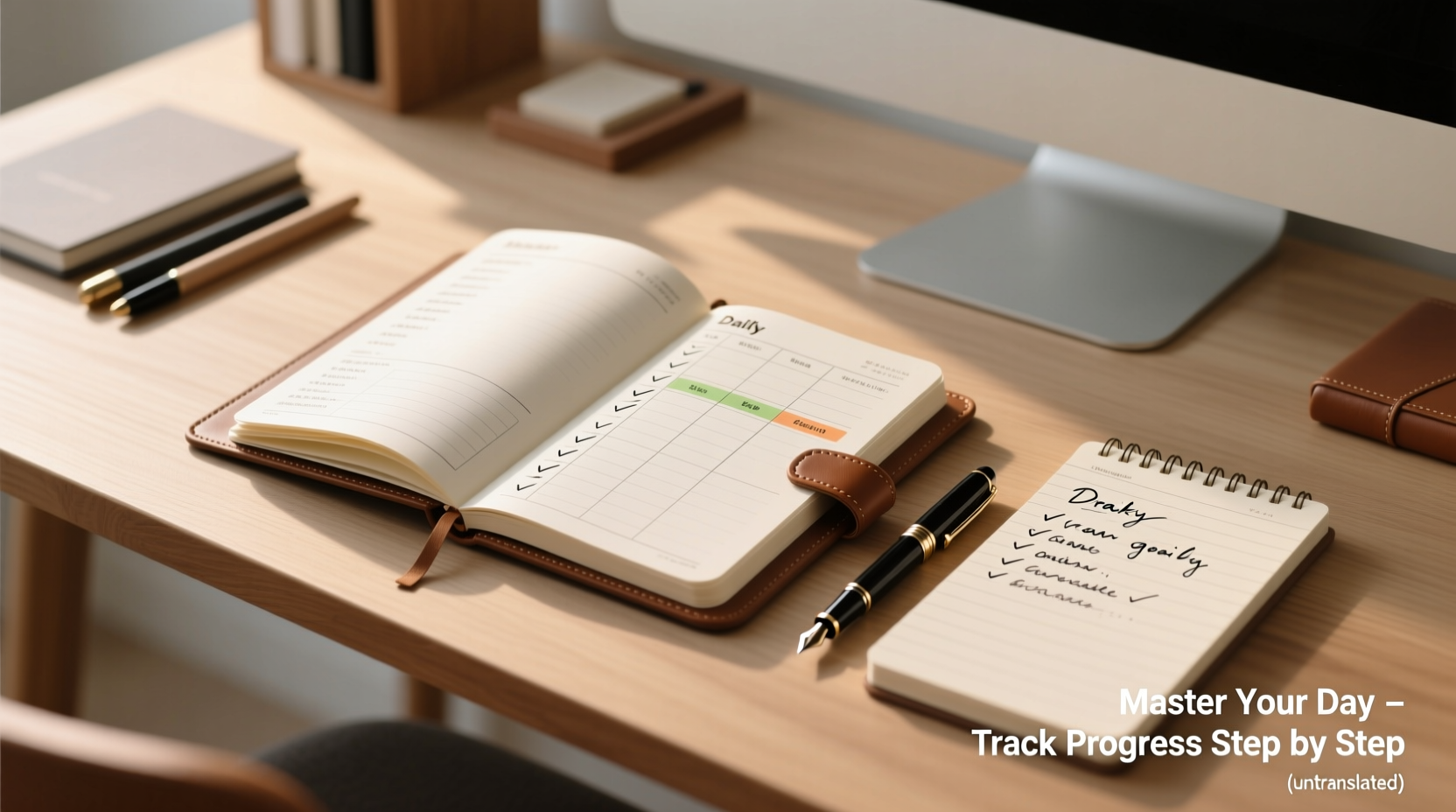
Digital calendars and task apps offer convenience, but they often encourage superficial engagement—quick taps, auto-scheduling, and endless notifications that fragment attention. In contrast, handwriting activates regions of the brain associated with memory retention, comprehension, and critical thinking. A study from Princeton University found that students who took notes by hand demonstrated better conceptual understanding than those using laptops, even when tested on identical material.
A physical planner forces deliberate decision-making. You can’t “snooze” a task indefinitely or bury it under layers of folders. Each entry requires intention: what matters today, what aligns with long-term goals, and what deserves space on the page. This tactile process strengthens accountability and fosters a deeper connection to your priorities.
“Writing things down makes them real. It transforms abstract ideas into commitments.” — Dr. Betsy Booren, Cognitive Psychologist
The Step-by-Step Framework for Effective Progress Tracking
To get consistent value from your planner, follow this six-phase system. Implement it weekly and refine it over time to match your rhythm and responsibilities.
- Define Your Core Objectives (Quarterly)
Start with the big picture. What do you want to achieve in the next 90 days? These should be specific outcomes—not vague aspirations like “be healthier,” but measurable targets such as “lose 8 pounds” or “publish four blog posts.” Write these at the front of your notebook as reference points. - Break Goals Into Weekly Milestones
Divide each objective into smaller, actionable steps that can be completed within a week. For example, if your goal is to launch a website, weekly milestones might include choosing a domain, drafting copy, selecting a template, and testing functionality. - Design Your Daily Layout
Create a consistent structure for each day. Recommended sections include:- Top 3 Priorities
- Scheduled Tasks & Appointments
- Energy Level Check-In (morning and evening)
- Gratitude or Wins Log
- Review and Reflect Each Evening
Spend 5–10 minutes reviewing what was accomplished, what was blocked, and why. Use symbols (✓, △, ✗) to denote completion, partial progress, or missed items. This builds self-awareness and informs future planning. - Conduct a Weekly Audit
Every Sunday, assess the past week. Which goals moved forward? Where did energy lag? Adjust upcoming tasks accordingly. Highlight patterns—such as recurring distractions or peak productivity times. - Update Long-Term Roadmaps Monthly
At month-end, revisit your quarterly objectives. Are they still relevant? Do timelines need adjustment? Use this reflection to revise your plan and recommit with clarity.
Choosing the Right Notebook System for Your Workflow
Not all planners serve the same purpose. The best choice depends on your working style—whether you thrive on structure or prefer flexibility. Below is a comparison of common systems:
| Planner Type | Best For | Pros | Cons |
|---|---|---|---|
| Bullet Journal (BuJo) | Creatives, freelancers, goal-focused individuals | Highly customizable, integrates tasks, logs, and habit trackers | Steeper learning curve; requires setup time |
| Undated Daily Planner | Busy professionals, parents, project managers | Structured layout, easy to pick up after missing days | Limited space for long-term planning |
| Weekly Spread Notebook | Students, remote workers, team leads | Overview of entire week, good for time blocking | Less detail per day; may feel crowded |
| Goal-Oriented Planners (e.g., Passion Planner, Full Focus) | Entrepreneurs, career climbers, life coaches | Integrated vision-setting pages, progress dashboards | Can feel rigid; less room for freeform notes |
Real-World Example: How Sarah Regained Control of Her Schedule
Sarah, a freelance graphic designer, struggled with inconsistent income and missed deadlines. She used a digital calendar but felt overwhelmed by shifting priorities. After switching to a bullet journal system, she began mapping her monthly income goals and breaking them into client acquisition tasks. Each week, she reviewed completed projects and tracked time spent per task.
Within two months, Sarah noticed she was undercharging for revision rounds. By logging actual hours, she adjusted her pricing model and set clearer client expectations. Her planner became a tool for both operational planning and business intelligence. Today, she uses color-coded spreads to forecast cash flow and track skill development—proof that thoughtful tracking fuels not just productivity, but profitability.
Essential Do’s and Don’ts of Planner Use
Avoid common pitfalls that turn planners into guilt-inducing relics. Follow this checklist to stay on course:
- Do keep your planner accessible—at your desk, in your bag, or bedside.
- Do use shorthand and symbols to save time (e.g., “MTG” for meeting, “→” for delegated).
- Do leave blank space for unexpected tasks or insights.
- Don’t erase or obsess over messy entries—authenticity beats perfection.
- Don’t overload daily pages; limit top priorities to three.
- Don’t abandon the system after a few missed days. Resume without judgment.
Frequently Asked Questions
How detailed should my daily entries be?
Focus on actionability. Include only tasks that require a decision or effort. Avoid listing every minor activity. For example, instead of “check email,” write “respond to client proposal by 3 PM.” Specificity drives execution.
What if I fall behind on tracking?
Progress tracking is not about perfection—it’s about awareness. Falling behind is normal. Simply resume where you are. Consider doing a “reset page” to summarize current priorities and let go of outdated tasks.
Can I combine digital tools with a paper planner?
Yes, but with caution. Use digital tools for reminders and file storage, but keep strategic planning and daily prioritization in your notebook. This hybrid approach leverages the strengths of both: digital efficiency and analog depth.
Build a Habit That Lasts
The true power of a planner emerges not from isolated use, but from consistency. Like a fitness regimen, progress tracking compounds over time. Small daily reflections reveal patterns. Weekly reviews expose inefficiencies. Monthly audits uncover growth.
Start simple. Dedicate five minutes each morning to list your top priorities. Add a nightly review. Over time, expand into goal mapping and energy tracking. Let your notebook evolve with you—not as a static organizer, but as a living document of your journey.




 浙公网安备
33010002000092号
浙公网安备
33010002000092号 浙B2-20120091-4
Comments
No comments yet. Why don't you start the discussion?