
For millions living with asthma or chronic obstructive pulmonary disease (COPD), the Ventolin inhaler—commonly known as a \"puffer\"—is a lifeline during breathing difficulties. Yet, studies show that up to 90% of users do not use their inhalers correctly, significantly reducing medication effectiveness. Proper technique is not optional; it's essential for delivering life-saving medication directly to the lungs. This guide walks through every critical step of using a Ventolin inhaler effectively, highlights best practices, and addresses common errors so you can breathe easier—literally.
Understanding Your Ventolin Inhaler
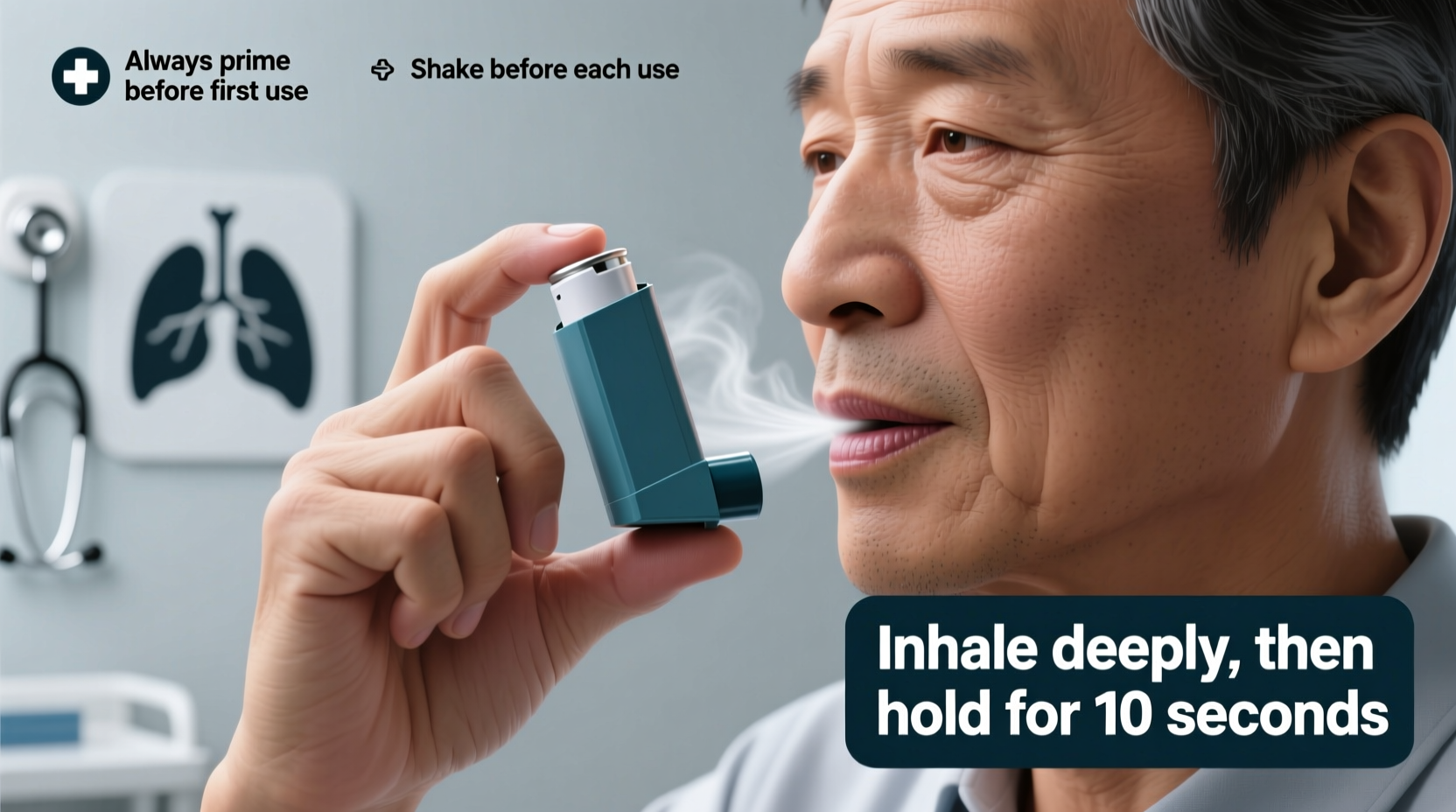
Ventolin contains albuterol (salbutamol), a short-acting beta-agonist (SABA) that relaxes muscles in the airways, making it easier to breathe during an asthma attack or flare-up. It’s a rescue inhaler, not a long-term controller, meaning it treats symptoms quickly but does not reduce underlying inflammation.
The standard Ventolin HFA inhaler delivers medication as a fine mist through a metered-dose system. When used correctly, it can provide relief within minutes. However, poor coordination between pressing the canister and inhaling, incorrect positioning, or failure to shake the device can result in less than 20% of the medication reaching the lungs.
“Getting the dose where it needs to go—deep in the lungs—depends entirely on proper inhaler technique. It’s not just about pressing and breathing; it’s about timing, force, and consistency.” — Dr. Lena Reyes, Pulmonologist, National Asthma Foundation
Step-by-Step Guide to Effective Ventolin Use
Follow this precise sequence to ensure optimal delivery of medication. Practice this routine daily, even when symptom-free, to build muscle memory.
- Remove the cap and inspect the mouthpiece. Check for dirt, debris, or foreign objects. Wipe the outside gently with a dry cloth if needed. Never rinse or insert objects into the nozzle.
- Shake the inhaler vigorously. Do this for at least 5 seconds to mix the medication and propellant. Skipping this step leads to inconsistent dosing.
- Exhale fully—but not into the inhaler. Breathe out completely to empty your lungs, then move the inhaler away from your mouth.
- Place the mouthpiece between your lips, forming a tight seal. Use your fingers to hold the metal canister upright. Avoid blocking the top button.
- Start to inhale slowly and deeply through your mouth. As you begin your breath, press down firmly on the canister to release one puff. The key is synchronizing the spray with the start of your inhalation.
- Continue inhaling steadily for 3–5 seconds. Aim to fill your lungs completely without coughing or stopping mid-breath.
- Hold your breath for 10 seconds. This allows the medication particles to settle in the lower airways. If you can’t manage 10 seconds, hold as long as possible.
- Exhale slowly. Move the inhaler away and breathe out gently through your nose or mouth.
- Wait 30–60 seconds before repeating if a second puff is prescribed. Shake the inhaler again before the next dose.
- Replace the cap after use. Store in a cool, dry place away from direct sunlight and extreme temperatures.
Best Practices for Long-Term Inhaler Effectiveness
Using your Ventolin correctly once isn’t enough. Consistency and maintenance matter just as much.
- Clean your inhaler weekly. Run warm water through the plastic casing (remove the metal canister first), then air-dry overnight. A clogged nozzle reduces spray efficiency.
- Track your doses. Most Ventolin inhalers contain 200 puffs. Mark your calendar or use a tracking app to know when it’s time to refill—don’t wait until it stops working.
- Avoid extreme temperatures. Don’t leave your inhaler in a hot car or freezer. Temperatures above 120°F (49°C) or below freezing can alter medication stability.
- Rinse your mouth after use. While not always necessary with Ventolin, rinsing reduces the risk of oral thrush, especially if using a steroid inhaler alongside it.
- Practice with a placebo trainer. Ask your pharmacist for a demonstration inhaler (like the AeroChamber Trainer) to refine your technique without wasting medication.
Common Mistakes and How to Avoid Them
Even small errors can drastically reduce how much medication reaches your lungs. Here’s what to watch for:
| Mistake | Why It’s a Problem | Solution |
|---|---|---|
| Not shaking the inhaler | Medication settles; uneven dosing occurs | Always shake for 5 seconds before each puff |
| Inhaling too quickly | Medication hits the back of the throat instead of lungs | Breathe in slowly and steadily |
| Forgetting to hold breath | Reduced drug deposition in airways | Count silently to 10 after inhaling |
| Using the inhaler like a straw | Poor seal leads to leakage and wasted dose | Close lips tightly around the mouthpiece |
| Not using a spacer when needed | Low coordination = low lung delivery | Use a spacer, especially for children or elderly users |
Real-World Example: Maria’s Turnaround
Maria, a 34-year-old teacher with moderate asthma, used her Ventolin inhaler several times a week but still experienced nighttime wheezing and fatigue. During a routine checkup, her doctor observed her technique and noticed she wasn’t holding her breath and was inhaling too rapidly. She also hadn’t cleaned her inhaler in months.
After being shown the correct steps and given a spacer, Maria practiced daily. Within two weeks, she reported fewer symptoms and only needed her inhaler once or twice a week. “I didn’t realize I’d been doing it wrong for years,” she said. “Now I feel like I’m actually getting the medicine I need.”
When to Seek Help and Emergency Signs
Ventolin is designed for quick relief, but frequent use signals uncontrolled asthma. If you’re using your inhaler more than twice a week for symptom relief (excluding pre-exercise use), it’s time to reassess your treatment plan with a healthcare provider.
Seek immediate medical attention if:
- Your symptoms don’t improve after two puffs (wait 4–6 minutes between puffs)
- You need more than eight puffs in 24 hours
- You experience severe shortness of breath, chest tightness, or blue lips/fingernails
Frequently Asked Questions
Can I use Ventolin every day?
Ventolin is a rescue inhaler, not meant for daily control. If you’re using it regularly, your asthma may be poorly managed. Talk to your doctor about adding a maintenance inhaler such as an inhaled corticosteroid.
How do I know when my inhaler is empty?
Most Ventolin HFA inhalers don’t have dose counters. Track usage manually—each canister has 200 actuations. Some newer models include built-in counters; if yours doesn’t, mark off doses on a chart or use a tracking app.
Is it safe to use Ventolin during pregnancy?
Yes. Uncontrolled asthma poses greater risks to both mother and baby than properly dosed albuterol. Always consult your OB-GYN or pulmonologist, but do not withhold necessary medication.
Final Checklist: Mastering Your Ventolin Routine
- Before Use:
- ✓ Remove cap and inspect mouthpiece
- ✓ Shake well for 5 seconds
- ✓ Exhale fully (away from inhaler)
- During Use:
- ✓ Seal lips around mouthpiece
- ✓ Press canister while starting slow inhalation
- ✓ Inhale deeply over 3–5 seconds
- ✓ Hold breath for 10 seconds
- After Use:
- ✓ Exhale slowly
- ✓ Wait 30–60 seconds before second puff
- ✓ Replace cap and store properly
- ✓ Clean mouthpiece weekly with water




 浙公网安备
33010002000092号
浙公网安备
33010002000092号 浙B2-20120091-4
Comments
No comments yet. Why don't you start the discussion?