
The striped waistcoat is more than just a vintage throwback—it’s a canvas for rebellion. Rooted in 1970s British punk, the garment has evolved from working-class uniform to a symbol of defiance and individuality. When styled correctly, it becomes the centerpiece of a look that challenges norms and commands attention. But the real power lies not in the vest itself, but in how you choose to adorn it. Accessorizing a striped waistcoat isn’t about matching; it’s about making a statement. From safety pins to anarchist patches, every addition should scream authenticity and intent.
Understanding the Striped Waistcoat in Punk Culture
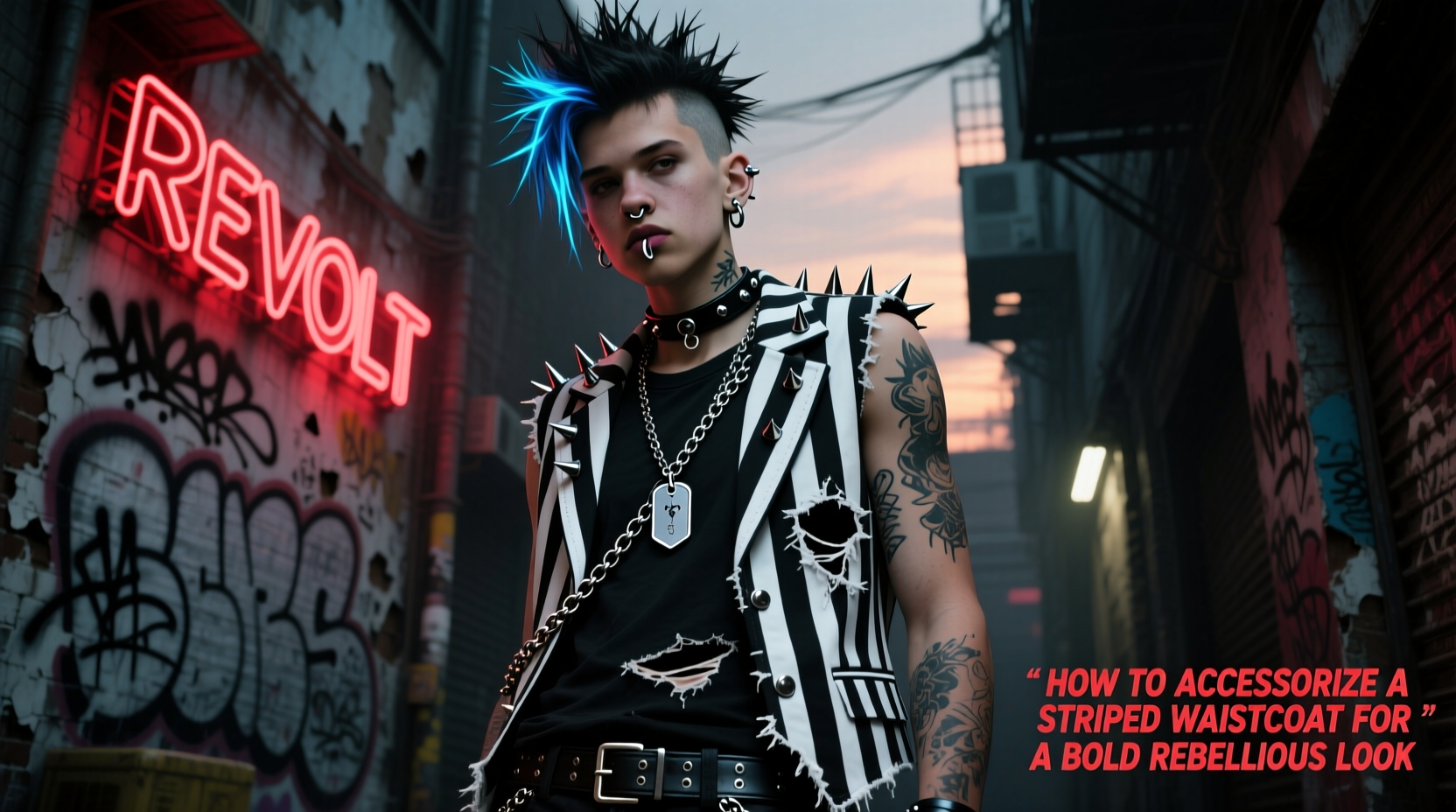
The striped waistcoat emerged as a staple in punk fashion during the mid-1970s, popularized by bands like The Sex Pistols and The Clash. Originally borrowed from Victorian-era tailoring, its rigid structure was subverted through deliberate damage, asymmetry, and aggressive customization. The stripes—often black and white or red and black—added visual tension, mimicking prison uniforms or circus attire, both loaded with symbolic meaning.
In today’s context, the waistcoat remains a versatile foundation. It bridges the gap between formal and chaotic, offering a structured base for anarchic expression. Whether tailored or thrifted, its value increases when transformed into a personal manifesto through accessories.
Essential Accessories for Maximum Impact
To truly master punk style, treat your waistcoat as a display board for rebellion. The goal is not cohesion but confrontation. Here are the key accessory categories that define the aesthetic:
- Safety Pins: More than just fasteners, they represent DIY ethos. Use oversized silver pins to attach fabric scraps, band patches, or even dangle chains.
- Chains: Attach them from shoulder to pocket, across buttons, or dangling from belt loops. Metal link chains add industrial weight and movement.
- Patches & Pins: Band logos, political slogans, or hand-drawn symbols transform the vest into a narrative piece. Sew or pin them asymmetrically for maximum effect.
- Studs & Spikes: Apply them along lapels, pockets, or in geometric patterns. Chrome or blackened steel offers different vibes—shiny for aggression, matte for menace.
- Belts & Straps: Crisscross leather or webbing straps over the vest to suggest utility and constraint, evoking military or bondage influences.
“Punk isn’t about looking dangerous—it’s about looking unapologetic. The waistcoat is the suit of resistance.” — Lila Cross, Punk Fashion Historian
Step-by-Step: Building Your Rebellious Look
Creating a powerful ensemble around your striped waistcoat follows a deliberate process. This timeline ensures balance between chaos and intention:
- Start with a clean base: Choose a waistcoat with defined stripes—vertical or horizontal—and minimal wear unless distressing is part of your plan.
- Add structural elements: Attach wide leather straps diagonally across the chest or use a chain belt threaded through buttonholes.
- Layer with meaning: Select 3–5 patches that reflect your beliefs—musical, political, or personal. Position them so they’re visible but not symmetrical.
- Embellish aggressively: Apply studs along one lapel, use safety pins as decorative rivets, or let a chain dangle from the top button.
- Finalize with attitude: Pair with ripped jeans, combat boots, and a tight band tee. Top with a leather jacket thrown over one shoulder for dynamic flair.
Do’s and Don’ts: Styling the Punk Waistcoat
| Do’s | Don’ts |
|---|---|
| Use asymmetry to create visual tension | Match accessories perfectly—avoid looking “designed” |
| Mix materials: metal, leather, plastic, fabric | Overload every inch—leave breathing room for impact |
| Personalize with hand-painted slogans or symbols | Use mass-produced, generic punk motifs without context |
| Wear with confidence—even if it shocks | Apologize for your look; punk thrives on provocation |
| Repair tears visibly (e.g., with contrasting thread) | Hide damage—imperfections are features, not flaws |
Real Example: Jamie’s Glastonbury Statement
Jamie, a 24-year-old sound technician from Bristol, wore a black-and-red striped waistcoat to Glastonbury Festival last summer. He’d customized it over six months: a torn Ramones patch on the left breast, a hand-stitched “No Gods No Managers” slogan across the back, and a heavy motorcycle chain running from the right shoulder to the bottom button. Studs lined the edges in uneven clusters, and two safety pins held a frayed piece of tartan fabric flapping from the collar.
What made the look powerful wasn’t just the accessories, but how he wore it—with rolled-up sleeves, no shirt underneath, and mirrored aviators. Festival-goers took photos, and a local zine featured him in their “Style Rebellion” spread. Jamie didn’t spend much money—most items were scavenged or gifted—but the message was clear: this was a body politic, dressed for disruption.
Checklist: Your Punk Waistcoat Transformation
Before stepping out in your customized creation, run through this checklist to ensure maximum impact:
- ✅ Waistcoat is securely fitted—snug but not restrictive
- ✅ At least three types of accessories incorporated (e.g., pins, chains, patches)
- ✅ Message or theme is evident (even if abstract)
- ✅ One element is intentionally “over the top” (e.g., excessive studs, dangling hardware)
- ✅ Paired with footwear that grounds the look (boots, creepers, etc.)
- ✅ You feel defiant wearing it—not self-conscious, but empowered
Frequently Asked Questions
Can I wear a punk-striped waistcoat to a non-punk event?
Absolutely. The beauty of punk fashion is its ability to disrupt polite spaces. Wearing it to a gallery opening or dinner party can be a form of quiet protest. Just be prepared for reactions—and own your presence.
How do I keep my accessories secure during long wear?
Sew patches with strong thread in multiple directions. For chains, use bolt snaps or heavy-duty jump rings. Safety pins should be stainless steel and fully closed. Test movement by simulating walking or raising your arms before heading out.
Is it still punk if I buy a pre-customized vest online?
Punk values authenticity over origin. A store-bought customized vest can work—if you make it yours. Add personal touches: redraw a patch, remove an element you don’t align with, or reposition hardware. True punk isn’t about where it’s from, but what it says.
Conclusion: Wear It Like a Weapon
Mastering punk style isn’t about replicating the past—it’s about weaponizing fashion to declare who you are. The striped waistcoat, when layered with intentional accessories, becomes more than clothing. It’s armor. It’s art. It’s a refusal to blend in.
Don’t wait for permission. Start with one pin, one patch, one act of defiance stitched into the fabric. Let your waistcoat tell a story that unsettles, inspires, or simply refuses to be ignored. That’s the essence of punk—not noise, but signal.




 浙公网安备
33010002000092号
浙公网安备
33010002000092号 浙B2-20120091-4
Comments
No comments yet. Why don't you start the discussion?