
Purchase orders (POs) are more than just transactional documents—they’re foundational tools for controlling spending, maintaining accountability, and building trust with suppliers. Yet, many businesses still treat them as afterthoughts, leading to delayed deliveries, budget overruns, and strained vendor relationships. When properly managed, POs become strategic assets that bring clarity, compliance, and efficiency to procurement. This guide breaks down how to master the purchase order process from initiation to reconciliation, offering actionable strategies to streamline operations across departments.
Understanding the Role of a Purchase Order
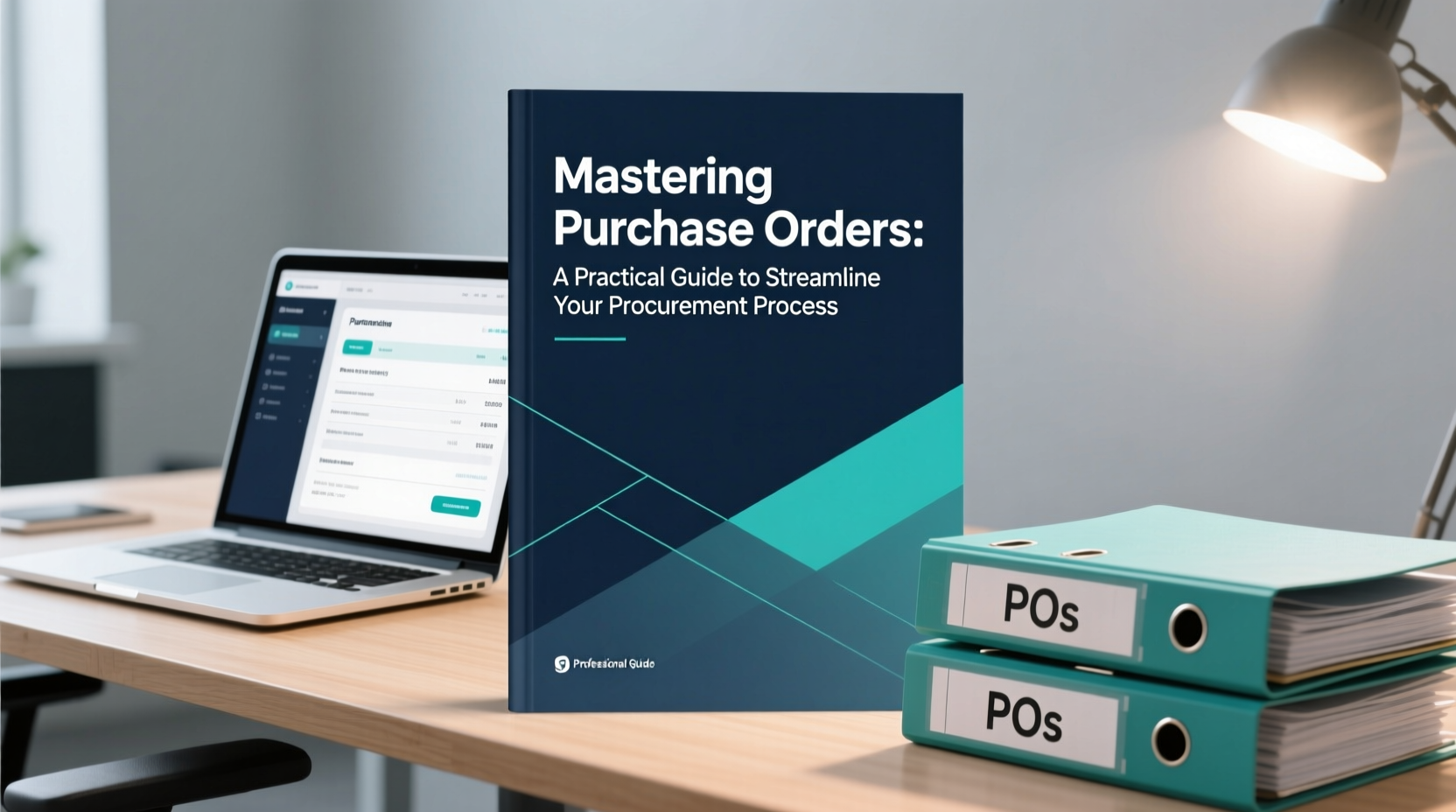
A purchase order is a legally binding document issued by a buyer to a seller, detailing the types, quantities, and agreed prices for products or services. Unlike an invoice, which is sent by the seller after delivery, a PO originates from the buyer before any goods or services are provided. It serves multiple functions: formalizing intent, setting expectations, and creating a paper trail for auditing and financial reporting.
Effective PO use prevents unauthorized spending, ensures accurate inventory tracking, and supports timely payments. Without standardized PO practices, companies risk duplicate orders, receipt of incorrect items, or disputes over pricing—issues that can ripple through finance, logistics, and customer satisfaction.
“Clear purchase orders eliminate ambiguity. They’re not just about buying things—they’re about managing risk and building operational discipline.” — Linda Tran, Procurement Strategist at SupplyChain Insights Group
Key Components of a Well-Structured Purchase Order
To be effective, every purchase order must include specific information. Omitting key details leads to confusion, delays, and errors. Below are the essential elements every PO should contain:
- PO Number: A unique identifier for tracking and reference.
- Date of Issue: Helps manage timelines and payment terms.
- Buyer and Seller Information: Full names, addresses, contact details, and tax IDs.
- Item Descriptions: Clear specifications including model numbers, sizes, or SKUs.
- Quantities: Exact number of units ordered.
- Unit Price and Total Cost: Breakdown per item and overall order total.
- Delivery Date and Location: Specifies when and where goods should arrive.
- Payment Terms: Net 30, upfront deposit, etc.
- Authorized Signatures: Legal validation of approval.
Step-by-Step Guide to Streamlining Your PO Process
Efficiency in procurement doesn’t happen by accident—it’s built through structured workflows. Follow this five-step sequence to create a reliable, scalable PO system:
- Requisition Submission: Employees submit internal requests via a digital form or system, specifying need, cost center, and urgency.
- Approval Workflow: Department heads or managers review and approve based on budget availability and necessity.
- PO Generation: Approved requisitions trigger automated PO creation using pre-approved vendor data and pricing agreements.
- Sending to Vendor: The finalized PO is sent electronically (email, EDI, or portal), ensuring immediate acknowledgment.
- Matching and Reconciliation: Upon delivery, the received goods are matched against the PO and later against the supplier’s invoice (three-way matching).
Automation plays a crucial role here. Tools like QuickBooks, SAP Ariba, or Zoho Inventory allow businesses to set up rule-based approvals, auto-generate POs, and integrate with accounting systems—reducing manual entry and human error.
Common Pitfalls and How to Avoid Them
Even experienced teams fall into recurring traps that undermine procurement efficiency. Recognizing these issues early helps prevent costly setbacks.
| Pitfall | Impact | Solution |
|---|---|---|
| Using verbal or email-only orders | No audit trail; disputes over pricing or delivery | Require formal POs for all purchases above $50 |
| Inconsistent PO numbering | Tracking difficulties; duplicate entries | Implement sequential numbering with department prefixes |
| Late approvals due to bottlenecks | Delayed shipments; production halts | Set up tiered approval rules and deadline alerts |
| Poor vendor communication | Misunderstandings on specs or timelines | Include detailed SLAs and confirm receipt of PO |
Real-World Example: How a Mid-Sized Manufacturer Reduced Delays by 40%
A mid-sized industrial equipment manufacturer was struggling with frequent material shortages and accounting discrepancies. After an internal audit, they discovered that only 60% of purchases were backed by formal POs. The rest relied on informal emails or verbal agreements.
The company implemented a mandatory PO policy for all external purchases, integrated their ERP system with digital approval routing, and trained staff on proper documentation. Within six months:
- On-time delivery improved from 72% to 94%
- Invoice discrepancies dropped by 68%
- Procurement cycle time decreased from 7 days to 2.3 days on average
The shift didn’t require new software alone—it succeeded because leadership enforced compliance and made PO adherence part of performance evaluations.
Checklist: Optimizing Your Purchase Order System
Use this checklist to evaluate and strengthen your current procurement workflow:
- ✅ All purchase requests go through a formal requisition system
- ✅ POs are generated only after multi-level approval
- ✅ Each PO includes complete item descriptions, pricing, and delivery terms
- ✅ Unique PO numbers follow a consistent format
- ✅ Vendors acknowledge receipt of POs before fulfillment
- ✅ Three-way matching (PO, receipt, invoice) is standard practice
- ✅ Digital records are archived and searchable for audits
- ✅ Staff receive regular training on PO policies and updates
Frequently Asked Questions
Can a purchase order be canceled?
Yes, but only if the goods or services haven’t been delivered or started. Cancellation requires written notice to the vendor and should be documented internally. If work has begun, cancellation may involve fees or penalties depending on contract terms.
What’s the difference between a PO and an invoice?
A purchase order is issued by the buyer to initiate a transaction, while an invoice is sent by the seller after delivery to request payment. The PO sets expectations; the invoice confirms fulfillment and charges accordingly. Matching both ensures accuracy.
Do small businesses really need purchase orders?
Absolutely. Even small teams benefit from POs. They prevent overspending, clarify responsibilities, and build credibility with suppliers. As the business grows, having established processes makes scaling smoother and reduces financial risk.
Conclusion: Turn Purchase Orders Into a Competitive Advantage
Mastering purchase orders isn't about bureaucracy—it's about precision, control, and professionalism. When done right, the PO process strengthens vendor partnerships, improves cash flow forecasting, and protects your organization from waste and fraud. Whether you're running a startup or managing procurement for a large enterprise, refining how you create, track, and reconcile POs pays dividends across operations.




 浙公网安备
33010002000092号
浙公网安备
33010002000092号 浙B2-20120091-4
Comments
No comments yet. Why don't you start the discussion?