
A well-chosen shoulder bag enhances your look and keeps essentials within reach, but even the most stylish design can become uncomfortable if the strap isn’t adjusted properly. Too short, and it pulls on your shoulder; too long, and it swings awkwardly or drags on the ground. The key to both comfort and functionality lies in precise strap adjustment tailored to your body, outfit, and daily needs. This guide walks you through the science and style of achieving the ideal shoulder bag fit—no guesswork required.
Why Proper Strap Length Matters
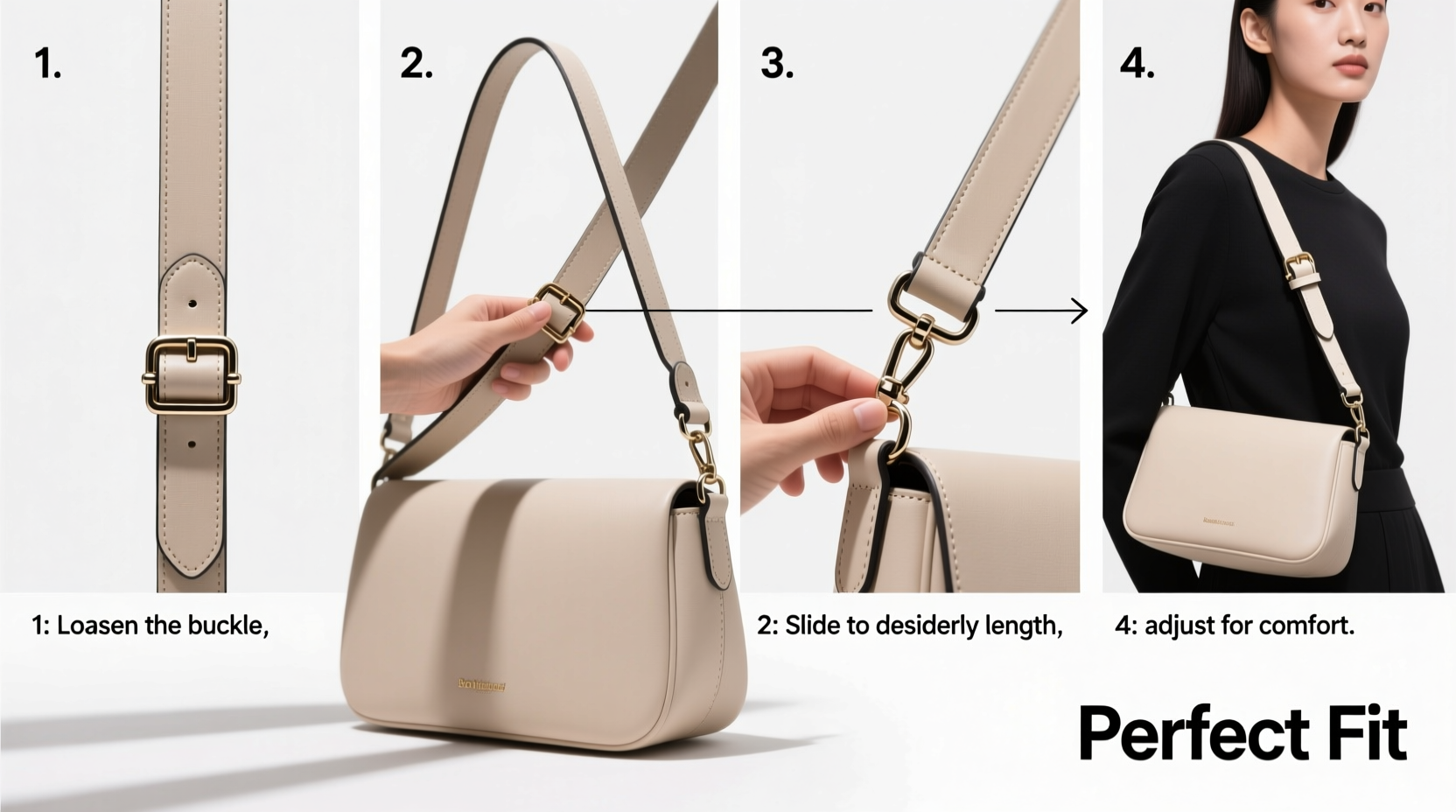
The position of your shoulder bag affects more than just appearance—it influences posture, balance, and physical comfort. A poorly adjusted strap can lead to shoulder strain, back pain, or even long-term musculoskeletal issues, especially if you carry your bag for extended periods. Beyond health, an ill-fitted strap disrupts your silhouette. A bag that hangs below the hip may look sloppy, while one riding too high can appear unbalanced or unnatural.
Proper adjustment ensures weight distribution, reduces fatigue, and complements your height and clothing. Whether you're wearing a blazer, a dress, or casual layers, the right strap length maintains both elegance and ease.
The Anatomy of a Shoulder Bag Strap
Before adjusting, understand the components that make adjustment possible. Most shoulder bags feature one of several strap types:
- Fixed-length straps: Non-adjustable, often found on designer or minimalist styles. Fit depends entirely on your body proportions.
- Sliding buckles: Leather or fabric straps with metal or plastic sliders that allow smooth length changes.
- Hole-and-pin systems: Multiple perforations along the strap with a pin or clasp that locks into place.
- Chain-with-hook extensions: Common in crossbody-style shoulder bags, allowing quick add-ons for lengthening.
- Detachable straps: Some bags offer interchangeable straps of varying lengths and materials.
Knowing your strap type determines how you’ll adjust it. Sliding mechanisms allow micro-adjustments, while hole-based systems offer preset increments. Choose adjustments that maintain both security and symmetry.
Step-by-Step Guide to Adjusting Your Shoulder Bag Strap
Follow this five-step process to achieve a personalized, ergonomic fit.
- Empty the bag and assess current length. Start with an empty bag to avoid uneven hanging due to weight. Hold it by the strap and let it dangle naturally.
- Stand in front of a full-length mirror. Wear the shoes and outfit you typically pair with the bag. Lighting should be clear so you can observe alignment.
- Put the bag on your dominant shoulder. Let it rest naturally. The bottom of the bag should ideally hit at or just below your hip bone. This is the golden zone for balance and style.
- Adjust incrementally. If using a sliding buckle, loosen the strap, reposition it over your shoulder, then gently pull the loose end until the bag reaches the desired height. For hole-and-pin systems, unhook, move to the next hole (up or down), and reattach securely.
- Test movement and weight. Walk around, climb stairs, and simulate daily motions. Check for slipping, pulling, or swinging. Re-adjust if necessary.
Repeat the process when switching between left and right shoulders, as body asymmetry can affect fit.
| Body Height | Recommended Strap Drop (inches) | Bag Position Goal |
|---|---|---|
| Under 5'3\" | 18–20 | Top to mid-hip |
| 5'4\" to 5'7\" | 20–22 | Mid to lower hip |
| Over 5'8\" | 22–24 | Near upper thigh |
Note: “Strap drop” refers to the measurement from the top of the shoulder to the top of the bag when worn. Add 2–3 inches if carrying heavier loads to reduce shoulder pressure.
Common Adjustment Mistakes and How to Avoid Them
Even experienced bag users fall into habits that compromise comfort and longevity. Watch out for these pitfalls:
- Ignoring load weight: A stuffed bag sags lower. Pre-adjust slightly shorter when expecting a full load.
- Asymmetric tightening: One side longer than the other causes tilting and imbalance. Double-check both ends.
- Over-tightening sliders: Excessive force on leather straps can cause creasing or breakage over time.
- Forgetting seasonal changes: Thick coats add shoulder volume—lengthen straps accordingly.
“Most people wear their bags too low, which shifts their center of gravity and strains the spine. Ideal positioning supports natural posture.” — Dr. Lena Torres, Ergonomics Consultant
Real-Life Example: Commuter’s Comfort Upgrade
Sophie, a graphic designer from Portland, used her favorite leather shoulder bag daily for work—laptop, sketchbook, lunch, and water bottle inside. After months of use, she developed persistent right-shoulder soreness. She assumed the bag was too heavy, but upon assessment, discovered the strap had stretched unevenly, dropping the bag nearly to her knee. The weight pulled her torso sideways with each step.
She reset the strap using the hole-and-pin system, raising the bag to hip level. She also began rotating between two bags to reduce strain. Within a week, her discomfort faded. “I didn’t realize how much a few inches could affect my whole body,” she said. “Now I check my strap monthly.”
Expert Tips for Long-Term Strap Care
Regular adjustment isn’t enough—maintain the strap’s integrity to ensure lasting performance.
- Clean straps regularly with material-appropriate wipes—especially after sweaty commutes.
- Avoid hanging bags by their straps; instead, store them upright or with internal support.
- Inspect stitching and hardware monthly for signs of wear or loosening.
- Use chain protectors on metal straps to prevent scratching clothes or skin.
Quick Checklist: Achieving the Perfect Fit
Use this checklist whenever you adjust or switch bags:
- ✅ Empty the bag before measuring
- ✅ Wear typical footwear and outerwear
- ✅ Use a mirror to assess bag position
- ✅ Ensure strap drop aligns with your height
- ✅ Test movement: walk, sit, bend
- ✅ Confirm both sides are even
- ✅ Re-evaluate when adding weight
Frequently Asked Questions
How do I know if my bag is too long?
If the bottom of your bag hangs below your upper thigh or touches the back of your knee, it’s likely too long. This increases swing, drag risk, and shoulder strain. Shorten the strap until the base rests at or above the hip line.
Can I adjust a fixed-length strap?
Not directly—but you can use a strap extender or visit a leatherworker to add an adjustable segment. Alternatively, consider using a scarf or fabric loop as a temporary cushion and slight lift.
Is it better to wear a shoulder bag on the front or back?
Wearing it on the shoulder with the bag resting at the back is standard and safest. Carrying it in front (like a messenger) can reduce strain but may not suit formal settings. Front carry works well in crowded areas for security.
Final Thoughts: Fit Is Personal—and Worth Perfecting
The perfect shoulder bag fit isn’t dictated by trends—it’s shaped by your body, lifestyle, and attention to detail. Taking five minutes to adjust your strap correctly can prevent hours of discomfort and extend the life of both your bag and your posture. Whether you’re dashing to a meeting or strolling through a weekend market, a well-positioned bag moves with you, not against you.




 浙公网安备
33010002000092号
浙公网安备
33010002000092号 浙B2-20120091-4
Comments
No comments yet. Why don't you start the discussion?