
Skeleton dial watches are more than timekeeping instruments—they’re wearable art. Exposing the intricate mechanics beneath, these timepieces blend horological craftsmanship with bold design. Yet their visual complexity demands thoughtful styling. Worn incorrectly, a skeleton watch can clash with an outfit or appear ostentatious. But when styled with intention, it becomes a statement of sophistication, curiosity, and confidence. Whether you're attending a board meeting, a rooftop dinner, or a weekend brunch, understanding how to integrate a skeleton dial into your wardrobe elevates your personal style.
The Allure of the Skeleton Dial
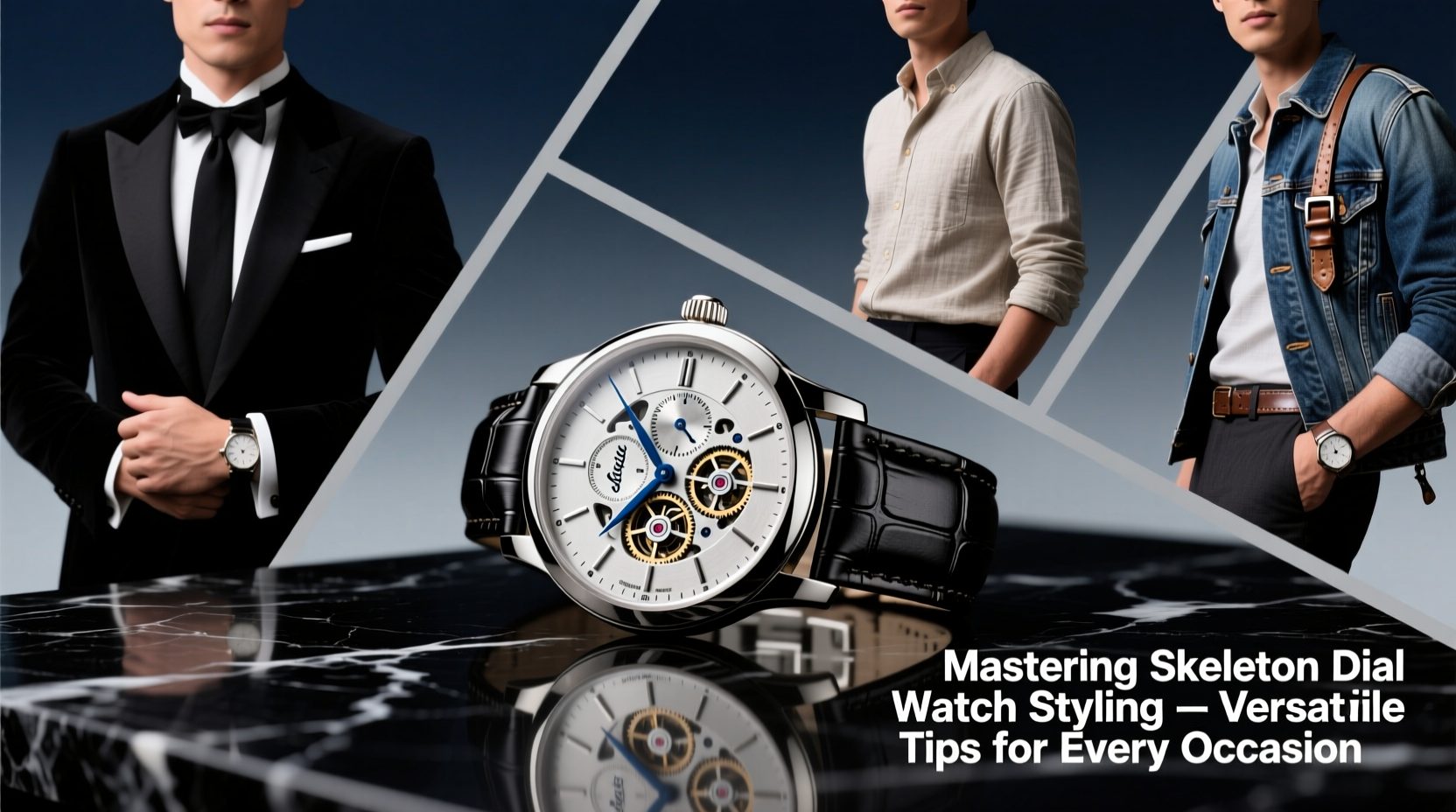
Unlike traditional watches with solid dials, skeleton models reveal gears, springs, and balance wheels in motion. This transparency celebrates engineering mastery and appeals to those who appreciate both form and function. Originating in 18th-century Europe as a way for watchmakers to showcase their skill, modern skeleton watches range from minimalist open-heart designs to fully exposed mechanical movements.
Their aesthetic versatility is often underestimated. A well-chosen skeleton watch can transition seamlessly across settings—but only if matched with complementary attire and context. The key lies in balancing the watch’s technical drama with the tone of the occasion.
“Skeleton watches are not just accessories; they’re conversation starters. They reflect a wearer who values precision and appreciates the unseen mechanisms behind everyday elegance.” — Julian Moreau, Horology Curator at Geneva Time Museum
Styling by Occasion: Practical Applications
Different environments call for different approaches. Here’s how to adapt your skeleton watch to fit each moment without overstatement or underuse.
Formal Events: Understated Sophistication
In formal settings—weddings, galas, business dinners—opt for a refined skeleton watch with restrained detailing. Choose models with silver, white gold, or rose gold cases and minimal branding. Pair with a slim-fit suit in navy, charcoal, or black. A white or light gray dress shirt enhances contrast, allowing the watch to catch subtle light without dominating the ensemble.
Avoid overly busy skeleton patterns in formal contexts. Instead, favor watches with partial skeletonization or open-heart dials that offer a glimpse of mechanics without overwhelming the eye.
Business & Office Wear: Confidence Without Flash
In corporate environments, subtlety wins. Select a skeleton watch with a dark or neutral dial background (black, deep blue) and fine finishing. Leather straps in alligator or calfskin maintain professionalism. Avoid rubber or sporty bands unless your workplace leans toward creative industries.
Wear it under a French-cuff shirt with a tailored jacket. When you gesture during meetings, the peek of moving components subtly signals attention to detail—a silent testament to your precision-minded approach.
Casual Outings: Expressive & Intentional
Weekend wear allows bolder choices. A titanium or stainless steel skeleton watch on a NATO strap or leather band pairs perfectly with chinos, a linen shirt, or a well-fitted crewneck. Denim also works, especially in indigo or black—just ensure the watch isn’t lost against a bulky sleeve.
This is where full-skeleton designs shine. Their exposed movement adds intellectual flair to relaxed looks, transforming a simple outfit into something curated and intentional.
Evening & Social Gatherings: Command Attention
Nighttime events invite drama. Choose a model with luminescent elements or sapphire case-backs that glow under low light. A black PVD-coated case with blued steel hands creates striking contrast. Pair with a dark velvet jacket or a sleek turtleneck to let the watch stand out.
At cocktail parties or gallery openings, people notice details. The visible heartbeat of your watch becomes part of your persona—dynamic, refined, and slightly mysterious.
Do’s and Don’ts: Style Etiquette for Skeleton Watches
| Do’s | Don’ts |
|---|---|
| Match strap material to the occasion (leather for formal, fabric/metal for casual) | Wear a large, flashy skeleton watch with athleisure or gym attire |
| Use the watch as a focal point—limit other wrist accessories | Stack multiple bracelets that obscure the watch face or movement |
| Adjust the fit so the watch sits flush but doesn’t slide | Wear a loose watch that flips or catches on sleeves |
| Choose simplicity in other accessories to let the watch breathe | Pair with overly ornate rings or cufflinks that compete visually |
| Consider lighting—some skeleton dials look best under natural or warm light | Assume all skeleton watches are interchangeable across settings |
Step-by-Step Guide: Building Your Skeleton Watch Look
Follow this five-step process to confidently style your skeleton watch for any event:
- Assess the occasion. Is it formal, business, casual, or social? This determines the level of exposure and finish you should choose.
- Select the right model. Smaller, partially skeletonized watches suit conservative settings; larger, fully open designs work best in creative or evening environments.
- Pick a coordinating strap. Leather exudes polish; metal bracelets add modernity; fabric straps bring playfulness.
- Harmonize with clothing tones. Neutral outfits allow the watch to stand out; patterned clothes require simpler watch designs to avoid visual clutter.
- Limit competing accessories. Remove extra bracelets, and keep rings and cufflinks minimal to draw focus to the timepiece.
“Your watch should enhance your presence, not announce it. A skeleton dial earns respect when worn with restraint.” — Luca Ferrero, Luxury Accessory Designer
Real-World Example: Alex’s Transition from Day to Night
Alex, a financial consultant in his early 30s, owns a rose gold Hamilton Jazzmaster Open Heart. On weekdays, he wears it with a navy suit, white shirt, and burgundy tie—its subtle off-center cutout adding quiet intrigue. Colleagues often ask about it after presentations.
On Fridays, he swaps to a black leather strap version of the same model. He rolls up the sleeves of a dark grey merino sweater, revealing the watch while dining at a rooftop bar. The warm lighting highlights the moving balance wheel, sparking conversations with new acquaintances.
His success lies in consistency of brand identity and smart adaptation—same watch family, different expressions.
Frequently Asked Questions
Can I wear a skeleton watch every day?
Yes, provided it’s designed for durability. Many modern skeleton watches feature sapphire crystals and water resistance up to 50 meters. Just avoid high-impact activities like sports or manual labor, which could damage the delicate internal components.
Are skeleton watches appropriate for women?
Absolutely. While often marketed toward men, skeleton watches are gender-neutral in appeal. Women can opt for smaller cases (32–36mm), delicate lugs, and elegant straps in silk or Milanese mesh. Brands like Nomos, Frederique Constant, and Longines offer unisex-friendly models.
How do I clean and maintain a skeleton watch?
Use a soft microfiber cloth to wipe the case and crystal weekly. Avoid moisture near the crown. For deeper cleaning, consult a professional every 18–24 months. Never use household cleaners, which can corrode metal finishes or lubricants inside the movement.
Your Wrist, Your Statement
Mastering skeleton dial watch styling isn’t about following rigid rules—it’s about aligning mechanical beauty with personal expression. Each tick of the exposed escapement reminds you that elegance lives in the details. From boardrooms to bistros, your watch can serve as both tool and testament: to craftsmanship, to taste, to the quiet confidence of someone who knows what they value.
Start small. Try pairing your skeleton watch with one elevated outfit this week. Notice the reactions. Feel the weight of it on your wrist—not just physically, but symbolically. Then build from there. With awareness and intention, your skeleton watch won’t just tell time—it’ll shape how others see you, and how you see yourself.




 浙公网安备
33010002000092号
浙公网安备
33010002000092号 浙B2-20120091-4
Comments
No comments yet. Why don't you start the discussion?